
Saturday night is fully booked. The deliveries are in. Front of house is set. Then the call comes in before lunch. Your sous chef is down, your grill chef can't get in, and the only person who said they might help is already committed elsewhere.
That's what service continuity planning looks like in hospitality. It isn't a binder on a shelf. It's whether you can keep covers on, protect standards, and avoid refunding tables because the kitchen can't cope.
For pubs in Devon, hotels in Berkshire, restaurants in Bristol, and busy seasonal venues across Dorset and Wales, the most common disruption isn't a flood or a server crash. It's people. Short notice sickness, no-shows, resignations, unreliable agency cover, and a chef market that stays tight when you need it most.
Why Your Kitchen's Plan B is Now Plan A
Most hospitality operators still treat continuity planning like a corporate exercise. A fire plan matters. A power failure plan matters. But neither happens as often as chef unavailability.
That's the gap. Plenty of businesses have a continuity document, but the working reality in hospitality is far messier than the paperwork suggests. A critical 54% of UK organisations reported in 2025 that they are not confident their specific business continuity plan is up-to-date or effective, according to Databarracks' 2025 findings on business continuity confidence.
If you run a kitchen, that figure won't surprise you. A generic plan doesn't help much when your head chef is off for a week, your KP has left, and Sunday lunch is still coming.
Why hospitality continuity fails in practice
The usual problem is simple. The plan focuses on rare disasters and ignores routine operational shocks.
A document might say “escalate to senior management” or “contact backup staffing support”. Fine. But who exactly makes the call at 6am? Which section gets cut first if no replacement arrives? Can your menu be reduced without damaging guest perception? Can the pass still run if the strongest chef in the brigade is missing?
Practical rule: If your continuity plan doesn't tell the duty manager what to do within the first ten minutes of a chef absence, it isn't a working plan.
The strongest operators plan for ordinary chaos. They know the difference between a risk register and a live service problem. They build decisions around revenue protection, not paperwork.
The real shift operators need to make
Service continuity planning in hospitality starts with one hard truth. Staffing disruption is often the first operational failure point.
That means Plan B can't be an afterthought. It has to sit inside daily operations, rotas, supplier decisions, menu design, and recruitment. If your current fallback is texting old contacts and hoping somebody picks up, you don't have resilience. You have luck.
A better starting point is to pressure test what happens when the kitchen loses a key person. This breakdown of kitchen disaster response and emergency relief chef booking is useful because it reflects the reality most venues face under time pressure.
In practical terms, your continuity plan should answer one question above all others. How do we keep cooking, safely and profitably, when the people plan fails?
Identifying Your Real-World Hospitality Risks
Service continuity planning starts with a clear view of what can stop service, what it costs you, and how quickly you need to recover. In hospitality, that means stripping out the jargon and asking operational questions your team can answer.
A hotel manager in Reading doesn't need a theoretical framework first. They need to know what happens if breakfast service loses a chef, if the combi goes down, or if the butcher misses a Friday delivery before a wedding weekend.
To organise that thinking, use a simple risk map.
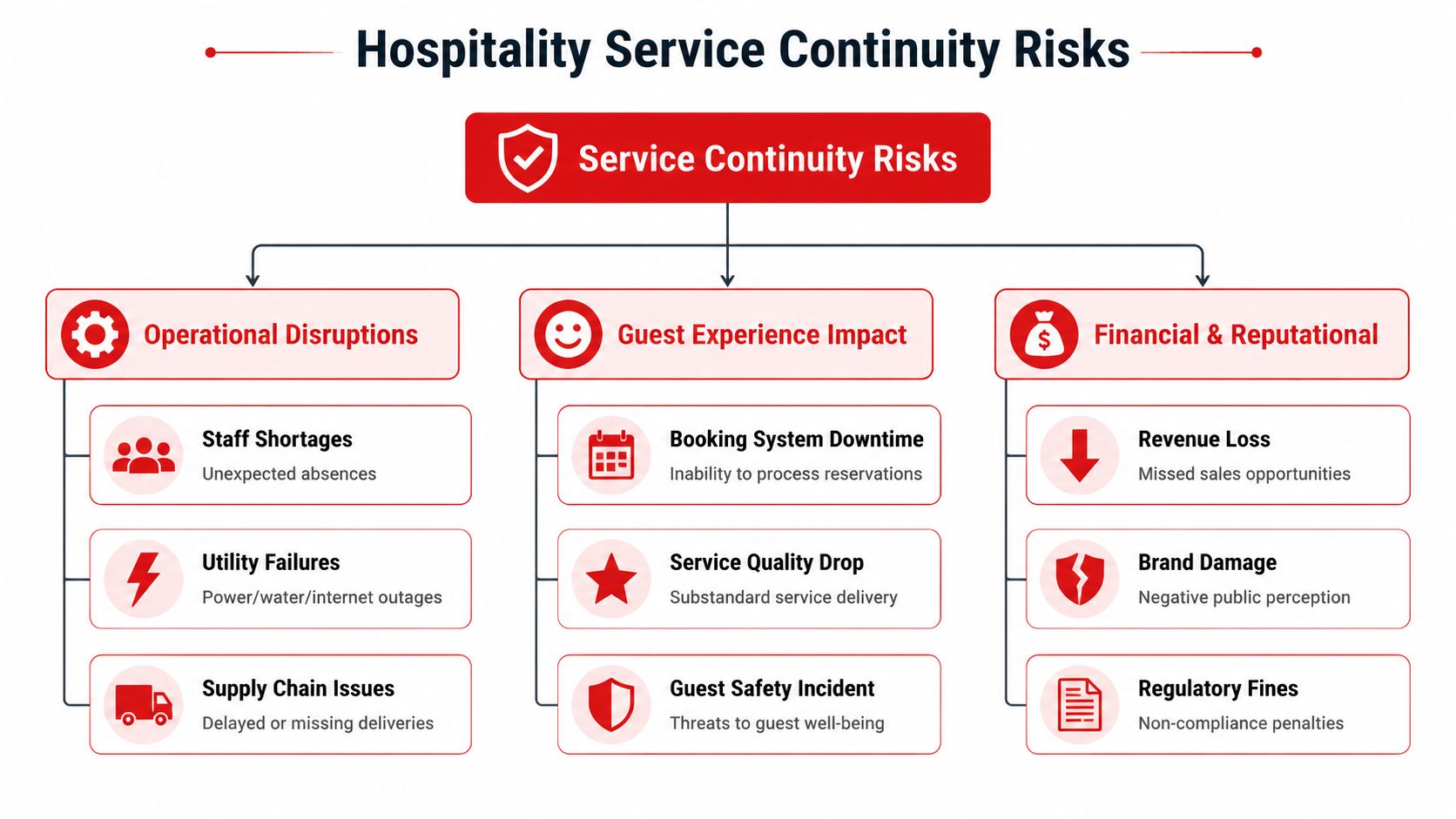
Start with business impact, not paperwork
A proper business impact analysis sounds formal, but the job is practical. Identify the functions you can't afford to lose, then define how long you can tolerate disruption before the damage becomes unacceptable.
For most venues, ask these first:
- Which services are critical: Breakfast in a hotel, lunch in a golf club, dinner in a destination pub, or private catering on a yacht.
- Which roles are single points of failure: Head chef, sous chef, pastry chef, night porter, KP, or a duty manager who also handles supplier issues.
- What can be reduced without breaking the guest experience: A shortened menu, fewer covers, paused room service, or a temporary switch to simpler prep.
- What must stay intact: Food safety, allergen control, communication between kitchen and front of house, and standards that protect reputation.
The risks most venues underestimate
Operators usually spot the obvious risks first. Equipment failure. Utility interruption. Supplier delays. They matter.
But staffing remains the hardest one to absorb because it hits instantly and often without much warning. The wider labour picture backs that up. The UK hospitality industry lost 59,000 workers in just one 12-month period up to 2025, making it the worst-hit sector in the entire UK labour market, according to Employment Hero's report on the hospitality labour crisis.
That loss shows up in daily operations. It means slimmer benches, fewer dependable backups, and more pressure on your existing brigade.
The venues that recover fastest usually know their people risk in detail. They don't just know who is on shift. They know which absence changes service entirely.
Questions worth asking this week
If you want a usable risk picture, sit down with your GM, head chef, and a senior front-of-house lead and work through real scenarios:
| Scenario | What to decide |
|---|---|
| Head chef off during peak season | Who leads service, who signs off ordering, and whether the menu needs trimming |
| Section chef absent on a wedding weekend | Which dishes come off, which team member can cover, and what guests must be told |
| Supplier fails on a key delivery day | Which approved alternative can fulfil quickly, and what substitutions are acceptable |
| Internet or booking system outage | How reservations are tracked manually and who updates guests |
| Sudden spike in covers due to weather or events | Whether labour can flex, whether prep can cope, and where standards are most exposed |
For pubs in Bristol, independent hotels in Windsor, and coastal venues in Devon, the priority is the same. Don't build your continuity plan around the rarest event. Build it around the interruption most likely to hit your service next.
Building Your Resilient Staffing Contingency Plan
Most staffing contingency plans collapse because they rely on memory, favours, or a generalist agency that doesn't understand a kitchen. That approach feels flexible right up until you need it.
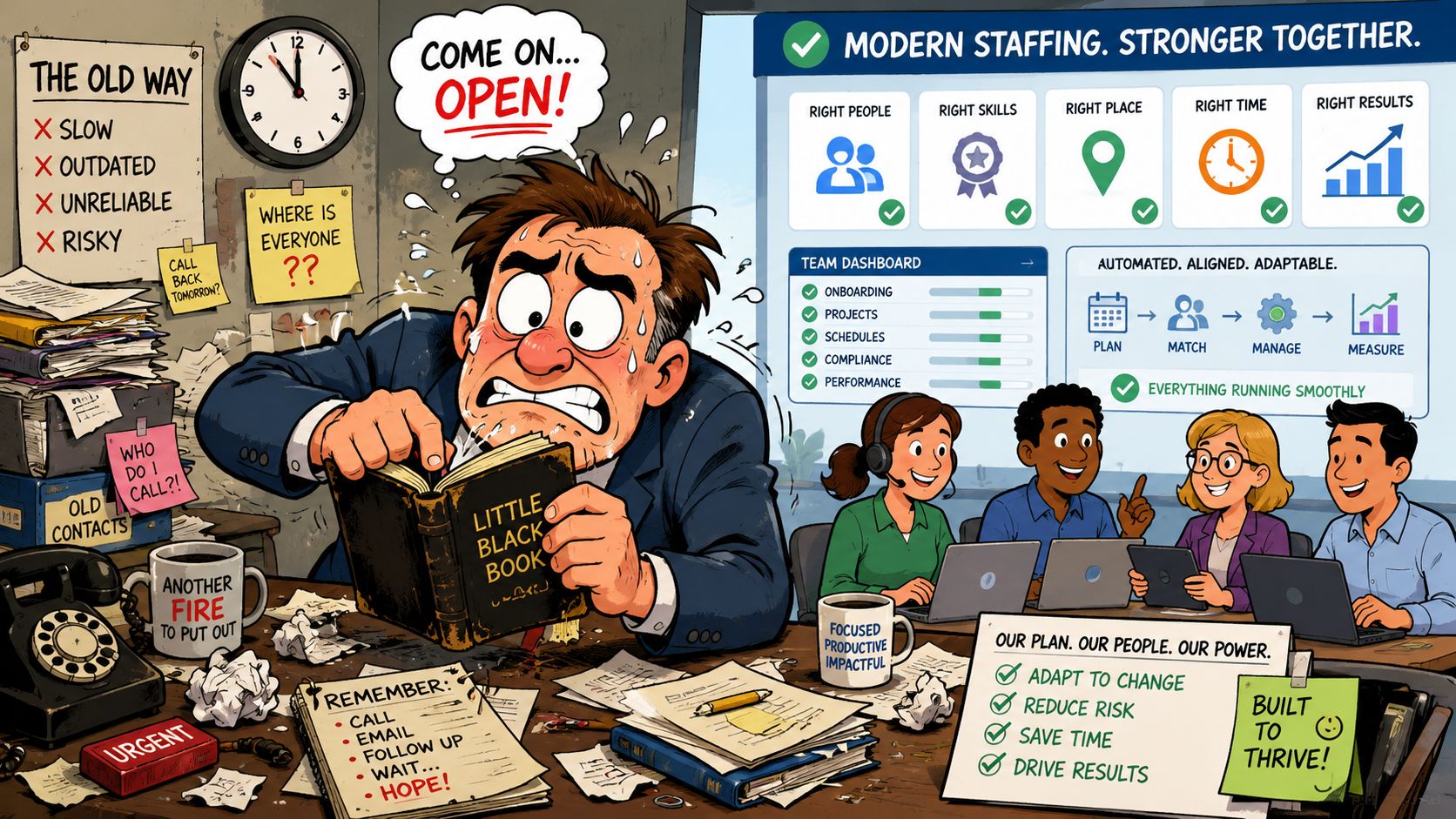
The old model is familiar. A manager keeps a phone list. A former chef might help. A temp agency says it can “send someone over”. Then you spend half the day checking whether the person has the right experience, can handle your pace, or will even turn up.
That isn't a contingency plan. It's a scramble.
Why informal backup methods stop working
The labour shortage has made weak backup systems more dangerous. In the UK hospitality sector, 67% of businesses lack non-head chefs and 36% are missing kitchen porters, according to Infraspeak's analysis of hospitality labour shortages.
That matters because most service failures don't begin with the executive layer. They begin lower down. Lose a capable line chef, a breakfast chef, or a KP at the wrong moment and the whole kitchen starts running slower, dirtier, and more reactively.
Here's what usually fails first:
- Manager contact books: Names are outdated, availability has changed, and nobody has been vetted recently.
- General temp pools: They may fill a body, but not necessarily a section, a standard, or a pace of service.
- Overreliance on overtime: Strong chefs burn out, errors rise, and the next absence comes sooner.
- Goodwill staffing: Borrowed chefs from sister sites can protect one venue while destabilising another.
What a real staffing contingency plan looks like
A resilient plan is structured. It treats temporary cover as part of operations, not as a panic purchase.
Build it around these points:
Define critical roles in order of service impact
If the breakfast chef is absent, does the hotel lose revenue immediately? If the sous chef is missing, does evening service lose control? Prioritise by operational damage, not by job title alone.Set clear trigger points
Don't wait until pre-service briefing to react. If a chef calls off, define exactly when you reduce menu complexity, call for cover, adjust prep plans, or freeze late bookings.Use specialist kitchen support, not generic labour
Temporary chefs only work as a continuity tool when the people supplied can walk into a professional kitchen and contribute fast.Plan for planned gaps as well as emergencies
Holidays, parental leave, refurb periods, event weekends, and seasonal surges all belong in the same staffing continuity plan.
A strong relief chef arrangement protects more than service. It protects team morale. Permanent staff stay steadier when they can see management has a credible answer.
Where operators get commercial value
There's a reason temporary chef support has become part of normal planning in places with volatile demand. A pub in Wales during bank holiday trade, a boutique hotel in Berkshire running weddings, or a coastal venue in Dorset through summer doesn't just need “cover”. It needs stability.
That means using relief chefs and temporary chefs strategically. Not just for same-day emergencies, but for annual leave, menu transitions, and high-pressure periods when a tired team starts making expensive mistakes.
It also means thinking beyond one type of placement. Some businesses need short-term kitchen rescue. Others need permanent chef recruitment, wider hospitality staffing support, or specialist hires such as yacht chefs and villa chefs where guest expectations are high and discretion matters.
A practical benchmark is this. If your current staffing fallback wouldn't survive a busy Friday in Slough, a wedding weekend in Windsor, or a surge week in Devon, it needs rebuilding. This guide to managing staff absence in hospitality operations is a useful lens because it treats absence as an operational risk, not just an HR problem.
Your Supplier and Communications Checklist
A kitchen doesn't fail only when a chef is missing. It fails when two smaller problems stack at the same time. A chef absence combined with a late delivery. A reduced team combined with patchy communication. A menu issue made worse because front of house didn't get the message early enough.
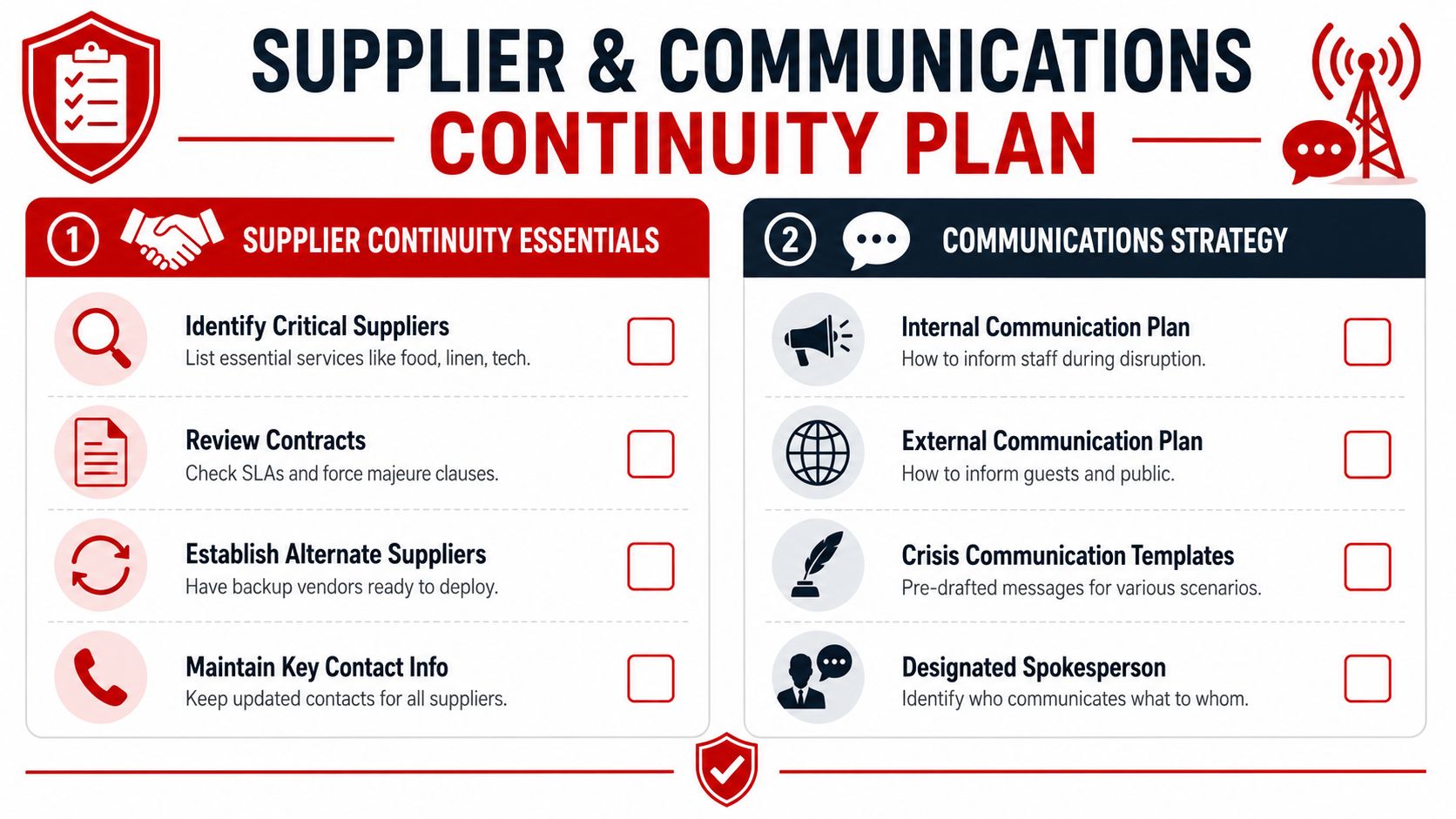
That's why service continuity planning needs two simple support systems. Backup suppliers and a communication tree your team can use without thinking.
A landmark 85% of UK firms reported having a formal business continuity plan in 2025, yet many still fail on basic execution such as maintaining current communication protocols and properly vetting alternatives, as noted in CIR Magazine's coverage of the Databarracks Data Health Check.
Supplier continuity essentials
Many venues still have hidden single points of failure. One butcher. One fish supplier. One agency laundry provider. One maintenance contact who never answers after hours.
Use this supplier checklist:
- List the suppliers that directly affect service: Food, linen, waste, gas, tech support, booking systems, and emergency maintenance.
- Mark single points of failure: If one supplier disappears tomorrow, which service stops first?
- Pre-approve alternatives: Don't start vetting during a crisis. Agree replacements in advance and keep contacts current.
- Check practical fit: Backup suppliers must match delivery times, minimum order expectations, product consistency, and location coverage.
- Store contacts in two places: A printed operations file and a digital version both matter.
A rural pub in Devon may need a backup produce route that can reach site quickly. A boutique hotel in Reading may need a second linen contact that can cope during peak occupancy. The principle is the same. If the switch can't happen fast, it isn't a real backup.
Communications that work under pressure
Most communication failures happen because nobody has set the order of decisions. The information exists, but it doesn't move quickly enough.
Use a simple chain:
| Trigger | First call | Next action | Who needs updating |
|---|---|---|---|
| Head chef absent before service | GM or duty manager | Review rota and menu impact | Front of house lead and senior kitchen team |
| Key delivery delayed | Head chef or kitchen lead | Substitute stock or revise specials | Front of house and reservations |
| Utility issue affects service | Duty manager | Decide reduced offer or pause | Team, guests on site, incoming bookings |
Operational check: If your team has to ask “who tells front of house?” during a disruption, the communication plan is unfinished.
Pre-drafted wording helps. Keep short templates ready for guest-facing updates, staff briefings, and supplier escalations. Keep them clear and calm. No drama, no over-explaining, just the operational facts and the action being taken.
Testing Your Plan Before Disaster Strikes
A continuity plan only earns its keep when the team has tested it. Until then, it's theory.
The difference between tested and untested planning is sharp in hospitality. UK hospitality businesses conducting quarterly simulations of chef unavailability achieve a 92% success rate in restoring kitchen operations within 2 hours. Those testing only annually drop to a 54% success rate, according to the GOV.UK business continuity management chapter.
That result makes sense on the ground. Teams that practise respond quickly. Teams that don't end up debating basic steps while service gets closer.

Run a tabletop exercise your managers will actually use
You don't need a consultant and a conference room. You need the right people and a realistic scenario.
Try this with your GM, head chef, senior sous, and front-of-house lead. Set a scenario in a real context. It's 2pm on a Friday in Windsor. Your lead grill chef has walked out. You're carrying strong dinner bookings and a private event.
Then work through these questions:
Who takes command first
One person leads. Not three.What happens in the first ten minutes
Calls made, bookings reviewed, menu pressure identified, staffing options triggered.What changes in the first hour
Sections reassigned, prep priorities reset, front of house briefed, guest expectations managed.Where does the plan snag
Old contact numbers, unclear authority, missing handover notes, no backup prep list, no one knowing the reduced menu protocol.
What you're trying to expose
Testing isn't about proving the plan is brilliant. It's about finding the weak joints before the weekend does it for you.
Common failures include:
- Outdated contact details: The person you thought you could call left months ago.
- No role clarity: Kitchen thinks GM decides. GM thinks head chef decides.
- Weak documentation: Key ordering notes, allergen controls, and prep lists live in one person's head.
- Poor handover quality: A relief chef can step in faster when systems and station expectations are documented clearly.
That last point is where many venues lose time. A chef may arrive, but if the kitchen setup, standards, suppliers, and section notes are vague, recovery still drags. Clean handover systems make a measurable difference in real operations. This practical guide to kitchen handover documentation is worth using as part of your test process.
Test the call chain, the menu reduction decision, and the handover file in one sitting. If one of those fails, service is still exposed.
Keep tests short and repeatable
Quarterly testing works because it becomes normal. Staff know the process. Managers stop improvising. New risks get folded in.
Utilize local pressure points. Summer trade in Dorset. Race days near Berkshire. Event traffic in Bristol. Holiday peaks in Wales. The scenario matters less than the discipline. Put the team under a little pressure in rehearsal, and they'll lose far less time when an incident occurs.
Secure Your Service with a Dependable Chef Partner
Hospitality businesses don't lose service continuity in dramatic ways most of the time. They lose it through ordinary operational strain. One chef off. One weak handover. One late supplier. One overstretched team making tired decisions under pressure.
That's why good service continuity planning in this sector is practical, not theoretical. You identify critical points of failure. You simplify decisions. You build fallback options that work on a live trading day, not just in a policy document.
For pubs, restaurants, boutique hotels, private households, villas, and yachts, the most important continuity question is usually the same. If a key chef becomes unavailable, who steps in, how quickly, and with what standard?
If the answer is still “we'll see who's about”, the plan isn't strong enough.
Relief Chefs UK has been supporting hospitality businesses nationwide since 2013 with relief chefs, temporary chefs, permanent chef recruitment, yacht chefs, villa chefs, and broader hospitality staffing support. For operators in Bristol, Devon, Dorset, Wales, Berkshire, Windsor, Reading, Slough, and across the UK, the commercial benefit is simple. Kitchens stay open, standards stay protected, and management stops firefighting every staffing gap as if it's a one-off.
A dependable chef staffing partner doesn't replace service continuity planning. It becomes one of the few parts of it that works when the pressure is on.
If your venue needs a stronger staffing contingency plan, contact Relief Chefs UK. Whether you need emergency relief chefs, temporary chefs for seasonal demand, permanent chef recruitment, or specialist support for yachts, villas, pubs, and boutique hotels, the team can help you secure reliable kitchen cover across the UK before the next gap hits service.