
Friday at 4pm, the phone rings and your only chef says they're off with sickness. The dining room is booked, the prep list is half finished, the front-of-house team is already telling guests everything's fine, and you know it isn't. In that moment, industry best practices stop being a policy folder and become the only thing standing between a full service and a mess that lands on Google reviews, staff morale, and next week's takings.
That's the job in hospitality, protecting service when the plan breaks. Recruitment matters, but recruitment alone doesn't keep a pass open on a Friday night in Bristol, a hotel kitchen in Berkshire, or a seasonal restaurant in Devon when the rota gets hit twice in one week. Good operators build systems that absorb shocks, not just systems that look tidy on paper.
When a Chef Calls in Sick at 4pm on a Friday
A fully booked restaurant in Bristol can look healthy right up to the moment the kitchen loses its only chef. Covers don't disappear from the booking system just because one person's gone home sick. Guests still arrive, tickets still print, and the rest of the team starts making promises they may not be able to keep.
That's why staffing failures are never just staffing failures. They turn into delayed mains, rushed prep, a stressed front-of-house team, and a manager trying to explain why service is slower than expected. If the kitchen closes early, the venue loses revenue for that night and often loses confidence for the next booking cycle too.
Practical rule: if a venue cannot replace a key chef fast, it does not really have a rota, it has a wish list.
The commercial damage outlasts the shift itself. A cancelled service can live far longer in online reviews than the lost sales live in the till. That's why strong operators keep an emergency response process ready, and why many turn to an emergency relief chef booking guide before the crisis hits.
The bigger lesson is simple. In independent venues, one no-show can destabilise the whole evening. In hotels and multi-site groups, the ripple effect spreads further because the pass, the prep, and the guest promise all depend on people who can't be in two places at once.
What Best Practice Means in UK Hospitality
Industry best practices in hospitality mean the venue can keep service, safety, and standards steady when the team changes. That is the standard. A stack of CVs does not keep a dining room open, and a good feeling after one successful booking does not protect the next service.
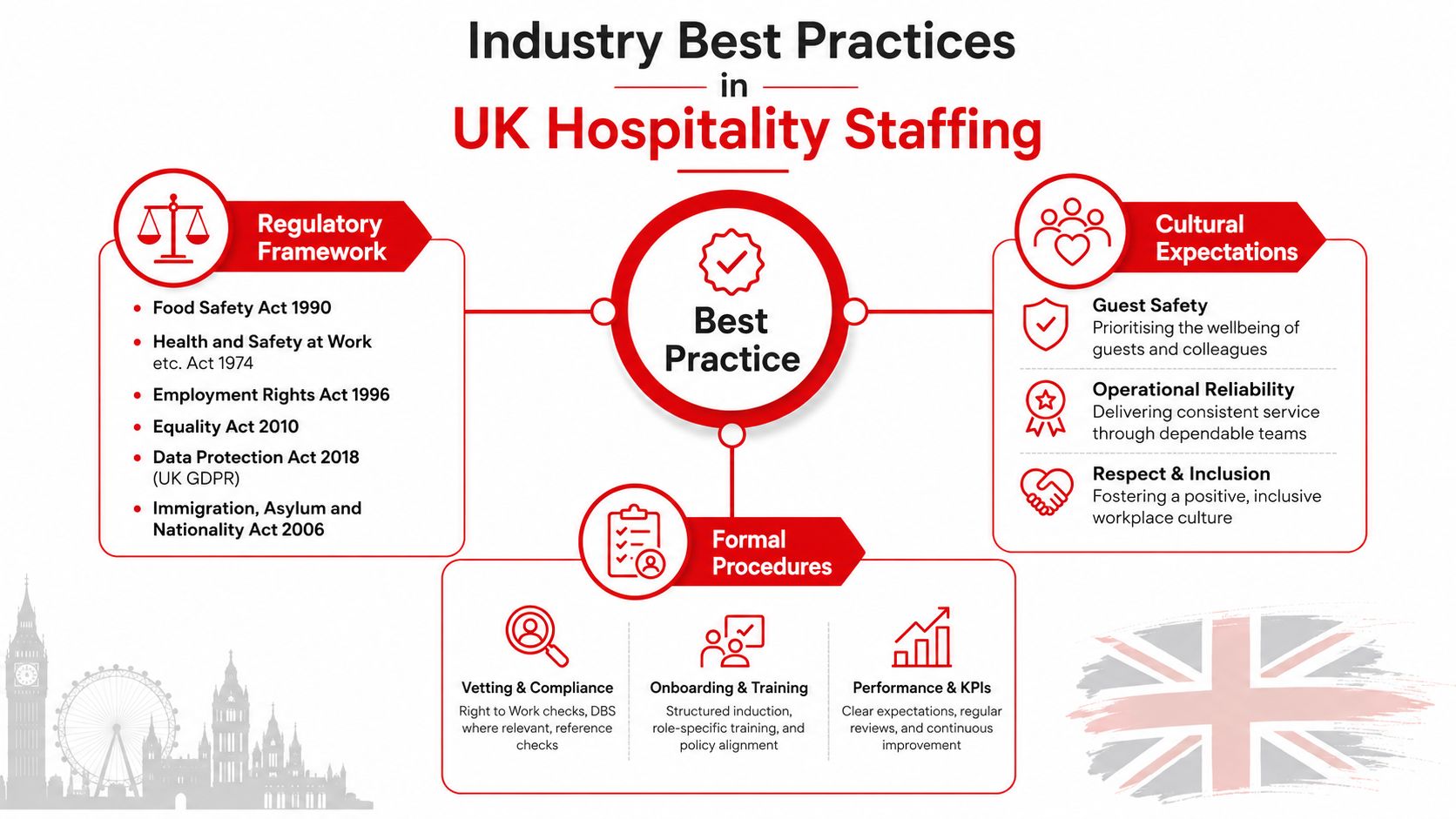
The UK has spent decades moving away from informal kitchen habits and towards documented control. The Food Safety Act 1990 and later hygiene rules pushed operators to manage food safety through process, not memory. The Food Hygiene Rating Scheme, launched in Wales in 2010 and later expanded across the UK, made that discipline visible to customers as well as regulators. The result shows up in the ratings culture, where over 70% of businesses in England, Wales, and Northern Ireland are typically rated 5 (very good), according to Food Standards Agency data. That is not luck. It is the outcome of venues that treat standards as a system.
A good kitchen does not rely on one heroic individual. It relies on repeatable behaviour. If a chef leaves, the venue still needs the same allergen controls, the same cleaning routine, the same temperature checks, and the same handover discipline.
The difference between a system and a scramble
A reactive venue rings around, hopes a mate is free, and crosses its fingers. A best-practice venue knows exactly who to call, what checks must already be done, and what brief the incoming chef needs before they touch a pan.
That distinction matters even more at scale. The UK accommodation and food service sector employed about 2.1 million people in 2024 according to the ONS data in the brief, and that scale is precisely why process matters. With so many people spread across pubs, restaurants, hotels, and catering sites, even small inconsistency creates avoidable friction. Best practice means one governed source of truth for staffing, compliance, rota, and incident data, not a trail of spreadsheets and email threads.
Operational truth: if the business cannot see who is available, who is cleared, and who is briefed, it will always be late to its own problems.
That is the standard. Consistent operations under pressure.
Vetting, Right-to-Work, and Compliance Essentials
Vetting happens before the chef reaches the door. If the paperwork is loose, the booking is loose. That is where too many venues make expensive mistakes, because they treat cover as a short-term fix instead of a compliance decision.
The sequence should be strict. Start with identity and right-to-work checks, then confirm references, then verify relevant food hygiene credentials for the role. If the booking involves a sensitive environment, add whatever safeguarding or enhanced checks the site requires. A professional partner should be able to confirm compliance in writing, because insurance teams do not care that the shift was urgent, only that the records exist.
What to ask before you approve a chef
Use the same questions every time:
- Right-to-work evidence: Has the chef's right-to-work status been checked and recorded?
- Identity verification: Do the photo ID details match the booking record?
- References: Has someone spoken directly to previous employers, not just collected a name?
- Food hygiene proof: Is the relevant qualification on file for the role and kitchen type?
- Role brief: Has the chef been told about allergens, prep standards, and section expectations?
The point is not bureaucracy for its own sake. The point is to stop a bad fit from reaching the pass. If a guest reports an allergen issue, or an inspector asks who briefed the temporary chef, you need a clean paper trail. That's the difference between a managed booking and a liability.
For an example of how a staffing partner documents verification before offering a chef, see employment verification checks. Relief Chefs UK is positioned in the market as a nationwide chef recruitment agency established in 2013, and its process is built around fully checked cover before the booking is confirmed.
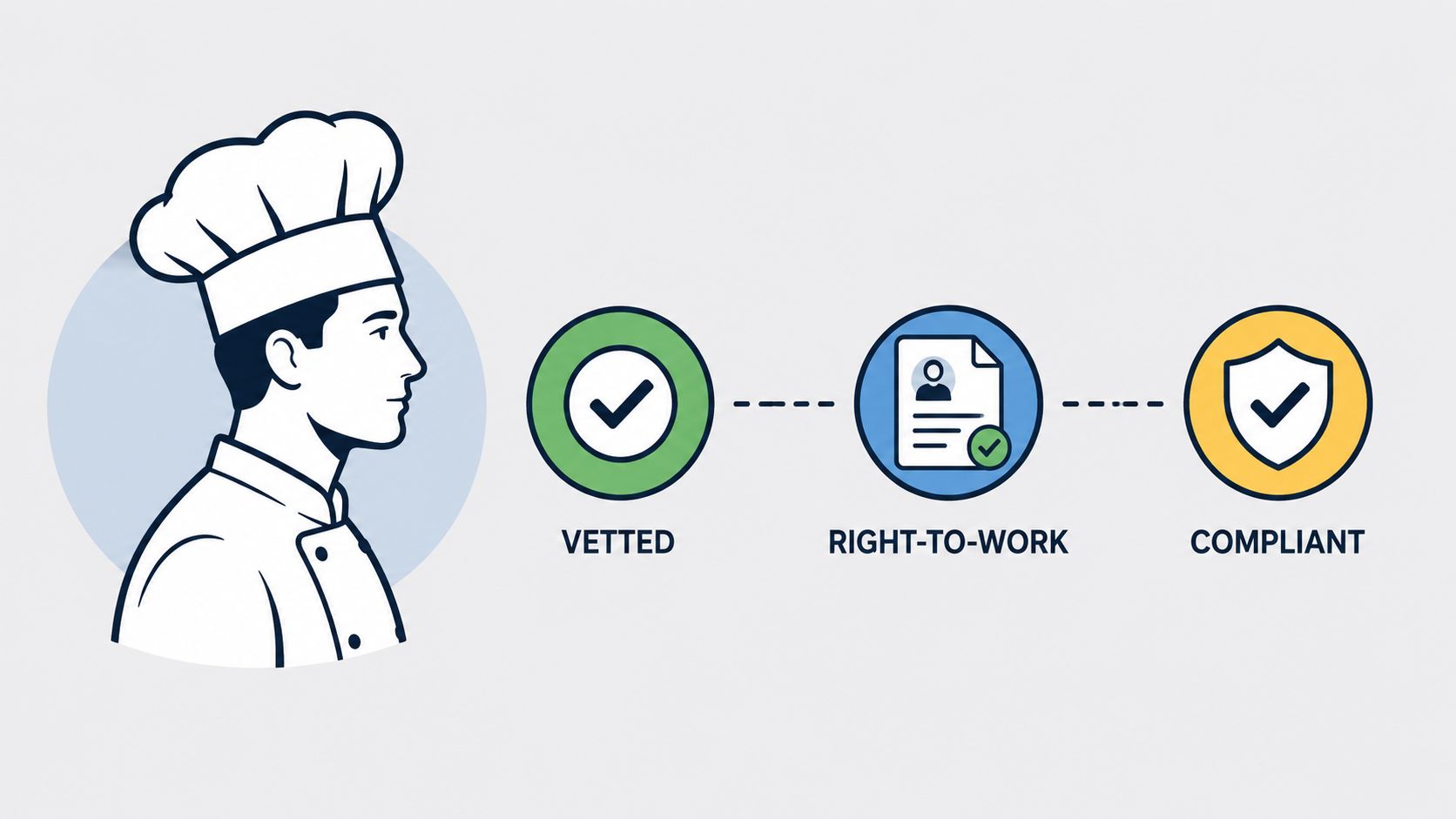
Never send a chef into a kitchen on trust alone. If the paperwork is not ready, the booking is not ready.
Onboarding Standards for Relief and Temporary Chefs
A vetted chef still needs an induction. Too many venues skip this and then act surprised when the chef asks where the dish specs are, fires the wrong ticket, or spends the first service guessing how the pass works. That is not a chef problem. It's an onboarding problem.
The best venues keep the induction short and consistent. A focused walkthrough on arrival is enough to stop most avoidable failures. Show the kitchen layout, point out the critical stations, confirm where the allergens folder lives, and set expectations for service pace. Then hand over the menu, the prep sheet, and the person they should call if something changes mid-service.
The 30-minute standard that saves the night
A strong temporary-chef briefing should cover:
- Kitchen familiarisation: where the pass, prep areas, storage, and cleaning points are
- Equipment and safety: what's in use, what's temperamental, and what not to touch without asking
- Menu and specials review: what is selling, what is running low, and what must not be misfired
- Point of contact: who the chef reports to and who can make decisions during service
That template works in a boutique hotel in Berkshire just as well as it works in a busy pub in Reading. The location changes. The standards don't. If the same induction sheet is used every time, the chef arrives with a clear brief instead of improvising one from scraps of conversation.
A lot of service failures begin with poor handover notes. If the departing chef leaves a half-finished prep list and no section notes, the incoming chef spends the first hour reverse-engineering the shift. That's wasted labour and unnecessary risk.
The faster a kitchen gets to clarity, the faster it gets to calm. That's why structured onboarding isn't admin. It's service protection.
Scheduling, Peak Season Cover, and Contingency Planning
Hospitality demand isn't flat, so the rota can't pretend it is. Devon in the summer, Dorset at weekends, Windsor during events, Bristol across peak trading periods, the pressure lands differently, but it always lands on the same thing, kitchen stability.
A good rota is built with a relief layer, not just a permanent core. Annual leave, sickness, and last-minute changes will happen. The question is whether the venue has a plan that absorbs them without cancelling service or burning out the remaining team.
Build the contingency before the shortage arrives
A practical contingency plan should include:
- Critical stations: which sections cannot run short without damaging service
- Escalation order: who gets called first, second, and third
- Menu flexibility: what gets cut or simplified if cover is tight
- Approval rules: who can authorise same-day cover
- Contact routes: how the booking gets out fast when the shift is at risk
The operational standard many managers try to hit is a response within hours, not days. A same-day chef booking is almost always cheaper than losing a service in a busy restaurant, especially when the dining room is already full. In hotels and multi-site groups, the gap gets wider because one shortage can affect multiple outlets, room service, or banqueting.
Remote work changes the equation too. Yacht chefs and villa chefs often need tighter cover windows and more coordination than a town-centre booking. The practical answer is the same, though, a partner that can move quickly and understands the geography.
For a tighter look at planning this properly, use a contingency planning guide for hospitality cover. The venues that cope best are the ones that assume sickness will happen and plan around it, rather than treating it as a rare inconvenience.
Choosing Between Temporary, Temp-to-Perm, and Managed Relief
The wrong staffing model wastes money. Some venues need emergency cover. Others need a trial period before a permanent hire. Others need an ongoing relief relationship because the pressure never really stops.
Compare the models against real operational needs
| Model | Best for | Typical response | Cost profile | Guarantee level |
|---|---|---|---|---|
| Temporary cover | Short-notice sickness, holidays, one-off gaps | Fast when the partner has availability | Flexible, but variable | Usually limited |
| Temp-to-perm | Testing a chef before a permanent offer | Slower than emergency cover | Higher upfront coordination, clearer long-term value | Depends on agreement |
| Managed relief | Repeated cover needs, multi-site groups, seasonal trading | Priority response and account handling | More predictable monthly planning | Stronger service continuity |
Ad-hoc bookings suit occasional gaps, but they do not buy priority. If your venue only needs cover once in a while, that flexibility makes sense. If the same shortage keeps appearing, you need something more structured.
Temp-to-perm works when the business wants to test fit before committing. That matters in kitchens where culture, pace, and section discipline matter as much as technical skill. Managed relief makes the most sense where managers want faster response, steadier cover, and less time spent chasing availability.
Relief Chefs UK offers monthly plans such as Starter, Growth, and Premium, which fit different cover volumes and levels of account support. Use those tiers as a commercial decision, not a status symbol. The right model is the one that keeps the pass staffed without overbuying capacity you won't use.
The same logic applies in Bristol, Windsor, Slough, Dorset, Wales, and the rest of the UK. Location changes the supplier pool. It doesn't change the decision framework.
KPIs, Inspections, and Feedback Loops That Prove It Works
If a staffing partner can't show performance, you're guessing. Good venues don't judge cover by one easy shift. They track whether the partner keeps filling bookings, confirming quickly, and replacing bad matches without fuss.
What to measure every quarter
- Fill rate: how often the partner supplies the chef you need
- Time-to-confirm: how quickly the booking is locked in
- Replacement handling: what happens if the first chef is not the right fit
- Post-shift feedback: what head chefs say after the service
- Inspection readiness: whether compliance records are easy to produce
That matters during audits and inspections. If an EHO visit comes in, you want right-to-work evidence, hygiene certificates, and incident logs ready to go. If records are scattered, the review becomes defensive. If they're organised, the review becomes routine.
The operational warning signs are usually visible early. A rise in no-shows, sloppy briefings, or repeated complaints about the same type of chef means the process is drifting. That's the point at which a quarterly review should get specific, not polite.
For venues that want QA built into the service, transparent reporting and a dedicated account manager reduce the amount of chasing. That is the difference between a supplier and a proper operating partner.
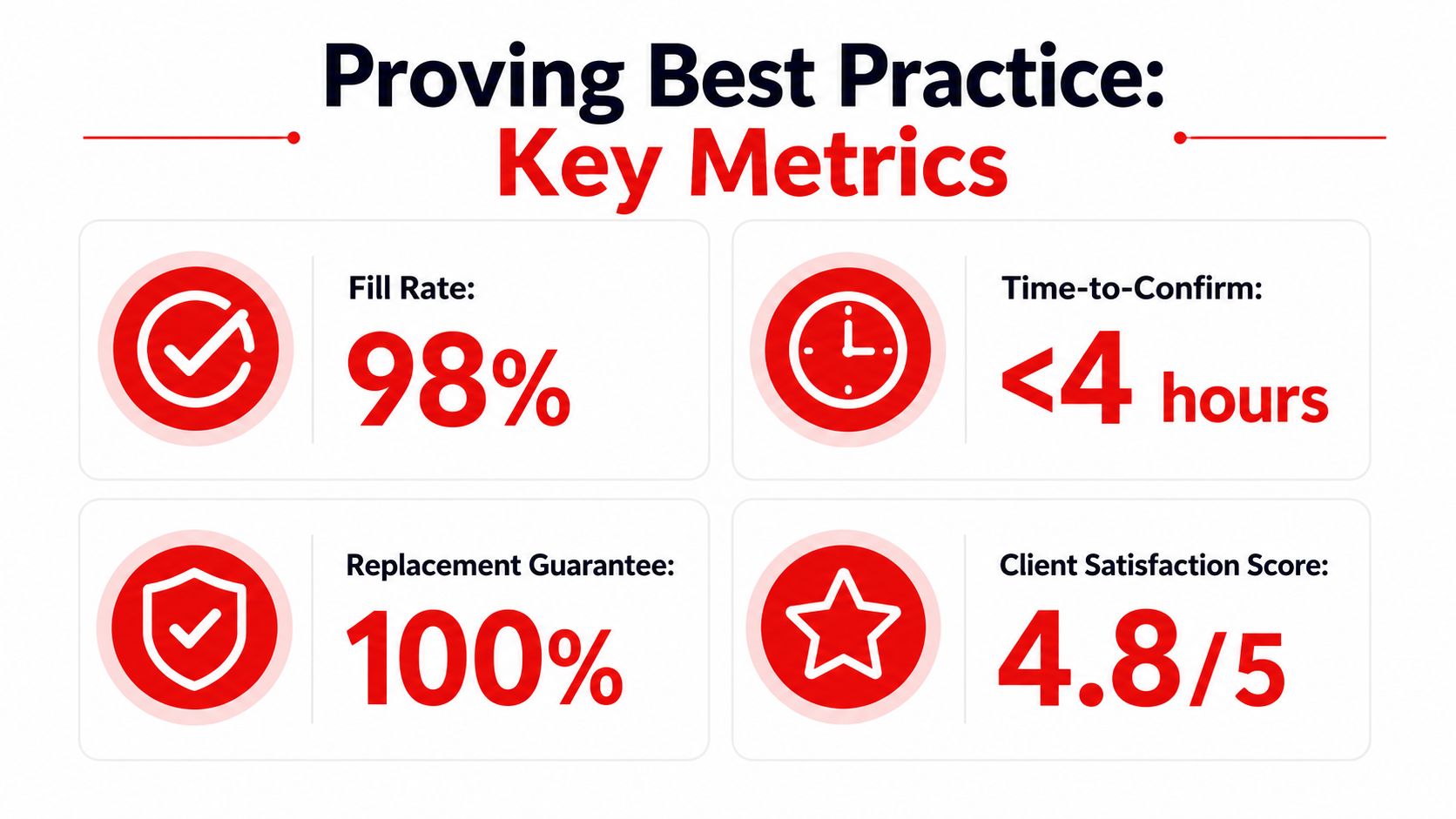
Bottom line: if the numbers are hidden, the problems will stay hidden too.
Cost Control, Contracts, and Your Next Steps
Cost control starts with transparency. If an agency buries fees, shifts the goalposts, or won't explain the service terms clearly, the booking will cost more than it should. Good contracts spell out response expectations, replacement routes, insurance cover, and what happens when the chef is not the right fit.
The best agreement is simple enough for a GM to understand and strict enough for an ops director to trust. Look for clear response times, clear escalation routes, and no hidden charges. A replacement guarantee is not a nice extra, it protects the venue from paying twice for the same problem.
Use this as your final checklist
- Transparent pricing: confirm what is included before you book
- Insurance cover: check it exists on every booking
- Replacement terms: know exactly when and how a swap is triggered
- Service levels: set expectations for response and confirmation
- Support route: make sure someone answers when the shift is going wrong
FAQs come up in every serious conversation.
How quickly can a chef start? In the right setup, urgent cover can move very quickly, but only if the checks and brief are already in place.
What if the chef isn't the right fit? A proper staffing partner should have a defined replacement process, not a shrug.
Is relief cover more expensive than going direct? Sometimes the headline rate is higher, but direct hiring doesn't solve same-day sickness, seasonal spikes, or holiday cover. The true cost is whether the kitchen stays open.
Industry best practices are not about looking organised. They are about staying operational when the week turns against you. If you need relief chefs, temporary chefs, permanent chef recruitment, yacht chefs, villa chefs, or wider hospitality staffing support across the UK, get the process in place now, not after the next no-show.
If you need dependable chef cover, a permanent chef pipeline, or fast help with staffing shocks across pubs, restaurants, hotels, yachts, and private households, contact Relief Chefs UK and speak to a team that runs kitchens as well as bookings. Visit Relief Chefs UK to request cover, discuss a managed plan, or get a clear answer on what your venue needs next.