
How to Find Part Time Hospitality Work in the UK
7 September 2026

Friday service is approaching in Reading, and your head chef has just called in sick. The sous chef is already covering prep, the junior cook is asking who'll run the pass, and the bookings keep coming. This is where part time hospitality work becomes operational protection, not a nice extra.
A dependable part-time chef can cover a sickness gap, strengthen a Sunday service, support a wedding at a Berkshire hotel or give a seasonal kitchen enough depth to keep standards consistent. The same principle applies in Devon, Bristol, Wales, Dorset, Windsor, Slough and every other UK hospitality hotspot where demand changes faster than permanent recruitment can respond.
Introduction to Part Time Hospitality Roles
Hospitality managers rarely struggle because they don't understand the value of staff. They struggle because the need arrives at the wrong time. A pub may have a full rota on paper, but one illness, delayed holiday return or unexpected booking can leave the kitchen exposed before service begins.
Part-time roles solve that exposure when managers use them deliberately. A chef available for Fridays and Sundays can protect a pub's busiest periods. A temporary commis or chef de partie can give a boutique hotel enough cover for a function. A relief chef can step into a restaurant in Bristol or a catering operation in Devon without forcing the existing team into unsustainable hours.
The sector's labour model makes flexible staffing particularly relevant. A 2019 London government evidence report found that 46% of hospitality workers were part-time, compared with 26% across the whole economy. It also recorded 9% on temporary contracts in hospitality, compared with 5% of all UK workers.
Operational rule: Treat part-time cover as part of your staffing structure, not as an emergency improvisation.
The pressure is still clear. UK Hospitality reported 132,000 vacancies, 48% above pre-pandemic levels, with chef shortages ranging from 10% for head chefs to 21% for production chefs in the evidence cited by UK hospitality staffing cost data. A manager who waits until the rota collapses has already lost valuable time.
Finding Part Time Hospitality Work Opportunities
Start with the venue, not the job title. A chef seeking regular evenings should target pubs, small restaurants and hotel brasserie operations. Someone with event experience should approach hotels, wedding venues and contract caterers. A chef comfortable with privacy, travel and changing menus may find better fit in yacht or villa work.
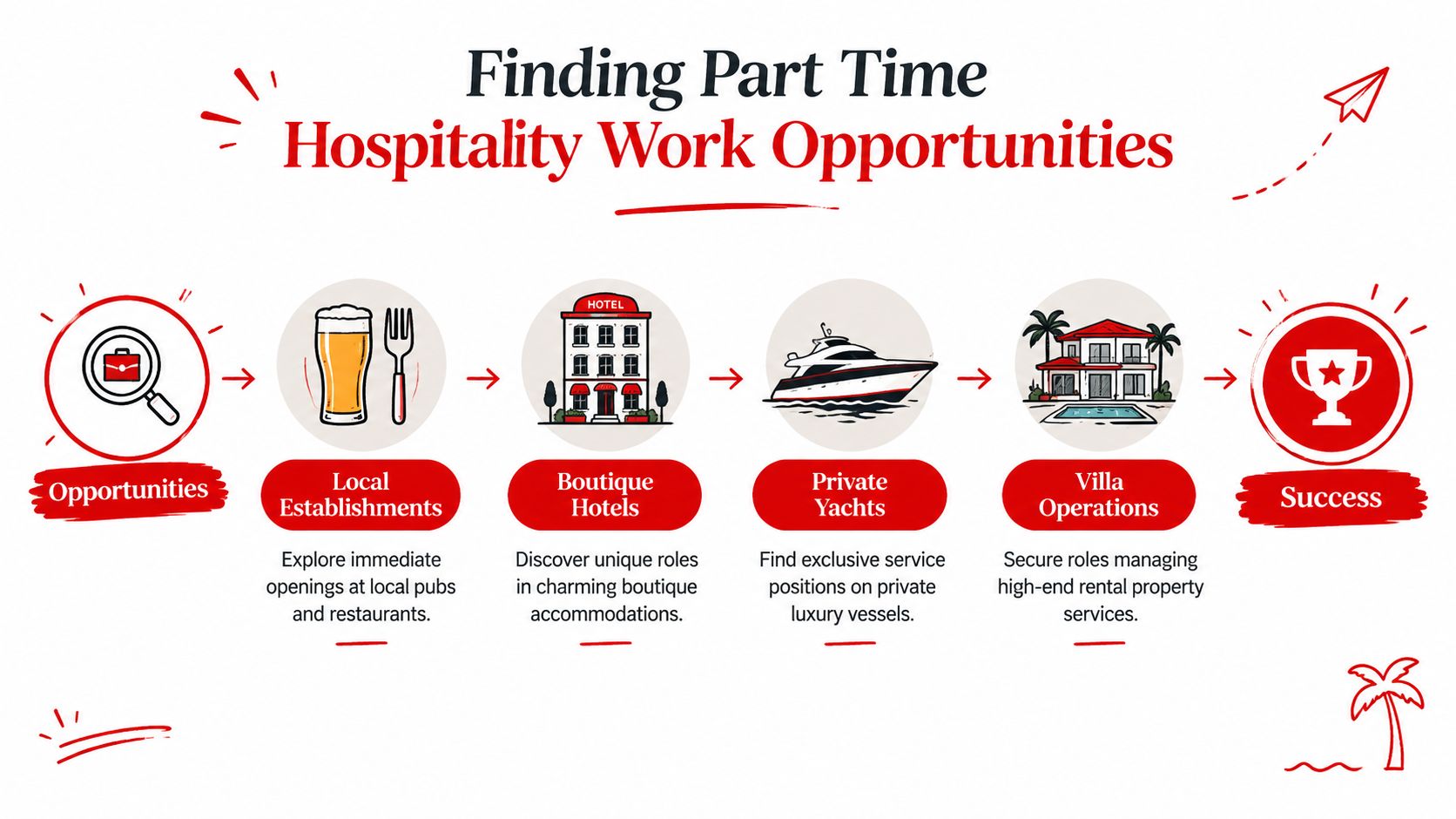
Use five channels, but give each a clear purpose:
- Local establishments: Visit or contact pubs, restaurants and cafés with a concise CV and exact availability. A Slough pub manager with weekend gaps needs a chef who can confirm specific shifts, not a vague promise to “help out”.
- Boutique hotels: Hotels in Wales, Berkshire and Dorset often need flexible kitchen staff for functions, breakfast operations and seasonal occupancy. Contact the head chef or general manager directly where possible.
- Specialist agencies: Agencies can match relief chefs to short-notice cover, particularly when the venue needs someone vetted and ready to work. Compare response times, replacement arrangements, geographic reach and the quality of candidate screening. Use chef recruitment and job search agencies to understand how specialist recruitment differs from general job-board applications.
- Private yachts: Yacht chefs need more than sound kitchen technique. Highlight discretion, provisioning, menu flexibility and the ability to work independently.
- Villa operations: Villa roles suit chefs who can manage guest preferences, private dining and changing service expectations. Approach villa management companies with a compact profile that makes your availability easy to assess.
A job board can widen your reach, but it often leaves the candidate responsible for chasing every lead. Networking works better when you make your request specific: “I'm a chef de partie available Friday evenings and Sundays in Bristol, with experience in fresh fish and high-volume service.”
The same approach helps hotels source specialist staff. A Bristol operation seeking yacht chefs for summer service should contact a provider with access to that talent rather than relying only on a general vacancy advert.
Watch the following video for practical context on hospitality work and career preparation:
Flexibility is normal in this sector, but it still needs structure. The government evidence cited above shows how part-time and temporary work are a fundamental aspect of hospitality staffing.
Crafting a Standout Hospitality CV
A part-time hospitality CV must answer a manager's first questions quickly: What can you cook, when can you work and can I trust you during service? Put those answers near the top, before a long employment history.
Use a clear opening profile:
Chef de partie with experience across busy pubs, hotel kitchens and event service. Available Fridays, Sundays and short-notice cover across Berkshire and Surrey. Confident with prep planning, service communication and food safety controls.
Follow it with a short availability line. “Flexible” is too vague. State whether you can work breakfast, evenings, weekends, split shifts, seasonal contracts or emergency cover. If you can travel between Windsor, Reading and Slough, say so.
Make each line prove reliability
Replace duties with evidence of responsibility. A strong bullet point might read:
- Service leadership: Ran a busy section during evening service, maintaining prep levels and communicating shortages to the sous chef before they affected tickets.
- Short-notice adaptability: Joined temporary kitchen teams quickly, learned local procedures and supported service without disrupting the existing brigade.
- Stock control: Completed section checks, rotated ingredients and flagged shortages before the next service.
- Team support: Covered prep and plating across sections when staffing changed during a shift.
Don't claim skills you can't demonstrate. A hotel manager in Windsor may need breakfast production, buffet replenishment and allergen awareness, while a Dorset restaurant may prioritise fish preparation and à la carte timing. Tailor the first half-page to the venue.
Keep the format easy to scan
Use a simple layout with clear headings for profile, availability, experience, skills, certificates and references. Include food hygiene training, allergen training, first aid where relevant, right-to-work status and any requested DBS information. Keep dates consistent and remove unrelated detail that hides your kitchen experience.
For a specialist structure, use this chef CV guide as a reference, then adapt the wording to the role. A strong CV won't replace reliability, but it gets the right manager to call you.
Preparing for Interviews and Trial Shifts
A trial shift is a working assessment, not a performance staged for an audience. Arrive ready to observe the kitchen, follow the house system and produce consistent food at the required pace.
Research the venue before you arrive. Read the menu, identify the cooking style and note whether the operation focuses on pub classics, tasting menus, banqueting, breakfast or private dining. A candidate interviewing at a boutique hotel in Wales should understand that the role may involve changing service patterns, functions and guest requests rather than one fixed menu.
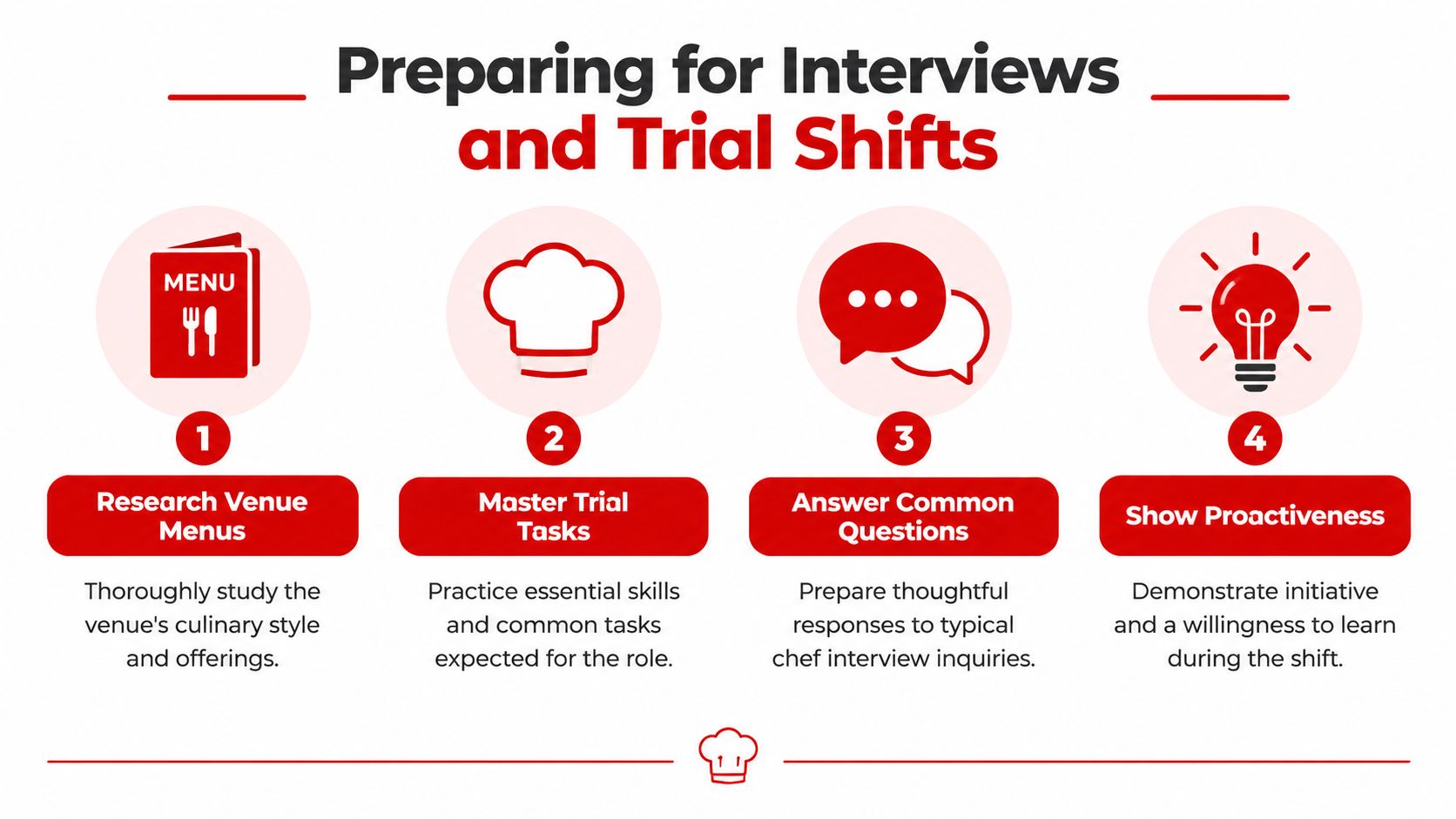
Prepare direct answers to questions such as:
- How do you handle a sudden change in bookings? Explain how you check prep, speak to the section and adjust priorities.
- What would you do if you spotted an allergen risk? Say that you'd stop the process, inform the responsible manager and follow the venue's controls.
- How do you join an unfamiliar brigade? Describe how you learn the pass system, ask concise questions and avoid changing established procedures without approval.
- What availability can you guarantee? Give days, service periods and travel limits accurately.
During the trial, ask where ingredients are kept, who controls the pass and how tickets are called. Start with the task you're given, keep your station clean and communicate before a problem becomes visible. Managers notice candidates who help the team without taking over.
A useful trial sequence is simple:
- Arrive early enough to change and receive a briefing.
- Confirm the section, menu items and expected standard.
- Complete prep methodically, labelling and storing food correctly.
- Communicate during service, then clean down properly.
If the venue uses staging, understand the purpose before agreeing. This guide to staging in a restaurant explains the arrangement and the questions candidates should ask. Never accept an unclear trial with no agreed expectations.
Navigating Legal Checks and Certifications
Managers should prepare documents before the first shift, not while service is building. Candidates should keep digital and printed copies of their right-to-work evidence, food hygiene training and relevant references. A DBS check may be appropriate for certain environments, particularly roles involving private households or vulnerable people, but the venue should confirm what it requires.
Agency workers also have defined protections. The Agency Workers Regulations 2010 guidance requires equal basic working and employment conditions for agency workers doing the same job as directly recruited staff. Government guidance also states that after 12 weeks in the same job, qualifying agency workers receive equal treatment with comparable direct employees, including equal pay, automatic pension enrolment and paid annual leave. Check the assignment details with the agency before accepting work.
| Check | Purpose | Recommended timing |
|---|---|---|
| Right-to-work evidence | Confirms eligibility to work in the UK | Before the first shift |
| Food hygiene certificate | Demonstrates food safety knowledge | Before placement, then keep records current |
| Allergen training | Supports safe communication and ingredient control | Before working independently |
| References | Confirms previous experience and reliability | During registration |
| DBS check where relevant | Supports suitability for specified settings | Before a household or relevant care-related placement |
| Assignment terms | Clarifies hours, pay, duties and agency arrangements | Before accepting the shift |
Berkshire hotels and private operations should keep a record of completed checks. A clean compliance process builds confidence and prevents an avoidable delay from becoming a cancelled service.
Negotiating Shifts Pay and Managing Your Availability
Managers lose good part-time staff when they make availability difficult to understand or pay flexible labour as though flexibility has no value. A UK hospitality retention report recorded average pay of £9.00 per hour for part-time hospitality workers, compared with £13.23 for full-time workers. The report connects underpricing flexible labour with worsening attrition and repeat recruitment costs.
That gap should change the conversation. A chef who gives up other work to protect your Friday and Sunday services needs clarity about the value and limits of the arrangement. Managers should agree the rate, shift length, break arrangements, duties, notice period and cancellation terms before adding the chef to the rota.
Use plain scripts.
For a candidate: “I'm available Fridays and Sundays, including evening service. I can travel across Reading and Windsor, and I'd like to confirm the hourly rate, expected shift length and notice arrangements before accepting.”
For a manager: “We need dependable cover for Friday dinner and Sunday lunch. Can you commit to those services for the agreed period, and what notice do you need if the rota changes?”
Guaranteed hours can improve predictability, but only make promises the business can honour. If demand varies, offer a clear core arrangement and explain how additional shifts will be offered. A chef who knows which services they're expected to cover is less likely to accept another booking or cancel at short notice.
For multi-site groups, keep one availability record. Don't make a chef repeat the same information to managers in Reading, Slough and Windsor. A shared rota, approved messaging channel or shift-management app can help, provided one person owns the final confirmation.
Compare the staffing routes
Direct hiring gives you closer control but takes more time to source and vet. General job boards offer reach, but the manager often carries the screening burden. Specialist agencies cost more than an informal arrangement, yet they can reduce the time spent checking availability, compliance and suitability.
The right choice depends on urgency. Use your own pool for predictable recurring shifts. Use specialist temporary staffing when sickness, seasonal demand or chef shortages threaten kitchen stability. Never rely on one casual contact for a service-critical role.
Leveraging Relief Chefs UK for Flexible Work
Relief Chefs UK has operated as a nationwide chef recruitment agency since 2013, matching hospitality businesses with chefs for flexible and permanent requirements. The service covers relief chefs, temporary chefs, permanent chef recruitment, yacht chefs, villa chefs and wider hospitality staffing support.
For a manager, the practical value is speed and fit. You can submit a short request or phone with the venue location, section, service dates, required skills and expected duties. That gives the staffing partner enough information to assess whether the requirement suits a relief chef, a temporary placement or a permanent search.
The company supports independent pubs, restaurants, boutique hotels, private households, yachts and multi-site operations across the UK. That makes the model relevant to a Friday sickness gap in Reading, seasonal reinforcement in Devon, a hotel requirement in Wales or specialist private service in Dorset.
Ask for the right type of cover
Be specific when you enquire:
- Relief chef: For sickness, unexpected absence or immediate service protection.
- Temporary chef: For a defined seasonal period, project or sustained vacancy.
- Permanent recruitment: For a head chef, sous chef or other long-term appointment.
- Yacht or villa chef: For private service requiring discretion and adaptable menu delivery.
Official ONS vacancy data tracks accommodation and food services through the dedicated JP9O series, providing a recognised way to monitor labour demand. The hospitality employment update explaining the ONS series supports the case for having a rapid staffing route ready before demand peaks.

Relief Chefs UK provides relief, temporary and permanent chef cover for different operating needs. Benefits include 24/7 service, transparent pricing, full insurance and vetted chefs with right-to-work checks. Contact the team for a quote based on the role, location and dates, and confirm the assignment terms when you enquire.
Relief Chefs UK can provide relief chefs, temporary chefs, permanent recruitment and specialist yacht or villa staffing for venues needing dependable part-time cover. Contact Relief Chefs UK now with your location, service dates and kitchen requirements, so the team can help protect your next service.
Call the team.
Office 01392 715474 · info@reliefchefs.co.uk