
Recruitment in Liverpool: A Practical Guide for Hospitality
6 August 2026
A Liverpool kitchen doesn't care about your hiring plan when the Friday board is full, the head chef has called in sick, and a function can't wait. Service still starts at six, the pass still needs bodies, and the team still needs someone who can cook, plate, and keep their head when the tickets stack up.
That's why recruitment in Liverpool has to be treated as an operating problem, not a job-ad problem. If you're still posting and hoping, you're already late. The fix is a staffing system that covers sickness, seasonality, and permanent gaps without pretending one channel will solve all three.
Why Liverpool Kitchens Lose Hours They Cannot Afford
A Saturday night in Liverpool can fall apart fast. One chef rings in sick, the sous is already carrying another section, and the bookings keep landing because the city doesn't pause for your rota. When that happens, the problem is operational, and treating it like a job-ad issue leaves the kitchen exposed. The cost shows up in slower picks, longer ticket times, stressed junior staff, and a manager who ends up cooking instead of running the room.
Liverpool also has structural pressure behind the scenes, see the labour-market data below. The city's latest headline indicators show an employment rate of 57.3%, an unemployment rate of 5.3%, and an economic inactivity rate of 28.2% Liverpool City Council labour market indicators. That is not an easy market for kitchens that need experienced candidates at short notice.
Why generic hiring playbooks fail here
The old “post a vacancy and wait” approach works badly in a city where the local pool is tight and many candidates can choose between sectors. Liverpool hospitality demand also moves with the football calendar, cruise activity, matchdays, and weekend peaks, so you are not hiring into a stable pattern. You are hiring into bursts. The same rota that looks fine on paper can collapse the moment trading spikes and sickness lands together.
Practical rule: if a kitchen cannot absorb one absence without service slipping, the hiring model is already too thin.
A generic job-board strategy also misses a basic Liverpool truth, the best candidates often move through informal routes, agency benches, or repeat seasonal work. That means the venue that relies on one advert is competing with operators who already have a cover system in place. If you want the room to hold, you need a plan built for speed, not hope.
What Liverpool's Labour Market Really Looks Like
Liverpool kitchens are hiring into a market with pressure on both sides. The local workforce is there, but it is not loose enough to make staffing easy, and that matters when you need people who can start fast and stay through service. As noted earlier, the city's headline indicators point to a tighter pool than the national picture.
A wider Liverpool City Region summary backs that up. Analysts found that 14% of employers had vacancies at the time of the survey and 53% had had at least one vacancy in the previous 12 months Liverpool City Region LMI summary. The same source also reported 17,942 advertised vacancies in Liverpool City Region in January 2022, while Liverpool itself accounted for 11,853 live vacancies in April 2022. That is the kind of backdrop that forces operators to treat hiring as a live process, not a one-off advert.
The ONS local profile adds another layer. In the year to December 2023, 67.5% of Liverpool residents aged 16 to 64 were employed, down from 70.0% the year before, and 26.1% were economically inactive ONS Liverpool local labour market profile. For a kitchen, that means fewer easy wins when a section needs covering, fewer spare hands to absorb sickness, and less room for slow hiring decisions.
The practical answer is to run permanent recruitment and relief as one staffing system. A strong permanent hire matters, but so does a bench that can keep service standing when trading spikes, holiday rotas bite, or a section drops out at short notice. For a closer look at how that relief side should work, see temp work in Liverpool.
What that means on the pass
Shortlists get thinner. Time to fill stretches. Weak interviews become expensive because the wrong hire still looks useful when you are desperate, then falls apart under pressure.
Liverpool kitchens need redundancy built into the rota. One channel will not cover permanent hiring, short-notice relief, and seasonal swings at the same time, so the job is to build layers that can absorb absence without service slipping.
Operator insight: the city's numbers do not say hire harder, they say build a roster that can take a hit.
Where to Find Chefs in Liverpool
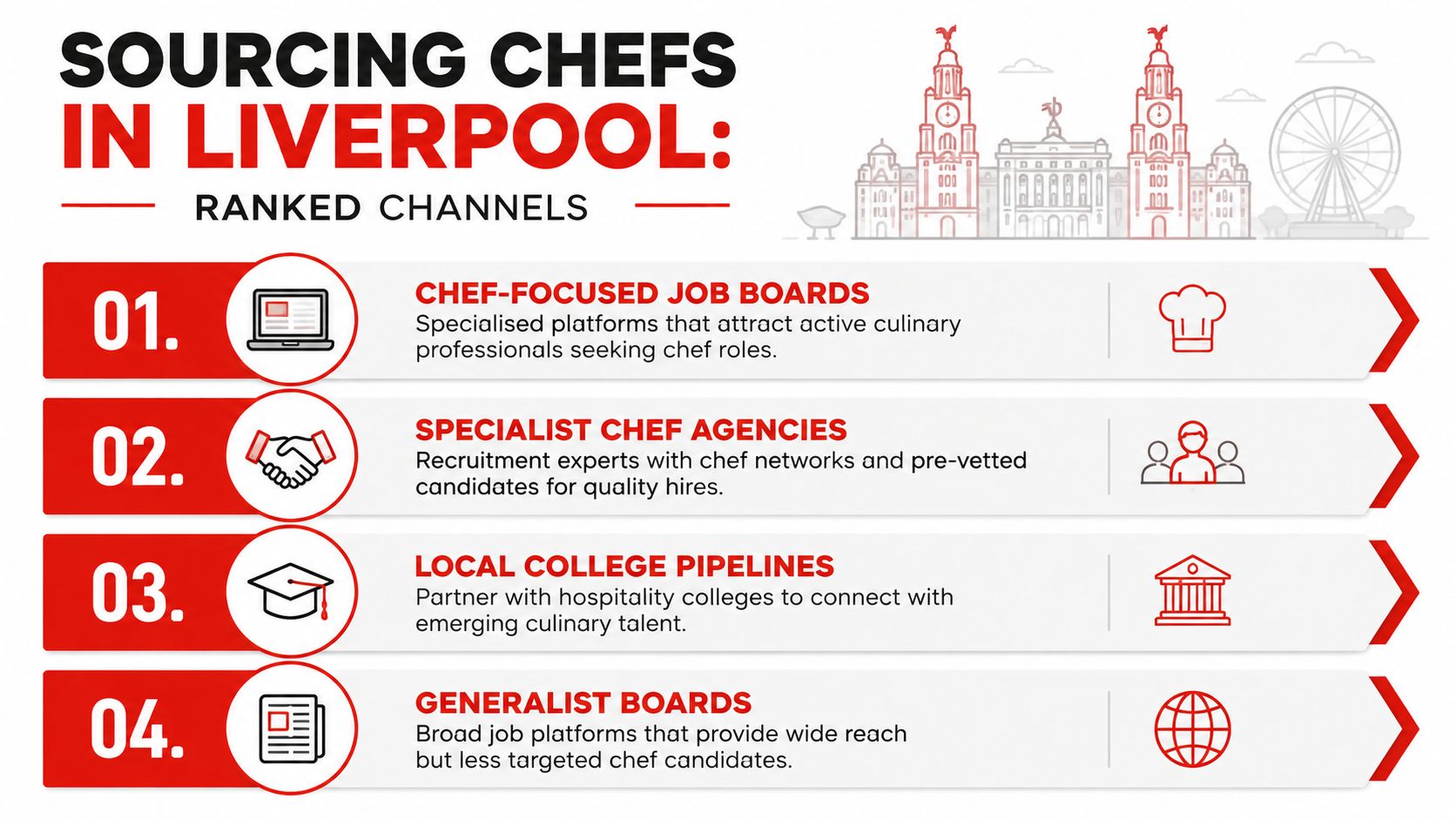
Start with the channels that move chefs, not the ones that make managers feel busy. For fast cover, specialist agencies and chef-focused networks beat generalist boards. For long-term hires, hospitality-specific job boards and referrals can still work, but only if the role is clear and the offer is credible.
Hospitality-specific boards are useful when you want applicants who already understand kitchen life. They're weaker when you need immediate cover, because the best candidates often aren't checking ads at the exact moment your rota breaks. Generalist boards bring volume, but much of that volume is noise, and noise slows down hiring.
The channels worth using
- Specialist chef agencies. Best for speed, screening, and short-notice cover. If a Liverpool venue needs vetted relief at short notice, this is the channel that protects service.
- Chef-focused job boards. Better for permanent hires and culture fits, especially if you can write a realistic advert and explain the shift pattern properly.
- Local college pipelines. Useful for entry routes and junior talent, but only if you're prepared to train and supervise, not just post and wait.
- Networks and community groups. Good for reaching people who aren't actively applying, including former chefs who may return for the right rota and the right operator.
- Word of mouth. Still powerful in Liverpool. The catch is simple, if your kitchen has a reputation for chaos, the network works against you.
For temporary cover, Relief Chefs UK is one option for venues that need a fast response and vetted chefs, and its Liverpool temp-work page sits here: temporary chef cover in Liverpool. That matters because the cost of a vacancy is not the advert, it's the lost covers and the strain on the rest of the brigade.
You should also widen the funnel. Liverpool hospitality can pull from transferable experience in care, retail, and cruise-line catering. Those candidates may not arrive with the same kitchen vocabulary, but they often bring pace, stamina, and guest-facing discipline.
Right-to-Work and Vetting Without the Headache
A Liverpool GM needs a Monday-morning checklist that clears people to work. Start with the legal basics, then add the kitchen checks that prevent avoidable grief later. If a candidate cannot clear the paperwork quickly, stop the process there. Do not let it drift for another week.
The minimum you should verify
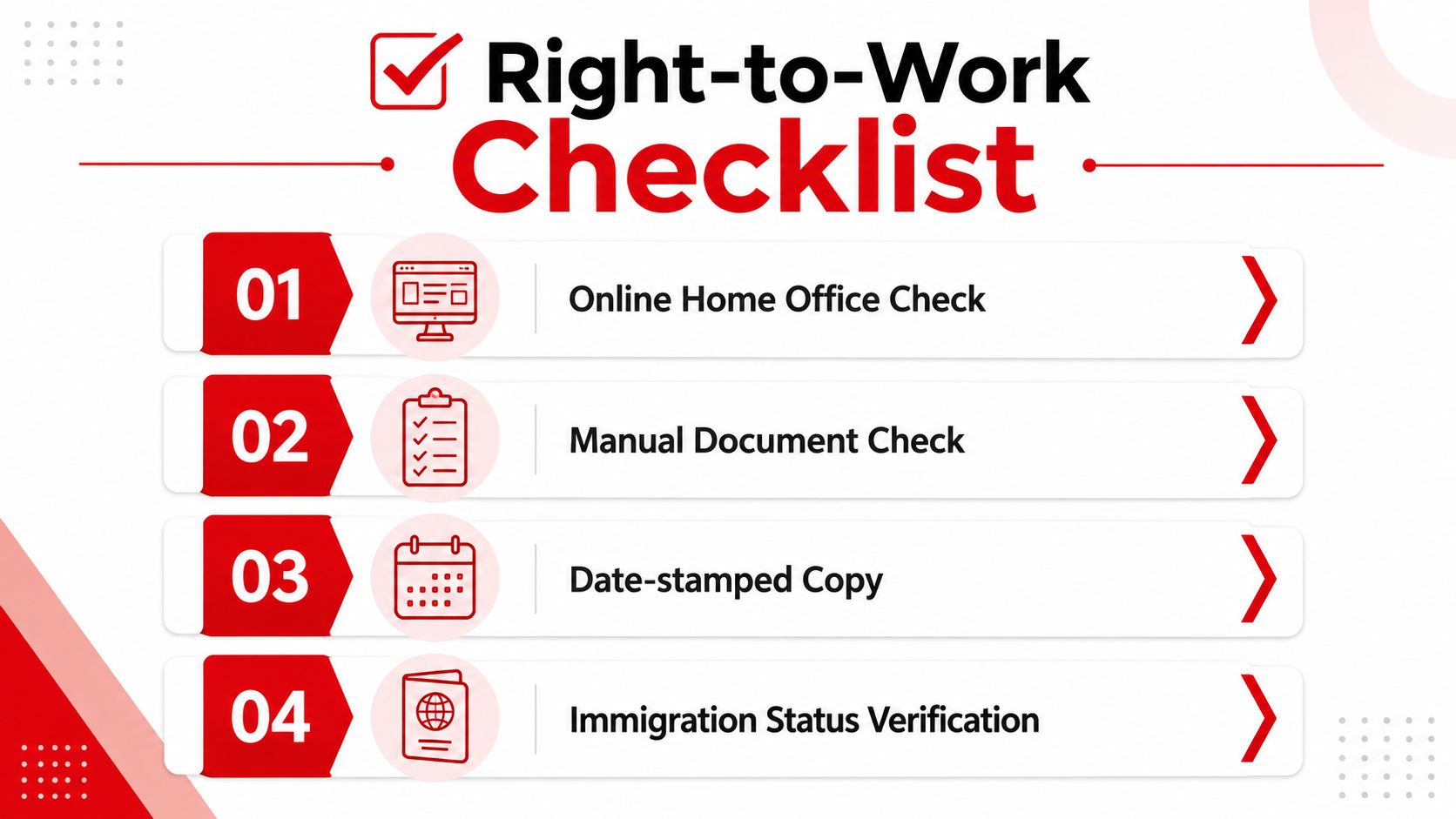
- Right-to-work evidence. Use the Home Office online check where it applies, or do a manual document check and keep date-stamped copies.
- Identity and immigration status. Match the documents to the person standing in front of you.
- National Insurance confirmation. Deal with it before payroll becomes a mess.
- References from the last two employers. Kitchen references matter because punctuality, section discipline, and team behaviour show up fast under pressure.
Then add the hospitality checks that tell you how someone will behave in service. Hygiene certificates show one part of the picture, allergen awareness shows another, and a trial shift shows whether they can hold their station when the tickets start flying. If the role involves guest care, private households, or sensitive access, DBS checks may also be relevant.
Practical rule: never trust a warm interview more than a clean reference trail and a shift that proves the candidate can hold their station.
Liverpool brings a few specific paperwork problems. Some candidates have limited UK employment history, some bring overseas references that take time to verify, and some can talk through an interview without showing they understand your service rhythm. That is why a staffing desk with proper screening removes admin from the GM's desk and speeds up a hire without cutting corners.
Use the right-to-work verification for hospitality employers process as your baseline. If you are filling shifts fast, vetting has to be built into the supply line before the phone starts ringing.
Pay and Shift Rates That Actually Make Sense
Liverpool operators often mix up permanent salary decisions with temporary cover pricing, and that's where bad hiring decisions start. Permanent pay is about retention, team structure, and predictability. Relief day rates are about protecting service when the rota breaks, not about replacing your whole labour model.
For permanent roles, the market generally expects a different band for each level of responsibility. A CDP needs to feel fair for the station they're carrying, a sous chef needs enough scope to lead the line and cover the head chef, and a head chef needs compensation that reflects planning, ordering, and pressure management. On the relief side, the rate has to cover immediate availability, short notice, and the cost of someone stepping into an unfamiliar kitchen and delivering anyway.
Liverpool chef pay benchmarks at a glance
| Role | Permanent annual | Relief day rate | Best used for |
|---|---|---|---|
| CDP | Mid-range salary for dependable section cover | Daily cover for sickness, holidays, and busy weekends | Stable section work and short-notice fill |
| Sous chef | Higher permanent salary for leadership and rota ownership | Higher day rate for experienced short-term cover | Running the line and protecting standards |
| Head chef | Upper permanent salary for full kitchen control | Premium relief rate for urgent management cover | Vacancies, crises, and peak-trading protection |
Use permanent hires when trade is predictable and the culture fit matters. Use relief when sickness hits, seasonal demand spikes, or you've got a major event such as Aintree, match traffic, or cruise turnaround pressure. The hidden cost of an empty pass is rarely just one missed shift, it's cancelled bookings, slower covers, and a permanent team that burns out trying to absorb the gap.
Agency fees look visible because they land on an invoice. The loss from leaving a shift uncovered is buried in the service you didn't sell.
Interview Questions That Predict Service
Chefs interview badly all the time. They rehearse technical talk, list past sections, and name menus they've worked on, then fall apart when you ask how they handle pressure, mistakes, or weak colleagues. If you want someone who can survive a Liverpool service, ask questions that force them to talk about behaviour, not just kitchen trivia.
Questions that actually tell you something
- How do you recover a slow station during a heavy Friday night? You want actions, not drama.
- What do you do when a dish is sent back because of an allergen mistake? This tests judgement, honesty, and urgency.
- How do you deal with a junior who is not pulling their weight? That shows whether they lead or complain.
- How would you cost and portion a new menu item on the fly? That tells you whether they understand numbers and service pressure.
- What did your last kitchen do badly? Watch for blame, because blame-heavy answers usually mean the candidate adds friction.
- Would your last head chef hire you again? That one cuts through polished answers fast.
A good interview sounds like a shift review, not a pub quiz. If a candidate can't explain how they think under pressure, they're unlikely to save your Saturday.
Use a simple Google Doc and score each answer against three things, service judgement, team behaviour, and practical reliability. That keeps the interview focused and stops managers hiring the loudest person in the room.

Onboarding and Keeping Good Chefs
Liverpool kitchens lose money when onboarding is sloppy. The new starter turns up, gets thrown onto a section, and spends the first week guessing how the place works. That's how good people leave before they've had time to settle.
The first 90 days matter most
The first 30 days should cover service rhythm, supplier ordering, the pace of the pass, and the kitchen politics that never make it into the handbook. Keep the trial shift honest, then follow it with written feedback so the candidate knows exactly what landed well and what didn't.
By 60 days, the chef should know where they fit and what good looks like in your operation. By 90 days, the review should recognise progress, not just criticise gaps. People stay longer when they feel coached rather than constantly judged.
The small retention moves matter more than operators admit. Predictable rotas help. Fair split of closes and lates helps. Listening when someone has a workable menu idea helps. Paying on time every time helps most of all.
Skills for Care's Liverpool summary shows the wider service economy is already carrying heavy churn and absence pressure, with 23.0% staff turnover and an average of 8.6 sickness days per worker in the last year Skills for Care Liverpool summary. Hospitality doesn't get a pass from those realities, it lives inside the same local labour market.
Keep the rota fair, keep the feedback plain, and keep the pay punctual. Kitchens remember all three.
Building a Reliable Cover Plan for Liverpool
The smartest Liverpool operators don't treat relief, permanent recruitment, and seasonal reinforcement as separate purchases. They build one staffing system. The core team carries standards, the relief bench absorbs sickness and holidays, and seasonal hires add depth when trading spikes.
That matters because the city doesn't behave like a flat market. It surges. If you wait until the crunch to find help, you're already trading on the edge. A better model is to keep a stable core, maintain a vetted cover list, and line up extra capacity before the rush lands.
A practical staffing sequence
Start with your permanent structure. Fill the roles that shape standards and keep your kitchen culture stable. Then add a relief layer for short notice, illness, and annual leave so one absence doesn't break service. After that, widen for peak periods and known event windows.
If you need a partner for the relief layer, Relief Chefs UK is a nationwide chef staffing agency established in 2013 that provides relief chefs, temporary chefs, permanent chef recruitment, yacht chefs, villa chefs, and broader hospitality staffing support. Its service continuity planning approach fits operators who need a dependable bench rather than a last-minute scramble.
The commercial logic is blunt. A good staffing desk should give you response speed, vetted right-to-work chefs, transparent pricing, and a replacement path if a placement fails. That's what turns staffing from panic buying into proper operational control.
If your Liverpool kitchen is bleeding hours, stop treating recruitment like an advert problem and start treating it like a cover system. Contact Relief Chefs UK, tighten the rota, and keep the pass staffed before service starts slipping.
If you need stable kitchen cover, permanent chef recruitment, or vetted temporary chefs for Liverpool and beyond, speak to Relief Chefs UK today. They handle relief, permanent, yacht, and villa staffing with a chef-led approach that keeps standards high, so visit Relief Chefs UK and get the right cover in place before the next gap turns into a missed service.
Call the team.
Office 01392 715474 · info@reliefchefs.co.uk