
Temporary Chefs Bristol: Top Talent, No Stress
19 April 2026

You’re halfway through the prep list, the fridge is full, bookings are strong, and then the message lands. Your sous is off sick. Your CDP can’t cover. Service starts in a few hours, and you’re trying to work out whether to trim the menu, pull someone from another site, or start phoning around Bristol in a panic.
That’s the point where most managers realise temporary chef cover isn’t a nice-to-have. It’s operational insurance.
In Bristol, that pressure is constant. There are currently 39 temporary chef jobs listed on Caterer.com, which tells you two things at once: demand for short-term kitchen cover is active, and you’re not the only venue competing for capable chefs in the city, according to temporary chef jobs in Bristol on Caterer.com.
Why Finding Temporary Chefs in Bristol Is a Strategic Priority
Bristol has the kind of hospitality mix that creates staffing pressure fast. Independent pubs need solid all-rounders. Restaurants need chefs who can slot into an existing brigade without slowing service. Boutique hotels need someone who can handle breakfast, prep, banqueting crossover, or a tight dinner service depending on the day.

The usual mistake is treating relief cover as a last-minute fix rather than a standing part of kitchen planning. That approach works right up until it doesn’t. One absence becomes two, prep slips, cleaning gets rushed, and your strongest chef spends service firefighting instead of leading.
What the real risk looks like
Understaffing rarely fails in one dramatic moment. It usually shows up in smaller operational damage:
- Standards drift first. Garnish gets simplified, sections get messy, and consistency drops.
- Your core team burns out. Good chefs will cover for a while, but they remember when they’re left carrying a kitchen.
- Managers start making expensive decisions. Overtime, reduced menus, cancelled covers, and comped tables all chip away at margin.
- Guest experience suffers. Delays from the kitchen turn into complaints at the pass and pressure on front of house.
Practical rule: If losing one chef puts service at risk, you don’t have a staffing issue. You have a continuity issue.
Bristol venues can’t rely on luck
A pub near the Harbourside might need quick cover for a busy run of evening services. A Clifton hotel may need someone polished enough to move from breakfast into prep and still present well in an open kitchen. A café operation may only need short bursts of support, but it still needs somebody who turns up ready to work.
That’s why temporary chefs in Bristol matter commercially. The right temp protects service, revenue, team morale, and reputation. The wrong one creates more work than the gap you were trying to fill.
Managers who handle this well usually do one thing differently. They build a repeatable process before the next staffing problem lands.
Defining Your Exact Chef Requirements Before You Search
Saying “I need a chef” is how you end up with the wrong chef.
The brief needs to be tight. If you’re vague, you’ll get vague matching, vague expectations, and a much higher chance of skill mismatch on shift. The fastest placements usually come from managers who know exactly what section needs support, what standard is required, and how long the cover is likely to run.
Start with the role, not the panic
Before you call anyone or post anywhere, write down the practical shape of the gap.
Ask yourself:
- What level do you need. Commis, Chef de Partie, Junior Sous, Sous, Head Chef cover.
- Which section is exposed. Grill, larder, pastry, breakfast, prep, banqueting, all-round pub kitchen support.
- What kind of food are they walking into. Gastropub, fine dining, volume events, hotel breakfast, premium casual, care setting.
- What shifts need filling. Lunch only, doubles, evenings, weekends, split shifts, rolling rota.
- How long is the gap. One shift, a weekend, holiday cover, a two-week bridge, open-ended support while recruiting.
- What must they know on day one. Allergens, fresh stock rotation, GP targets, menu specials, open kitchen etiquette.
A rushed brief creates avoidable friction. A clear one lets you match for competence, not hope.
Two Bristol examples that need different briefs
A boutique hotel in Clifton may need a chef who can work cleanly, communicate calmly, and cope with a mixed day that starts with breakfast and ends with plated dinner prep. That brief should mention guest-facing standards, pace changes through the day, and whether banqueting support is part of the shift.
A busy pub near the Harbourside needs something else. It may need a confident CDP who can handle volume, keep a section moving, and jump into a service built around roasts, grills, fryers, and tight turnarounds. That brief should say so plainly.
“The best temp bookings are specific enough that the chef knows what kind of pressure they’re walking into before they accept.”
Use a working brief you can send in minutes
A simple format works best:
| Requirement | What to note |
|---|---|
| Venue type | Pub, restaurant, boutique hotel, yacht, villa, café |
| Chef level | Commis, CDP, Sous, Head Chef |
| Menu style | Pub classics, fine dining, events, breakfast, volume service |
| Shift pattern | Dates, start times, finish times, breaks |
| Length of booking | Single shift, short run, ongoing temp cover |
| Site details | Parking, postcode, kit needed, uniform expectations |
| Non-negotiables | Allergen awareness, lone working, section ownership, pace |
If you also need long-term support beyond relief cover, note that early. Plenty of operators start with temporary chefs and then realise they also need permanent chef recruitment, wider hospitality staffing support, or specialist placements such as yacht chefs and villa chefs.
A sharp brief saves time at every stage. It also makes you look organised, which matters. Strong temp chefs prefer sites that know what they need.
Where to Find Reliable Temporary Chefs in Bristol
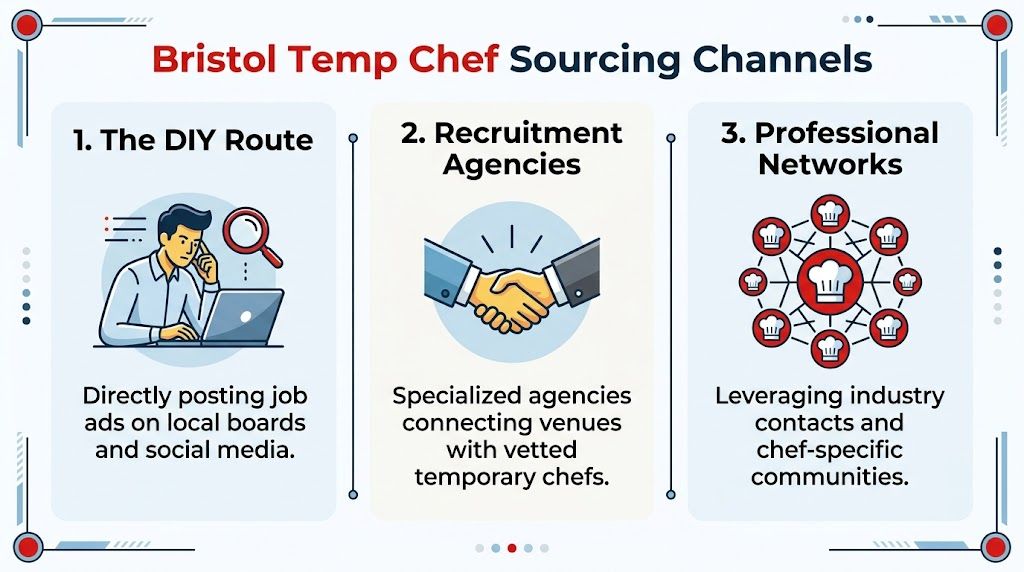
You’ve got three main routes. None of them is perfect for every situation. The right choice depends on urgency, complexity, and how much risk you’re willing to carry yourself.
Bristol’s market already leans towards agencies with local knowledge and wider reach. That matters because kitchen cover often needs to happen fast, and local hospitality operators don’t have time to educate a recruiter on the difference between a prep-heavy pub shift and a strong hotel breakfast chef. That point is reflected in Relief Chefs UK’s overview of agencies for temporary work, which notes Bristol agencies with local expertise and national reach.
The DIY route
This means job boards, local Facebook groups, Instagram stories, WhatsApp groups, or messages to ex-staff and industry contacts.
It can work when:
- You’ve got time. Not hours. Actual breathing room.
- The role is straightforward. Basic prep support or lower-risk shifts.
- You already know the candidate pool. Former staff, trusted freelancers, chefs who’ve worked with you before.
It tends to fail when the need is urgent. You still have to sift replies, check documents, test reliability, and determine if the chef is capable of handling your section.
DIY also puts all the risk on your side. If the chef is late, underqualified, or disappears, that’s your problem at 5pm.
Generalist recruitment agencies
Generalist recruiters can be useful when you’re hiring across multiple departments and want one supplier. They may also have decent admin processes and broad databases.
But kitchens are specialist environments. A recruiter who mainly places front of house, warehouse, or admin temps may not understand the difference between a chef who can cook and a chef who can survive your service.
Common problems with generalists include:
| Channel | Strength | Weak spot |
|---|---|---|
| DIY sourcing | Cheap on paper, direct control | Slow vetting, inconsistent reliability |
| Generalist agency | Broad reach, centralised admin | Limited kitchen knowledge |
| Specialist chef agency | Faster matching, role-specific vetting | Best suited to operators who value fit over bargain hunting |
Specialist chef agencies
This is usually the strongest route when service is exposed and standards matter. A proper specialist already understands kitchen hierarchy, service rhythm, prep expectations, and how different sites run.
That’s especially useful for Bristol operators who may also need cover across nearby regions such as Devon, Dorset, Wales, Berkshire, Windsor, Reading, or Slough. A wider hospitality group needs consistency, not a different process every time a rota breaks.
A chef-specific agency should be able to tell you quickly:
- what level of chef is realistic for your brief
- whether your shift pattern is likely to attract the right person
- what gaps in your brief need fixing
- what operational risks they see before the shift starts
A recruiter who asks about your menu, section setup, allergens, and who leads service usually understands kitchens. One who only asks for dates and rates usually doesn’t.
If you’re assessing options in the city, the Bristol chef staffing overview gives a useful picture of how specialist support is positioned for local venues.
For serious operators, Temporary chefs Bristol isn’t just about filling a shift. It’s about reducing the chance of a bad hire turning one staffing issue into two.
How to Vet and Interview a Temp Chef Quickly
It’s 10:15, lunch prep is already behind, and your sous has just called in sick. You do not have time for a polished interview process. You need a quick decision that protects service, food safety, and margin.
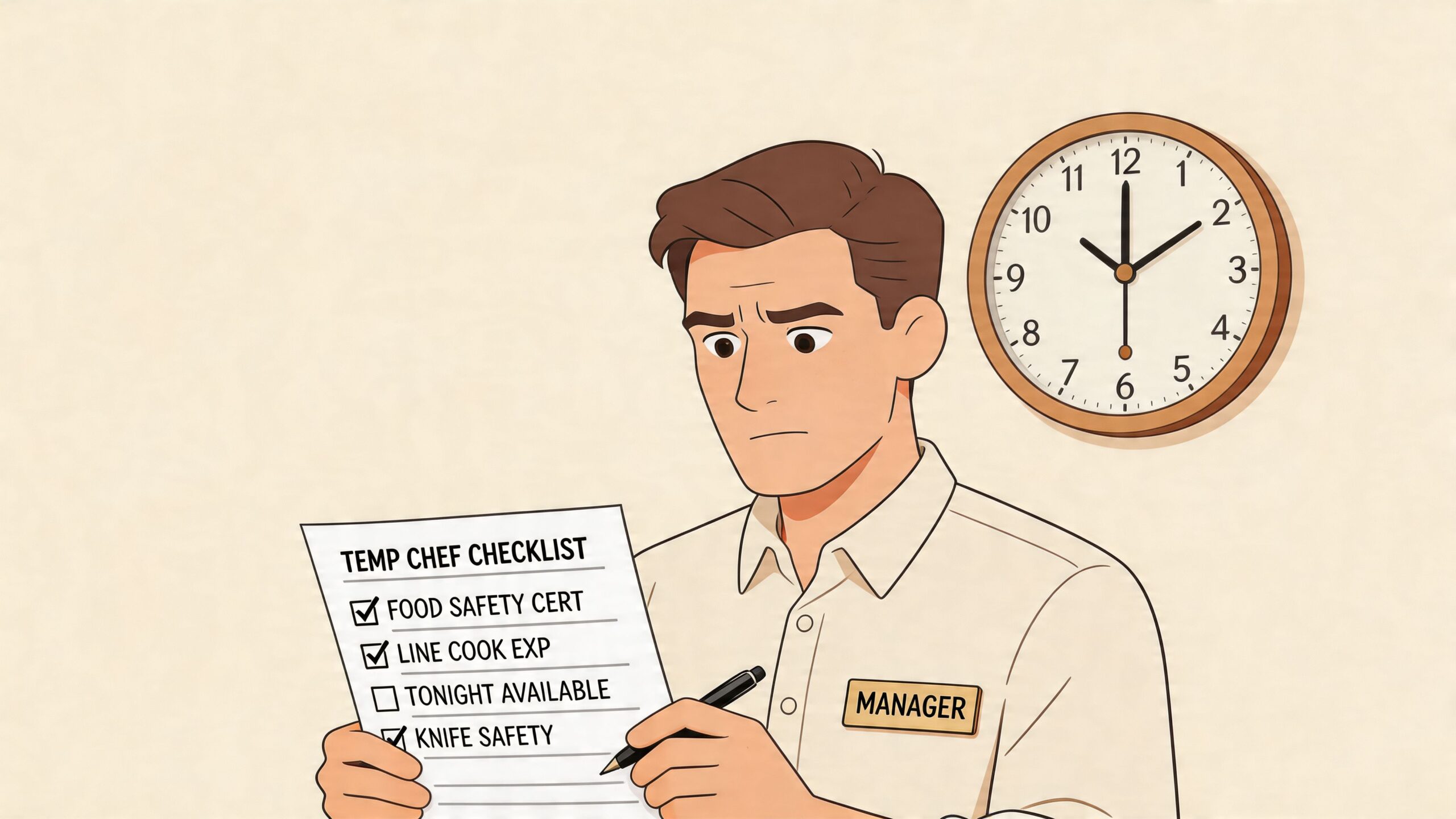
The fastest way to get there is to screen in three areas. Can they legally work? Can they run the section you need? Will they turn up ready to cook?
Check the basics first
Under pressure, managers often jump straight to “Can you do grill?” and miss the checks that create real risk later.
Confirm these points before you agree the shift:
- Right to work. Check the document before they start, not after service.
- Food hygiene training. Level 2 is the usual baseline. If your site needs more, say so at booking.
- Recent kitchen references. Relevant references from the last few roles matter more than old big-name venues.
- Section fit. Match them to the job you need covered. A solid prep chef is not automatically a safe service chef.
- Travel and timing. Ask where they are coming from, how they are getting in, and what time they will arrive on site.
If you are filling cover regularly, it helps to use a supplier that already understands chef-specific screening and compliance. This guide to hospitality recruitment support for kitchens and front of house is a useful starting point.
Run a five-minute chef interview that tells you something
A short call is enough if the questions are practical.
Ask what section they have been running in the last few weeks, not what they “can do.” Ask what volume they are used to, what menu style they know, and whether they have worked with fresh-food prep, breakfast pressure, banqueting, care, or branded systems. A capable temp answers with specifics. A weak one stays vague.
Use questions like these:
What section have you been responsible for most recently?
You need current service ability, not broad claims.What covers have you done in the last month?
This shows whether they are used to walking into new kitchens and getting up to speed fast.What menu style are you strongest on?
Pub food, hotel breakfast, events, volume casual dining, fine dining. The right answer depends on your operation.If you walk into a section that is behind, what do you sort first?
Strong chefs talk about mise en place, allergens, ticket pressure, and what can be recovered quickest.What do you need from me in the first ten minutes on site?
Good temps usually mention section brief, allergen controls, key equipment, and plating standard.Can you be on site by [time], in full kit, ready to start work?
Ask directly. Ambiguity creates no-shows.
This video gives a useful visual reminder of what fast but sensible checking should look like before a temp starts.
Vet for risk, not personality
Temp bookings fail for predictable reasons. The chef is over-claiming. The brief is unclear. Nobody checks the practical details.
Watch for these warning signs:
| Warning sign | What it usually means in practice |
|---|---|
| Vague answers about recent work | They may be stretching their current level |
| Resistance to sending documents | Compliance problem, or disorganisation you will inherit |
| No clear plan for getting to site | Higher chance of a late arrival or missed shift |
| “I can do anything” | Often means no real depth in the section you need |
| No questions about menu, allergens, or setup | They are not preparing properly for your kitchen |
I always trust specific answers over confident ones. A chef who says, “I’ve been on garnish in a 120-cover fresh-food pub, I’ll need a quick allergen brief and plating check,” is usually a safer bet than the one who says, “Don’t worry, chef, I’ve done everything.”
Use the right level of vetting for the level of risk
A short-notice KP prep shift does not need the same process as putting a temp sous on pass for a busy Saturday night. Good operators scale the check to the shift.
For lower-risk cover, a document check, a reference, and a sharp phone screen may be enough. For section-leading roles, ask for recent venue names, clarify who they reported to, and test how they handle stock, allergens, and pressure. If the booking involves lone responsibility, events, or premium standards, paying a bit more for an agency that has already done those checks is often cheaper than one bad service.
That is the commercial trade-off. Cheap cover can become expensive very quickly if it slows the pass, wastes product, or forces your senior team to rescue the shift.
Onboarding Your Temporary Chef for a Smooth Service
A good booking can still go wrong in the first hour if the handover is poor.
Most temp chefs don’t need hand-holding. They do need orientation. The faster you show them how your kitchen works, the quicker they start adding value instead of hunting for labels, trays, thermometers, and allergen folders.
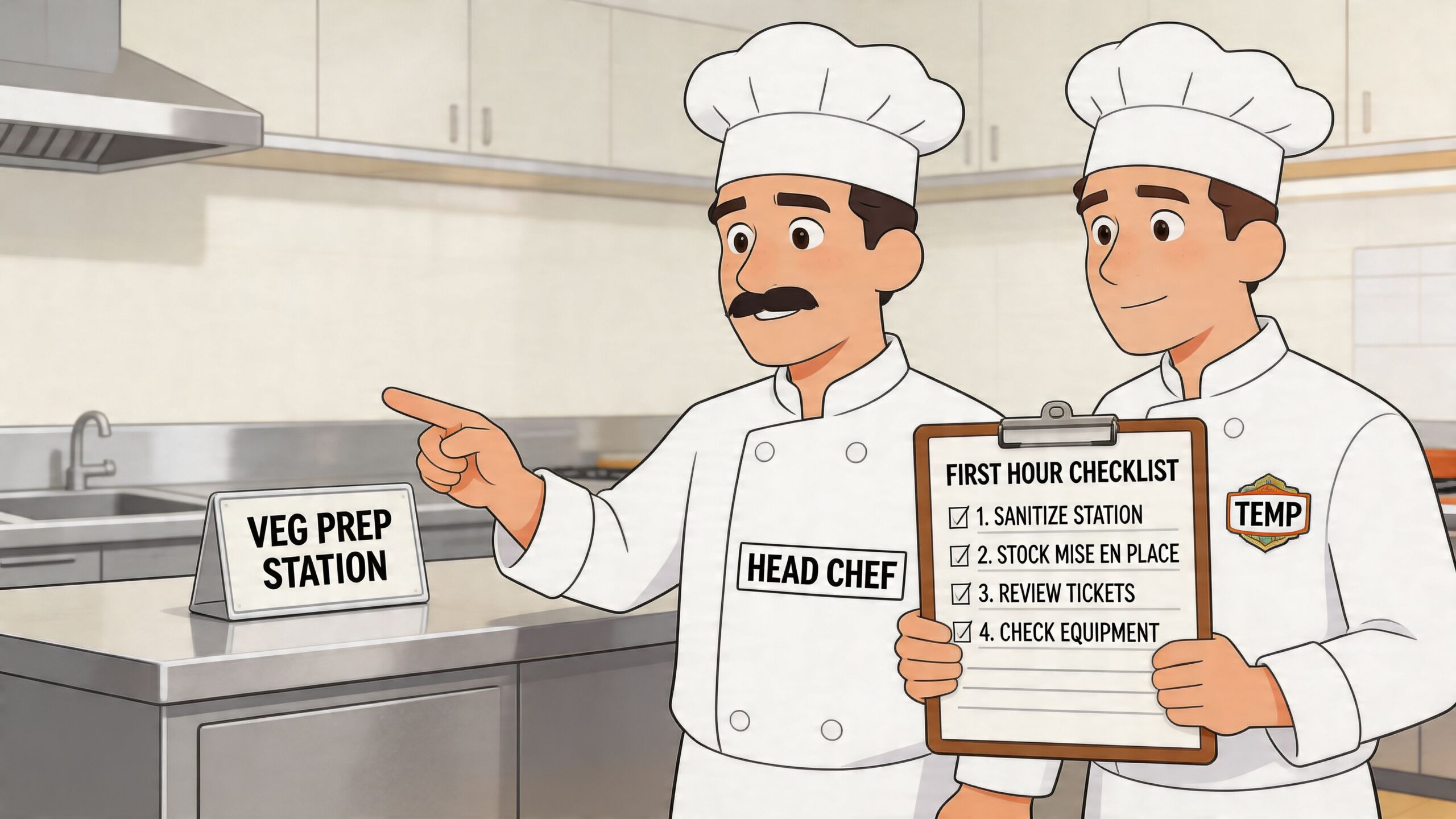
The first-hour checklist
A clean onboarding process should cover the essentials in a tight sequence.
- Walk the kitchen fast. Fridges, dry store, section layout, pass, wash-up flow, bins, fire exits.
- Show the paperwork. HACCP routines, allergen file, cleaning schedule, temperature logs if they touch them.
- Clarify the menu. Best sellers, specials, allergens, anything likely to catch them out.
- Assign one point of contact. Usually head chef, sous, or senior CDP.
- Set the shift expectation. Are they running a section, supporting prep, covering a break-heavy service, or bridging a staffing gap?
- Explain service style. Ticket flow, calling, plating standards, what gets escalated.
A temp who knows where things are and who to ask will settle much faster.
The legal and payment side
In this context, some operators create unnecessary risk.
If you use an agency chef, the admin is usually more straightforward because the agency handles the employment side, checks, and insurance arrangements. If you hire a freelancer directly, you need to be much clearer on documentation, status, payment terms, and who is responsible for what.
That doesn’t mean direct is always wrong. It means direct requires discipline.
The cheaper booking on paper can become the expensive one if you spend service managing avoidable admin and operational confusion.
What helps a temp succeed on shift
A few small decisions make a big difference:
- Put prep priorities in writing, even if it’s just a quick list.
- Flag any house quirks early, such as where finished dishes sit, how allergens are called, or what absolutely must not be changed.
- Introduce the temp properly to front of house if the kitchen and floor work closely together.
- Don’t leave them guessing on break policy, finish times, or who signs them out.
For hotels, private households, villas, and yachts, this matters even more because standards often rely on discretion and presentation as much as cooking. A chef may be technically good and still need a sharper briefing if the environment is premium or guest-facing.
The Ultimate Solution for Last-Minute Chef Cover
Last-minute cover fails for the same reasons again and again. The brief is vague. The vetting is rushed. The chef isn’t the right fit. The paperwork is patchy. Then service lands, and your senior team spends the shift compensating for a booking that was meant to solve the problem.
That’s why operators with repeated staffing pressure usually stop treating emergency cover as a one-off task and start using a proper staffing partner.
The strongest specialist models solve the main pain points in one go:
- Urgency gets handled through rapid response and active chef databases.
- Reliability improves because chefs are screened for kitchen fit, not just availability.
- Compliance is checked before deployment, not guessed on arrival.
- Continuity improves because you can request people who suit your site, not just anyone free.
The wider market shows what good looks like. Leading chef agencies report a 99% fulfilment rate for relief chef requests, including last-minute emergencies, backed by vetted databases and rapid replacement processes, according to The Chef Tree’s chef hire page.
For operators who are done with reactive scrambling, a dedicated service such as 24/7 chef recruitment solutions from Relief Chefs UK makes more commercial sense than starting from zero every time someone calls in sick.
Relief Chefs UK has been established since 2013 and works nationwide across independent pubs, restaurants, boutique hotels, private households, yachts, and villas. The business is chef-led, not recruiter-led, which matters when you need somebody who understands what a kitchen needs at short notice. It also supports permanent chef recruitment and broader hospitality staffing support when a temporary fix turns into a longer-term hiring issue.
If you’re running sites in Bristol and also covering wider regions such as Wales or Berkshire, that kind of consistency is worth more than a cheap shift filled badly.
Frequently Asked Questions About Temporary Chefs in Bristol
| Question | Answer |
|---|---|
| How much do temporary chefs cost in Bristol? | Current listings indicate temporary chef positions in Bristol are around £18.50 per hour, according to temporary chef job listings in Bristol on Indeed. Actual charge rates and pay arrangements vary depending on chef level, shift pattern, urgency, and booking route. |
| How quickly can I get chef cover? | It depends on the sourcing route and how clear your brief is. Specialist agencies are usually faster than DIY sourcing because they already hold vetted chef pools. |
| What’s the difference between a relief chef and a temporary chef? | In practice, many operators use the terms interchangeably. Both usually refer to short-term kitchen cover for sickness, holidays, peak periods, events, or recruitment gaps. |
| Should I use freelance chefs or an agency? | Freelancers can work well if you already know and trust them. Agencies are usually safer when speed, vetting, compliance, and replacement support matter. |
| What level of temp chef should I book? | Book to the section risk, not the job title you wish you could afford. If service will fall apart without someone owning a section, book at that level or above. |
| Can temp chefs lead a kitchen? | Yes, if the chef has the right background and the brief is clear. But leadership cover needs stronger vetting than basic prep support. |
| Are temporary chefs worth the cost? | If they protect service, stop your permanent team burning out, and avoid lost trade, they usually are. Cheap cover that fails on shift costs more. |
Temporary chefs Bristol searches often come from stressed managers looking for a fast answer. The better answer is a repeatable process. Get the brief right, choose the right sourcing route, vet properly, and onboard well.
If you need dependable kitchen cover without the usual chasing, Relief Chefs UK can help. Established in 2013, chef-led, and trusted by venues across Bristol and the wider UK, the team supplies relief chefs, temporary chefs, permanent chef recruitment, yacht chefs, villa chefs, and broader hospitality staffing support. If you’ve got short notice sickness, seasonal pressure, or a longer-term hiring gap, contact Relief Chefs UK and get a practical response built around keeping your kitchen stable.
Call the team.
Office 01392 715474 · info@reliefchefs.co.uk