
A resignation rarely arrives at a convenient time. It lands before a bank holiday weekend, in the middle of wedding season, on the morning of a fully booked Sunday lunch, or just as your Head Chef has finally got the brigade settled.
In hospitality, a resignation notice period isn't just paperwork. It's a live operational risk. If the wrong chef leaves at the wrong moment, standards slip, prep gets rushed, suppliers start fielding confused calls, and the front of house team ends up apologising for a kitchen problem they can't fix.
That's why smart operators don't treat notice as an HR admin task. They treat it as part legal process, part handover exercise, and part emergency planning.
When a Key Chef Resigns A Notice Period Is Not a Plan
A common scenario goes like this. Your senior chef gives notice on Thursday. You've got a bank holiday ahead, covers are strong, rooms are full, and half your trade is built on repeat guests who know exactly what standard to expect.
On paper, you've got time. In reality, you've got a countdown.
If that chef is central to ordering, menu execution, allergen control, prep organisation, and team discipline, their resignation notice period doesn't protect your service on its own. It only tells you when the employment is due to end. It doesn't guarantee focus, goodwill, or kitchen stability between now and then.
In Devon, Dorset, Berkshire, Bristol, Wales, Windsor, Reading, and Slough, operators run into the same problem in different forms. A hotel loses a Sous Chef before a busy events run. A pub near the coast loses its Head Chef just as seasonal trade picks up. A private household chef resigns before guests arrive. A restaurant already carrying a vacancy suddenly has another gap.
A notice period gives you a date. It doesn't give you cover, calm, or continuity.
That distinction matters. Plenty of businesses look at the resignation, file the letter, and assume they've got breathing room. Then the notice gets spent on awkward shifts, poor communication, rising tension, sickness, or an early exit by agreement. By the time they react properly, the rota is already broken.
What operators get wrong
The biggest mistake is waiting to see what happens.
The second is assuming recruitment and contingency are the same thing. They aren't. Replacing a permanent chef and protecting this weekend's service are two separate jobs. You need both addressed quickly, but not with the same timeline or the same plan.
What works in the real world
The operators who handle resignations best do three things immediately:
- Confirm the genuine risk: They assess what that person maintains, not just their job title.
- Protect the next service: They look at the next rota pressure point first, not the eventual leaving date.
- Start handover early: They pull recipes, supplier details, prep systems, ordering patterns, and key responsibilities out of one person's head before problems start.
That's the difference between a managed exit and a kitchen crisis.
Statutory vs Contractual Notice The Legal Reality
Managers get caught out here because they treat notice periods as a formality. In hospitality, they shape how much time you have to protect service, stock control, ordering, prep standards, and team stability after a resignation lands.
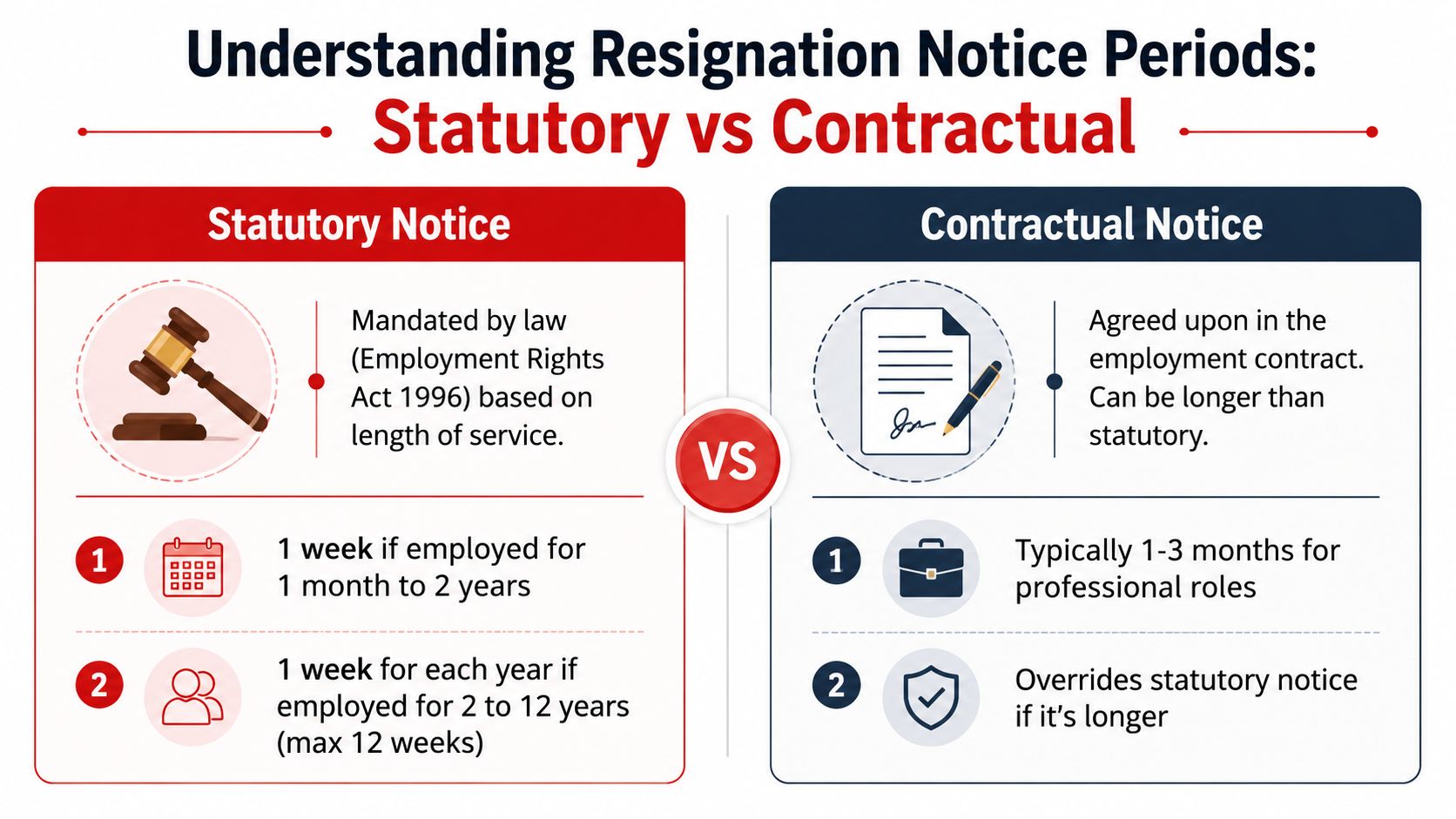
Statutory notice is the legal minimum. Contractual notice is the term you set in the employment contract, and it is usually the one that determines whether you have a workable handover or a rushed, expensive scramble.
According to ACAS guidance on notice when resigning, an employee in the UK who has worked for at least 1 month must give at least 1 week's notice. If they have worked for less than 1 month and the written terms do not set out a notice period, they may not need to give notice at all.
For a kitchen business, that legal floor is rarely enough.
Statutory notice is the minimum position
The Employment Rights Act 1996 sets the baseline. This overview of UK notice periods summarises the broad position. After one month of service, the minimum notice starts at one week and increases with length of service.
That matters for compliance. It does very little to solve an operational problem.
A one-week notice period may be manageable for a junior role in a well-staffed brigade. It is a weak safety net for a Sous Chef running prep, a Head Chef managing GP and supplier relationships, or a private chef role where routines sit almost entirely with one person.
Contractual notice is where you protect the operation
A contract can require more notice than the statutory minimum, and many hospitality businesses should use that option. The point is simple. If a role would take time to replace, train, or hand over properly, the contract should reflect that reality.
I have seen operators rely on generic contracts that give senior kitchen staff very little notice. The result is predictable. Service gets thinner, pressure lands on the remaining team, standards slip, and management ends up paying for emergency cover while also trying to recruit permanently.
Longer contractual notice does not guarantee a smooth exit. People go off sick, relationships break down, and some leavers disengage the moment they hand in notice. But a better contract improves your odds and gives you more room to secure recipes, ordering patterns, allergen controls, supplier contacts, and rota knowledge before the person disappears.
Practical rule: If losing the person would put service, revenue, or guest experience at risk, the contract should give you enough time to respond properly.
Why the distinction matters commercially
A weak notice clause creates two separate costs. First, you lose time. Second, you lose options.
Short notice reduces your chance of recruiting well, arranging a proper handover, or spreading pressure across the team in a controlled way. That is why contract reviews should sit alongside workforce planning, not in a forgotten HR folder. If you are reviewing terms, it helps to understand the full cost of employing kitchen staff, because the cost of poor notice provisions usually shows up in cancelled covers, inconsistent service, overtime, and avoidable management time.
Use contracts that match the role, the risk, and the replacement difficulty. Generic wording is cheap until someone leaves.
Hospitality Notice Periods What is Fair and Practical
Fair notice periods in hospitality depend on one thing above all else. How much damage does it cause if that person leaves with very little runway?
A kitchen porter, Commis Chef, Senior Sous Chef, Head Chef, and private household chef don't create the same exposure. Treating them the same in contract terms is lazy and usually expensive later.
Match the notice to the role
The legal floor is simple. As already noted earlier, UK law requires at least notice after the first month of employment, but the contract can require more. In hospitality, it usually should, because practical replacement times vary hugely by seniority, location, and specialism.
A busy Bristol restaurant can often absorb a junior vacancy faster than a boutique hotel in Windsor can absorb the loss of a Head Chef. A yacht chef or villa chef placement may need even tighter contractual protection because handover, discretion, and guest expectations are harder to substitute at short notice.
Here's a practical benchmark.
| Role | Recommended Notice Period |
|---|---|
| Casual or very junior back of house support | 1 week to 2 weeks |
| Commis Chef | 2 weeks to 4 weeks |
| Chef de Partie | 2 weeks to 1 month |
| Sous Chef | 1 month to 3 months |
| Head Chef | 3 months |
| Executive Chef or highly specialised senior role | 3 months to 6 months |
| Private household, yacht chef, or villa chef with trusted access and bespoke routines | 1 month to 3 months, sometimes longer for senior appointments |
These aren't legal rules. They're practical benchmarks based on risk, recruitment difficulty, and handover needs.
What fair looks like in practice
A notice period has to be defendable in real terms. If you put a Commis Chef on an overly heavy term that bears no relation to the role, you create friction without much benefit. If you put a Head Chef on a weak term, you leave the business exposed exactly where it can least afford it.
Good notice periods usually reflect:
- Operational dependency: Who controls ordering, rotas, allergen systems, menu specs, and supplier relationships?
- Recruitment difficulty: How hard is it to replace this role in your local market?
- Commercial timing: Would a departure hit peak season, event trade, wedding bookings, or holiday service?
- Knowledge concentration: Is too much sitting with one person?
In a well-run business, the notice period should feel reasonable to the employee and useful to the operator.
What doesn't work
Two things repeatedly fail.
First, copying contracts from another site with no thought for your own operation. A country hotel in Dorset, a gastro pub in Devon, and a central Reading branded outlet don't face the same staffing pressures.
Second, relying on “professional courtesy” instead of clean terms in writing. Courtesy helps. Contracts protect.
If you haven't reviewed your kitchen contracts in a while, start with the roles that would hurt most if they left tomorrow. That's where significant exposure sits.
The Moment a Resignation Lands Your Action Plan
The first few hours matter. Businesses either regain control or let the situation drift.
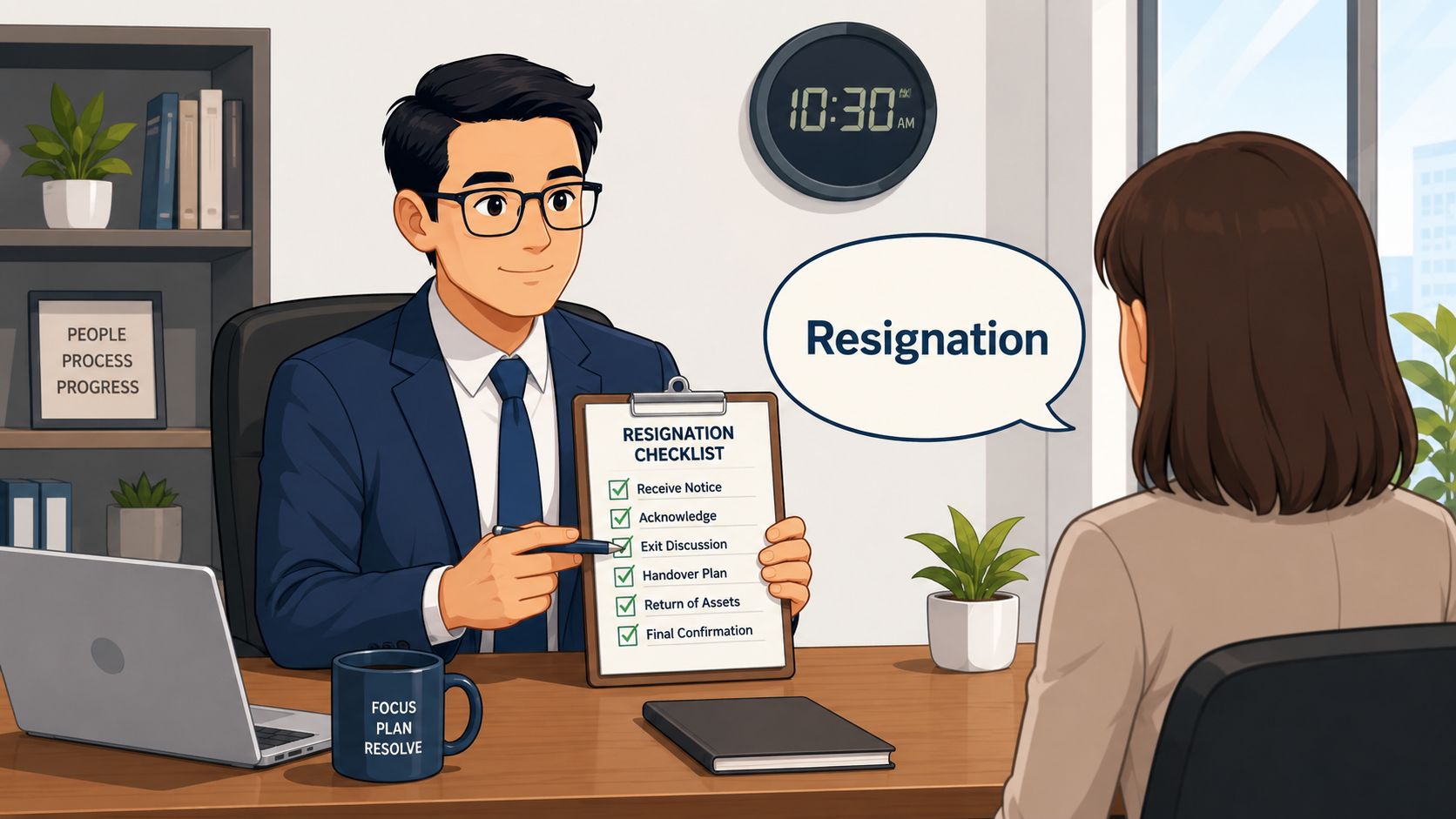
When the resignation comes in, don't jump straight to emotion, blame, or promises. Start with paperwork and risk.
Step one is to lock down the facts
Get the resignation in writing if it isn't already. Then confirm receipt in writing and state the proposed last working day based on the contract.
After that, check the contract itself. Don't rely on memory. Look at notice clauses, holiday entitlement, any garden leave wording, any payment in lieu of notice clause, and any restrictions around handover or confidential information.
Step two is to assess the service impact
The approach in hospitality diverges from general office advice. You need to know whether the resignation creates a real threat to upcoming service.
Ask practical questions:
- Which shifts are now vulnerable
- Who covers ordering if this person disengages
- What prep systems or recipes live only with them
- Are there booked events, functions, weddings, or peak trade dates inside the notice window
- Will this unsettle the rest of the team
Write the answers down. Gut feeling isn't enough.
Step three is to structure the handover
A proper handover for a chef isn't just keys and uniforms. It includes supplier contacts, ordering days, par levels, prep sheets, cleaning routines, allergen records, stock habits, menu specs, equipment quirks, and team knowledge.
Use a written handover list. If it's verbal, it gets lost.
Later in the process, this video is worth watching with a manager's eye on process and clarity:
When you may not want them to work the full notice
Often, managers hesitate. In some situations, you don't want the employee to remain in the kitchen for the whole notice period.
According to guidance on declining an employee's full resignation notice period, employers may use garden leave or payment in lieu of notice (PILON) if the contract allows. That can be the right call where there's a breakdown in trust, a risk to team stability, or sensitive business information involved.
If the person staying creates more disruption than the person leaving, review your contractual options immediately.
That decision should be calm, documented, and based on contract terms. Not frustration in the heat of service.
When Notice Periods Fail The Case for Emergency Cover
Friday lunch is booked solid. The head chef has resigned, the sous is on holiday, and the person serving notice has already stopped leading the pass. On paper, you still have cover. In service terms, you do not.
That is the gap too many operators miss. A notice period is a legal framework. It is not a staffing solution, and it does not protect tonight's standards, pace, or spend.
Public guidance on resignation usually focuses on etiquette and timelines. Hospitality operators have a different problem. Service still has to go out, wage costs still need controlling, and guests will not care that the kitchen is short. As noted in this UK jobseeker guidance that leaves an operational gap for employers, employer-side disruption is often treated as an afterthought. In pubs, restaurants, hotels, and event kitchens, it is the main event.
A notice clause is not kitchen cover
I have seen plenty of managers relax the moment they spot a four-week notice clause in the contract. That confidence disappears fast if the chef checks out, goes off sick, or starts creating friction in the brigade.
Contractual notice gives you a position. It does not give you performance, leadership, or stability.
The operational risk sits in the space between what the contract says and what the rota can survive. If the departing chef controls ordering, prep standards, menu knowledge, or section discipline, you have a live vulnerability the moment that resignation lands.
The practical trade-off
Every resignation forces a choice. Pay for cover now, or pay for disruption across the week.
Under-staffing rarely shows up as one neat cost line. It leaks into slower tickets, weaker consistency, extra management hours, waste, staff fatigue, guest complaints, and lost repeat trade. A business can save money on temporary cover and still lose far more through reduced capacity and damaged standards.
Emergency cover costs money upfront. Running short costs money in quieter, harder-to-recover ways.
Good operators plan for that trade-off early. They do not wait for the weekend to prove the point.
What sensible contingency looks like
Emergency cover works best when it is treated as service protection, not a desperate booking exercise. The immediate priority is to protect the shifts that matter most commercially, then reduce avoidable complexity until the kitchen is stable again.
A workable contingency plan usually includes:
- Service triage: Protect the most exposed shifts first, usually peak trading periods, events, and bookings with high spend per head
- Menu control: Trim dishes that rely on scarce skills, fiddly prep, or one person's knowledge
- Short-term chef cover: Bring in relief support with a clear brief, section assignment, and reporting line
- Recruitment on a separate track: Fill the long-term vacancy without asking emergency labour to solve it
- Clear operating notes: Keep service standards, ordering, and prep expectations written down so cover staff can work cleanly from day one
For operators who do not use temporary labour often, the weak point is usually briefing. Poor agency use creates more noise, not more control. This guide on working with temp agencies in hospitality explains how to brief properly, set standards, and avoid paying for the wrong fit.
What works under pressure
Strong temporary chefs do more than occupy a section. They steady the kitchen. They read the setup quickly, spot where the pressure is building, communicate well with the team, and keep output consistent enough for the business to trade properly.
Panic booking causes the opposite. If you bring in the cheapest available chef with no menu context, no handover notes, and no clear chain of command, you create a second problem while trying to solve the first.
The operators who handle resignations well separate the legal process from the operational response. Notice is one track. Cover is another. If you blur them together, service pays for it.
Your Resignation Response Checklist and Final Action
Most resignation problems don't come from the letter itself. They come from delay, vague communication, and a weak handover.
A strong response is simple, fast, and documented.
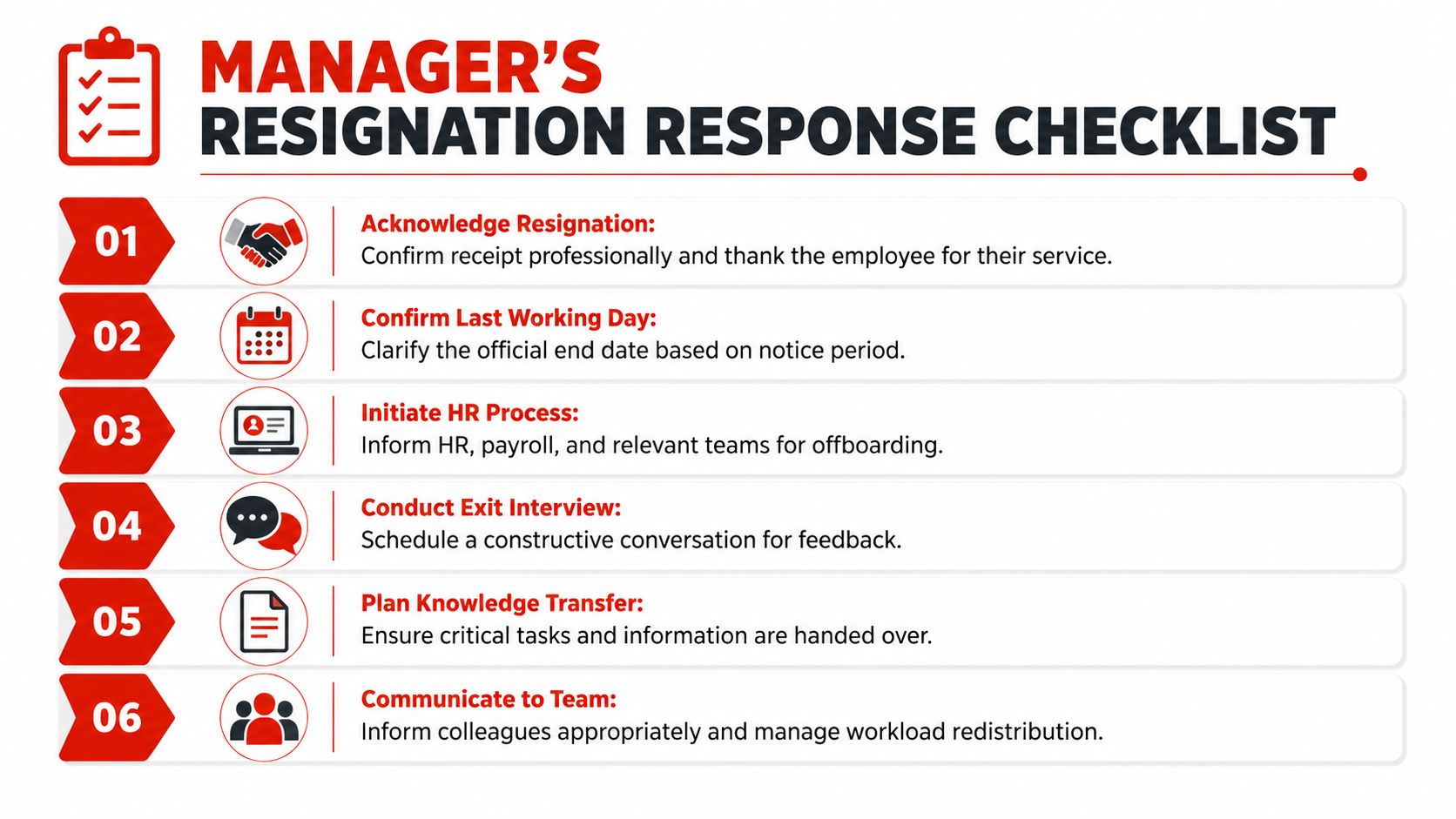
The checklist that keeps control in your hands
- Confirm receipt quickly: Acknowledge the resignation in writing and confirm the likely leaving date.
- Read the contract properly: Check notice, holiday, handover duties, garden leave wording, and PILON clauses.
- Assess service risk immediately: Look at the rota, bookings, key dates, and who else may be affected.
- Pull knowledge out fast: Recipes, ordering patterns, supplier contacts, opening and closing routines, and section standards all need documenting.
- Decide whether they should work the notice: If staying creates disruption, get advice and act within the contract.
- Separate cover from recruitment: Protect service now, recruit for the longer term after that.
A handover only works if it's recorded in a way another chef can use under pressure. If your business needs a better template for that process, this guide on handover documentation for hospitality teams is worth putting into your manager toolkit.
Hope isn't a staffing strategy. A resignation notice period helps, but only when the business responds like an operator, not a passenger.
Frequently Asked Questions About Notice Periods
What is garden leave
Garden leave means the employee is still employed and paid during notice, but they do not come into work.
It is usually used where trust has gone, where the employee is joining a competitor, or where keeping them on shift would unsettle the brigade. In a hospitality business, that decision is not just about HR etiquette. It is about protecting service standards, supplier relationships, team morale, and confidential information such as margins, menus, and operating routines.
Use it only if the contract allows it, and confirm it in writing.
What is PILON
Payment in lieu of notice, usually shortened to PILON, means the employee leaves without working some or all of their notice and is paid for that period instead, if the contract gives you that option.
This can be the right call when a clean exit costs less than weeks of tension, poor attitude, or disruption on the pass. I have seen kitchens limp through a notice period with everyone waiting for the last shift to end. That usually costs more than management expects. Standards slip, the team gets distracted, and guests notice.
Check the contract first, then handle it formally through payroll and written confirmation.
What if an employee refuses to work their contractual notice
You cannot force someone to turn up and cook.
Treat it as an operational failure point first. Rework the rota, secure cover, protect the busiest services, and lock down any knowledge or duties that will disappear with them. After that, confirm the contract position in writing and get advice on final pay, deductions where lawful, and any further action available to you.
Arguing with an absent chef does not save Saturday night service.
Is a verbal resignation legally binding
A verbal resignation can count, but it creates room for dispute over what was said, when it was said, and whether the employee meant it.
That matters in hospitality because resignations often happen in the heat of service, after conflict, or at the end of a bad shift. Do not leave that to memory. Write to the employee straight away, record what was said, ask for written confirmation, and state the proposed last working day. Clear paperwork prevents a bad shift turning into a longer contract argument.
Are longer notice periods becoming more common
In many roles, yes. Employers are using longer notice periods to buy time for recruitment, handover, and continuity.
That does not mean every hospitality role needs three months. A junior front of house role and a Head Chef running GP, supplier buying, menu control, and training do not carry the same level of risk. Fair notice periods reflect how hard the role is to replace and how much commercial damage a sudden exit can cause.
The practical test is simple. If this person resigned tomorrow, how many services, how much revenue, and how much team stability would be at risk before replacement cover is in place?
If your kitchen can't afford disruption, don't wait for the next resignation, sickness issue, or walkout to expose the gap. Relief Chefs UK has supported hospitality businesses nationwide since 2013 with relief chefs, temporary chefs, permanent chef recruitment, yacht chefs, villa chefs, and wider hospitality staffing support. If you run a pub, hotel, restaurant, private household, or multi-site operation and need dependable cover or a stronger long-term staffing plan, contact Relief Chefs UK now.