

You've got a screen full of London sommelier listings, a decent CV, and still the same problem, the market feels noisy. That's because sommelier London jobs aren't a neat little niche, they're a live hospitality hiring pool where luxury hotels, fine-dining rooms, private members' clubs, and sharp independents all fight for the same people. If you want to win in that market, you need to think like a recruiter and a head sommelier, not like a hopeful candidate refreshing job boards.
What the London Sommelier Market Looks Like
London is a concentrated hiring centre for wine service. Caterer lists 44 sommelier jobs within 5 miles of London and reports an average London salary of £30,749 per year, while Totaljobs places the average at £30,750 and Jooble's London estimate is £36,540 Caterer's London sommelier job listings and salary snapshot. That spread tells you two things straight away. The market is active, and the pay picture is uneven enough that you need a proper benchmark before you apply.

Where the strongest demand sits
The strongest demand sits in luxury hotels, fine dining, private members' clubs, and boutique independents. Employers in those venues pay for wine knowledge, polished guest handling, cellar discipline, and the confidence to recommend without hesitation. Broad restaurant listings often look easier on paper, but they usually value a general floor presence more than a trained sommelier.
Practical rule: target venues where wine is part of the experience, not an afterthought. That is where your credential and floor presence matter most.
London also behaves differently from the wider UK market. Jooble's comparison says London pay sits 8% above the UK average salary of £33,967, with a London range from £27,652 to £48,823 London sommelier salary comparison and range. That matters because the capital is not one pay band, it is several. Some roles sit in the £26,999 to £37,499 zone, while others are already in the £42,000 to £50,000 bracket. If you do not know which tier you are aiming at, you will either undersell yourself or waste time on roles you cannot realistically land.
Pay Bands and How to Benchmark Yourself
London sommelier pay is shaped by venue type, not just experience on paper. The lower and mid-market bands tend to sit around the entry-to-mid level restaurant and hotel roles, while premium properties push harder when they need someone who can handle service, cellar control, and sales under pressure. A single salary figure is useless here. You need to work from the band, then match your background to the band.
Use the market, not your hopes
The cleanest published comparison in the data is Jooble's London range of £27,652 to £48,823, with London pay sitting 8% above the UK average salary of £33,967 salary range and comparison. Read that properly. If you're coming from a solid restaurant floor, you're not automatically in the top tier. If you've done luxury hotel service, cellar administration, and guest-facing wine sales, you've got a better case for the upper end.
| Source | Average London Salary | Indicative Range |
|---|---|---|
| Caterer | £30,749 | £26,999 to £37,499 |
| Totaljobs | £30,750 | not stated in the verified data |
| Jooble | £36,540 | £27,652 to £48,823 |
The right move is to state your expectation clearly and justify it with venue type, service level, and wine responsibility. If you're applying to a hotel that expects stock control, tastings, team training, and guest sales, say so. If your background is mostly service floor with lighter wine exposure, aim lower and build into the next band through the job itself.
Direct advice: don't price yourself on title alone. Price yourself on the level of service pressure, cellar responsibility, and commercial value you can actually deliver.
Relief shifts can help top up base pay, but only if the core role is right. London operators want consistency, not a glamorous CV that falls apart during dinner rush.
Building a Sommelier CV That Wins Interviews
A winning CV for this market needs two layers. The first is a solid hospitality CV that proves you can work in a live dining room without drama. The second is the wine layer, where you show the employer that you can sell, train, and manage stock, not just talk about Burgundy. Keep both visible. If one is missing, the CV feels thin.
Lead with operations, then prove the wine knowledge
Multiple London roles list WSET Level 2 or Level 3 as a preferred or strong-plus qualification, alongside prior restaurant, luxury-hotel, or private members' club experience London sommelier job qualification patterns. That tells you what hiring managers are filtering for. They want evidence that you've done the work and can survive the pace. Don't bury those details halfway down the page.
Use bullet points that show actual contribution, not just duties.
- Wine list work: rewrote a by-the-glass section to improve guest uptake, or supported a list refresh for a seasonal menu.
- Cellar control: completed stock counts, rotated stock, or tightened breakage and waste control.
- Guest impact: recommended pairings for tasting menus, handled table-side sales, or recovered a hesitant guest with a confident suggestion.
- Team support: ran pre-service tastings, trained section staff on key wines, or briefed the floor on featured producers.
Leave out vague fluff like “passionate about wine” unless it's backed by action. If you've come from bar, floor, or private events, say it plainly and frame the transfer. A bar background gives you service pace and guest read. A floor background gives you rhythm, polish, and pressure handling. That's what employers care about.
Best practice: tailor the top third of the CV for each venue. One version should speak hotel, another should speak restaurant, but both need the same hard evidence.
Agency work and gaps are fine if you explain them cleanly. London hiring managers are used to seeing mixed backgrounds. What they won't forgive is a CV that hides the actual level.
Where to Find Live Sommelier Vacancies in London
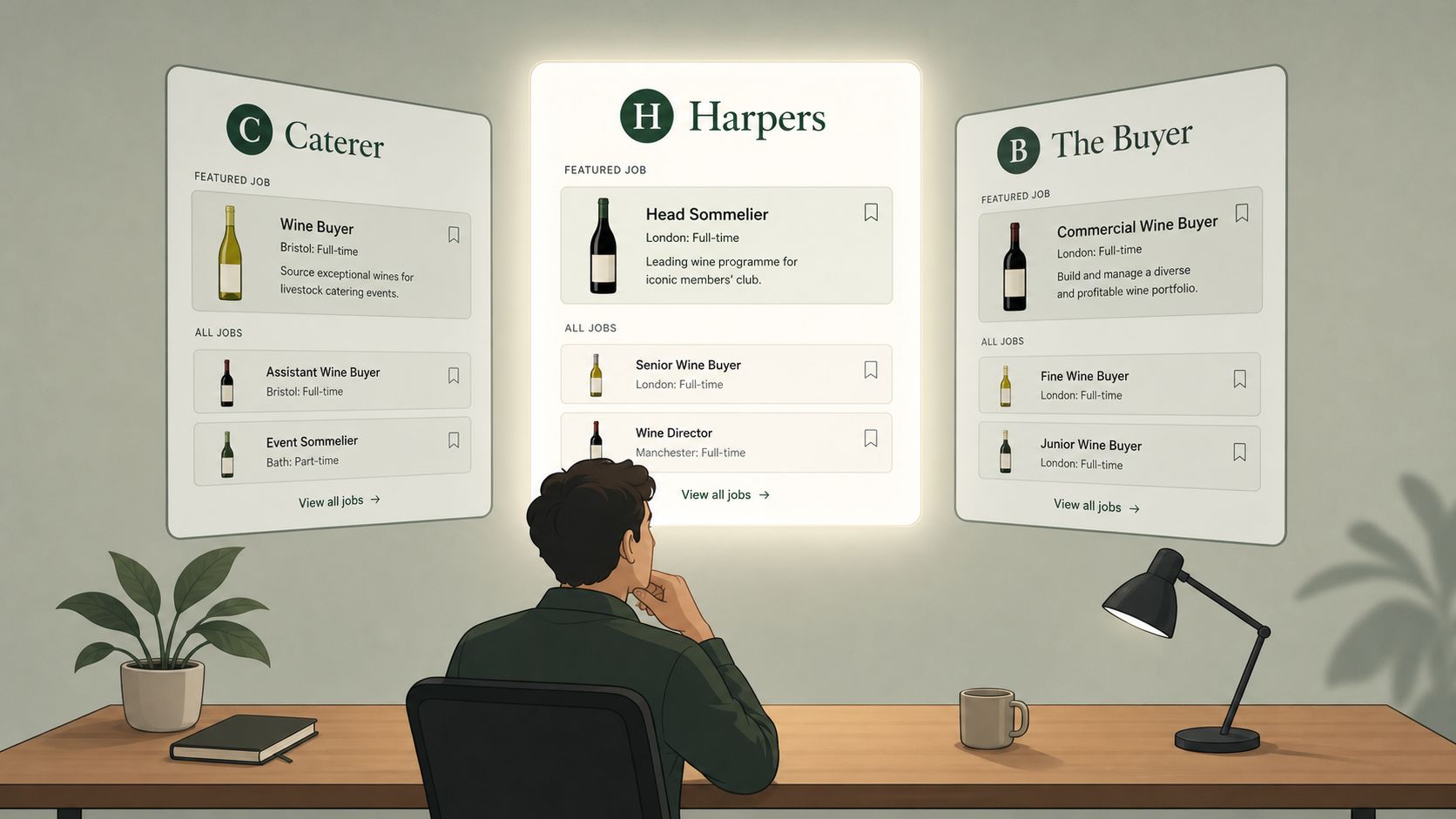
Start with the big boards, but don't stop there. The best live listings sit across broad job platforms, specialist hospitality pages, and direct venue career sites. If you rely on one source, you'll miss the good roles and probably the short-notice cover work that can get you in the door faster. A proper search is layered.
Use the right channel for the right role
Job boards like Caterer, Totaljobs, and Indeed are the starting point for volume. Specialist hospitality platforms surface more targeted wine and service roles. Direct venue pages are where luxury properties post when they want someone who already understands the standard. Agencies sit in the middle, which is useful when an operator needs cover quickly and doesn't want to wait through a long advertising cycle.
For employers dealing with short-notice sickness, seasonal spikes, and a fragile service rota, that middle layer matters. A decent agency can cut through the noise and get qualified people in front of a manager fast. One option in that space is Relief Chefs UK's London hospitality recruitment service, which sits alongside other staffing routes rather than replacing them.
If you're a candidate, don't only chase permanent roles. Short-term wine service can lead to repeat bookings, then a permanent offer. That's especially true in London, where managers will happily test reliability before they commit.
What to look for in the listing
Watch for three things. Right to work requirements, because they're now a real filter. Credential expectations, because WSET language tells you how formal the venue is. Service environment, because private clubs and luxury hotels recruit very differently from casual restaurants.
The fastest way to lose time is to apply blindly to every posting. Match the listing to your level, then send a CV that speaks that venue's language.
Acing the Tasting Test and Service Interview
The tasting test is not a wine quiz. It's a service simulation with a glass in the middle of it. London head sommeliers want to see whether you can think clearly, speak plainly, and stay composed while still making the guest feel looked after. If you spend the interview trying to prove you're clever, you've already missed the point.
What they actually test
Luxury properties such as The Savoy and St. Regis London pair WSET Level 3 with proven fine-dining or luxury-hotel experience, strong cellar and inventory skills, and guest-facing service under pressure luxury property role criteria. That mix tells you how the interview is built. They're testing theory, yes, but they're also testing whether you understand service flow, pacing, and how to recommend under pressure.
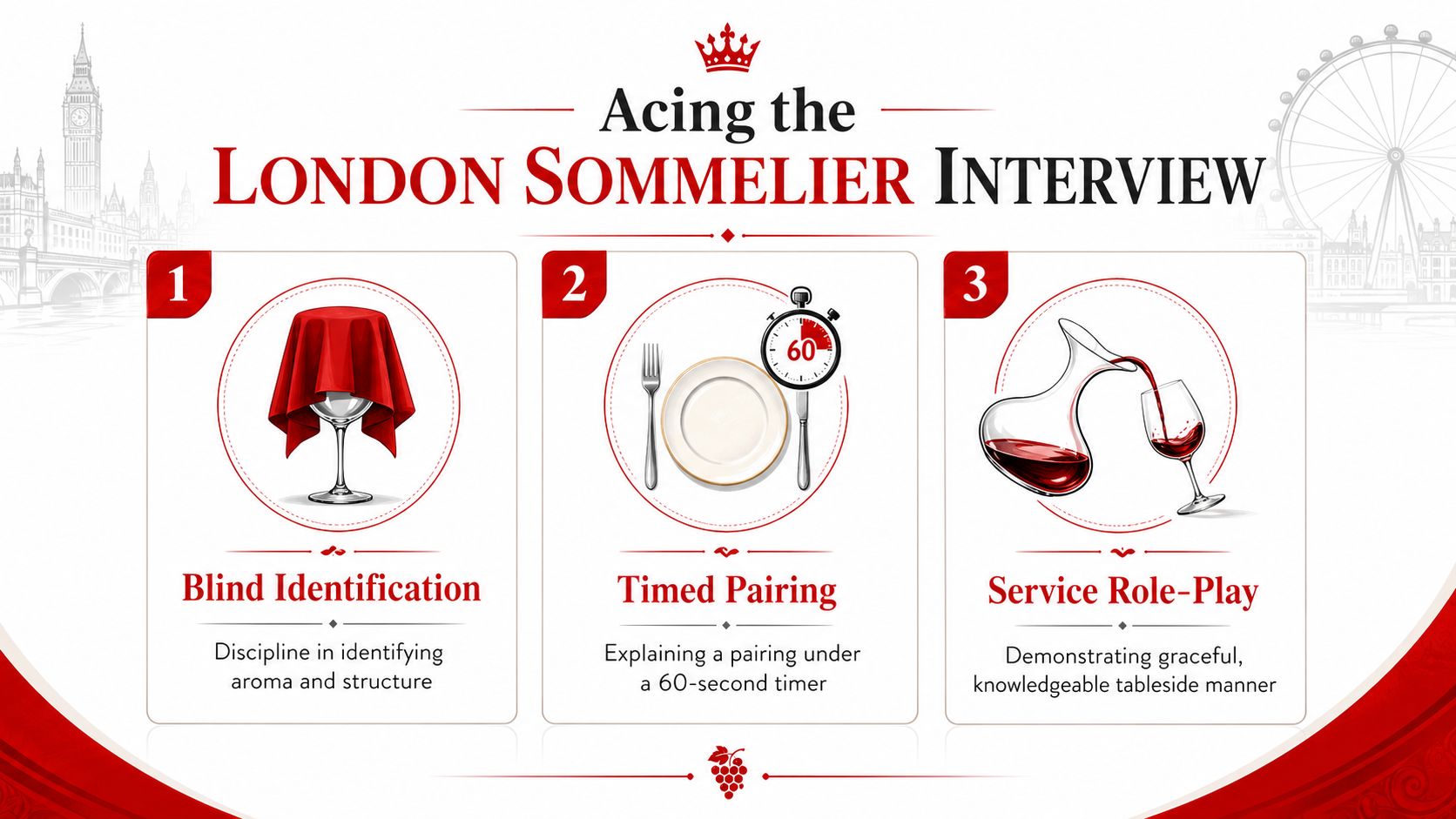
Prepare for three things.
- Blind identification discipline. Don't perform. Assess structure, aroma, acidity, body, and finish in a calm order.
- Timed pairing explanation. Give the pairing in plain English, not wine-school language.
- Service role-play. Speak like you're already on the floor, because that's what the interviewer wants to imagine.
How to train properly
Revise classic regions, producer styles, and common grape markers. Then practise saying the answer out loud in one clean pass. If a dish is unfamiliar, don't panic and start guessing. Anchor yourself in the ingredients, texture, and likely sauce structure, then make a grounded recommendation.
Don't over-index on theory and forget the room. A candidate who knows the answer but can't deliver it smoothly under pressure is a bad hire for a busy London dining room.
Also watch the small signals. Rotation shifts, attention to detail, and multitasking are not throwaway lines in a job ad. They're the employer telling you the service pace is real.
Freelance, Relief and Yacht Routes Into London Work
A lot of candidates treat relief work as a compromise. That's a mistake. In London, it can be the fastest way into a room, the quickest way to build trust, and sometimes the cleanest route to a permanent offer. Operators use relief cover when they've got same-day sickness, event pressure, or a service gap they can't afford to leave open.
Why this route works
If you're reliable, you solve a problem immediately. That matters in private households, hotels, yacht settings, and event-heavy venues where consistency beats charisma. It also gives you a chance to show how you handle stock, guest requests, and communication without the risk of a full permanent hire.
For candidates who want a live route into that kind of work, the listings on Relief Chefs UK's sommelier jobs page can be useful because they sit in the same short-notice world as chef cover. The wider hospitality staffing model applies here too, from temporary support to longer-term placements.
What to build in your profile
Keep it practical.
- State your availability clearly: evenings, weekends, split shifts, short notice.
- List your service level: fine dining, hotel, private club, events, or yacht work.
- Show eligibility early: if you can't prove right to work, you're wasting everyone's time.
- Keep references ready: relief bookings move fast, and managers like people they can trust without chasing.
Relief work is also how many people test whether they really want the London pace. You'll know quickly. If the rhythm suits you, you can build a steady pipeline. If it doesn't, you've learned that without burning months in a bad permanent role.
Rights to Work, Visa Pressure and Hiring Filters
London employers screen for paperwork early because the hiring rules are tight and the margin for error is small. UK hospitality has been shaped by visa and shortage-policy changes for years, and sommelier recruitment sits inside that pressure. Since at least October 2020, sommeliers have been part of the shortage occupation framework, and on 9 April 2024 the minimum salary threshold for skilled-worker visas rose from £26,000 to £38,700 visa and shortage-policy reporting. That changes who can be hired, how fast a manager can move, and which CVs make it past the first filter.
Harpers reported that more than 90% of the 8,500 migrants recruited in hospitality the previous year would not qualify under the new threshold, while Glassdoor's London-based base-salary estimates were roughly £23,000 to £32,000 visa threshold impact and London salary estimates. That is why right-to-work checks show up so early on vacancy pages. Employers are not interested in discovering at the end of the process that a candidate cannot be hired, and they will not keep an application open while immigration questions drag on.
A strong example is documented UK eligibility requirements on the St. Regis London recruitment page, which shows that proof of eligibility is part of the standard process. Treat that as an early-stage filter. If you wait until the interview to sort it out, you have already made yourself harder to place.
The practical move
Use right-to-work verification guidance before you apply, then state your status clearly in the first message. If you are hiring, ask for proof at the start and stop pushing forward applications that cannot clear compliance. That saves time, protects the rota, and keeps the process focused on candidates who can start.