
10 Practical Staff Shortage Solutions for UK Hospitality
11 July 2026
Your Kitchen Can't Afford Another Staffing Crisis
It's 5 PM on a Friday and your head chef has just called in sick. Again. The booking diary is full, the new commis is overwhelmed, and standards are about to nosedive. This isn't a hypothetical problem. For too many UK hospitality businesses, it's a weekly reality.
Staff shortages are no longer a background issue. They are a direct threat to revenue, reputation, and kitchen stability. The old ways of staffing don't work anymore. Posting a job ad and hoping for the best leaves too much to chance when service starts in two hours.
The pressure is obvious across the trade. UK hospitality is dealing with 132,000 vacancies, which is 48% higher than pre-pandemic levels. In practical terms, that means more venues competing for the same people, more no-shows, longer hiring cycles, and more managers stepping into the kitchen just to get through service.
This isn't just about plugging gaps. It's about building a resilient, profitable operation that can absorb sickness, holidays, peaks, and resignations without wrecking service. Below are 10 practical staff shortage solutions that work in real pubs, restaurants, hotels, private households, and seasonal businesses across places like Devon, Bristol, Wales, Berkshire, Windsor, Reading, Slough, and Dorset.
1. Specialist Chef Recruitment Agencies
The fastest fix for a chef shortage is often the right external partner.
Generic agencies can send bodies. That doesn't mean they send the right chef for your menu, service level, or brigade. A specialist hospitality recruiter understands sections, pace, allergen controls, prep discipline, and the difference between a chef who can survive service and one who can run it.

Relief Chefs UK has operated nationwide since 2013, and that matters when you need dependable cover in Bristol for a busy Saturday, a boutique hotel in Windsor that can't risk breakfast failure, or a yacht chef with private household standards. If you want a clearer view of specialist options in the market, this guide to the best recruitment agencies in the UK is a useful starting point.
What this solves well
Independent pubs often use relief chefs for weekend pressure points. A venue in Bristol might need cover every Friday and Saturday rather than a full-time extra chef all week. That is a commercial staffing problem, not just a recruitment one.
A specialist partner also helps when the brief is narrow. Yacht chefs, villa chefs, and private household placements need a different skill set from a standard restaurant line role. If the recruiter doesn't understand that, you waste time on the wrong CVs.
Practical rule: Use specialist agencies for speed, fit, and reduced risk. Use generic agencies only when the role truly is generic.
The trade-off is cost. Agency support is rarely your cheapest hourly option. But if the alternative is cancelled bookings, owner cover, or a broken service, the cheaper option can become the more expensive one very quickly.
2. Flexible Part-Time and Zero-Hours Staffing
Not every staffing problem needs a full-time hire.
A lot of venues create shortages by building rotas around best-case demand. Then weather changes, a coach party books in, or the school holidays hit, and the wage model falls apart. Flexible part-time contracts and zero-hours arrangements can help you match labour to trade, especially in seasonal areas.
Coastal restaurants in Devon already know this pattern. Summer demand can be intense, then drop sharply outside peak periods. The same applies to Christmas-heavy businesses in Dorset and family-driven hotel trade in Wales during school holidays. Flexible staffing lets you scale up and down without loading quiet weeks with fixed labour costs.
Where flexible staffing works
This model works best when you protect a strong core team and flex around it.
- Keep a permanent spine: Hold onto experienced chefs who own standards, stock, prep systems, and training.
- Use flexible staff for volume: Bring in part-time or zero-hours chefs for busy services, functions, and seasonal peaks.
- Back it up with agency cover: If your flexible staff cancel, a specialist chef agency gives you a second line of defence.
This approach is also realistic because recruitment pressure is still widespread. A survey of over 350 UK hospitality businesses found that 67% are struggling to recruit non-head chefs and 84% lack front-of-house personnel. That makes rigid staffing models harder to sustain.
Flexible staffing does have limits. If your rota depends too heavily on casual availability, you'll spend too much time chasing confirmations. The answer is structure. Use scheduling software, lock availability early, and keep agency support ready for the shifts that matter most.
3. Cross-Training and Multi-Skilled Kitchen Teams
Some of the best staff shortage solutions start inside your own kitchen.
If one person can only do one station, every absence becomes a crisis. If your team can rotate across prep, garnish, breakfast, fryer, grill, and basic sauce work, service gets far more resilient. You don't need everyone to do everything. You need enough overlap to stop one sickness call from wrecking the pass.
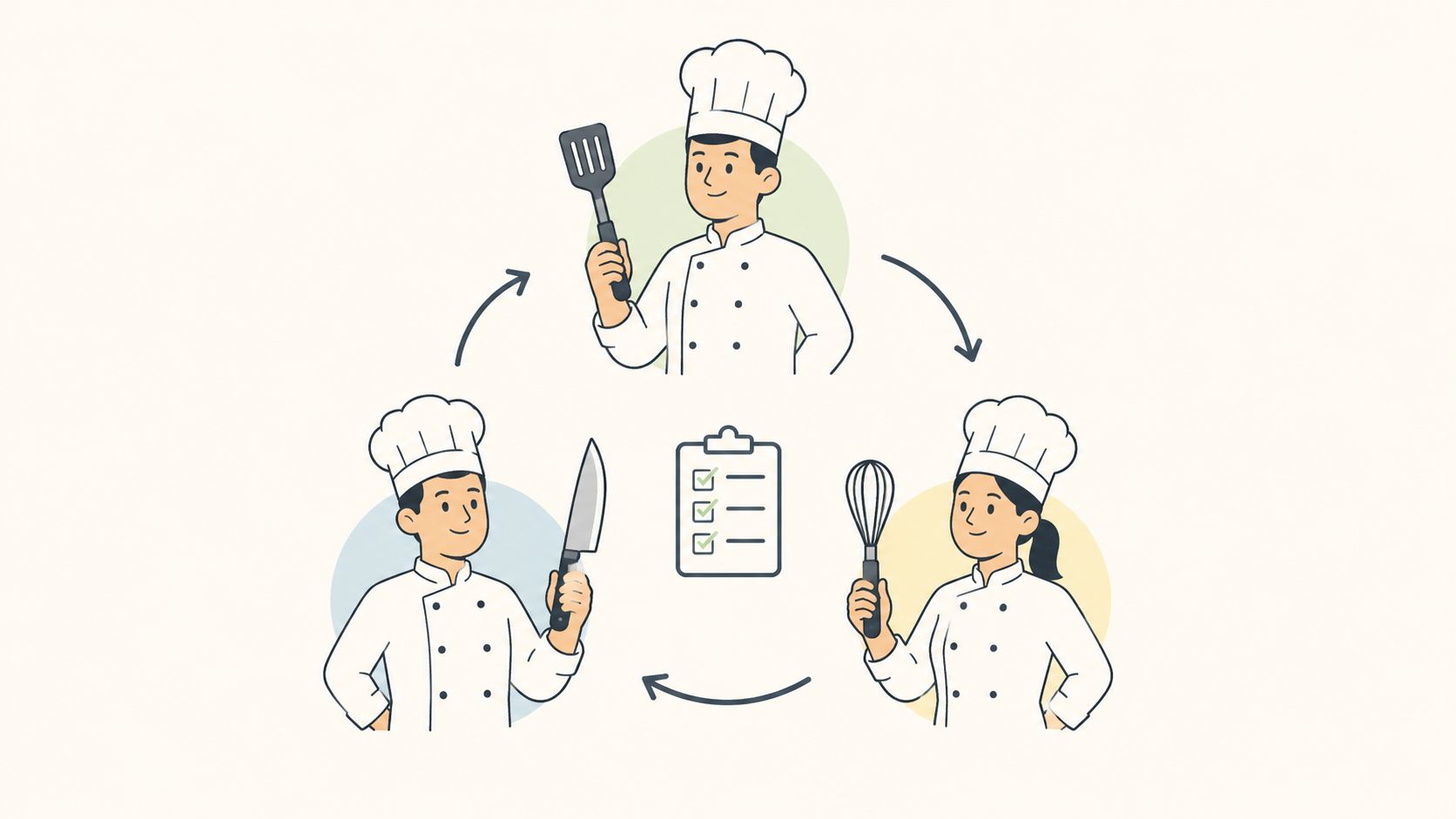
In Berkshire boutique hotels, this often means rotating chefs across breakfast and evening service so the team isn't split into narrow silos. In Reading pubs, bar staff can be trained to support simple prep, desserts, or cold section support during pressure periods. In multi-site restaurant groups, sous chefs should be able to lead a full service, not just their usual section.
How to train without disrupting service
Cross-training fails when managers do it informally and hope standards stick.
Use simple station guides, clear competency checks, and planned rotation. Relief Chefs UK's guide on how to identify skill gaps is helpful because it frames training around actual operational weaknesses rather than vague development plans.
Cross-train for continuity, not for convenience. The aim is to protect service when someone is off, not to overload your strongest people.
The trade-off is time. Training takes labour and patience, and in a short-staffed kitchen that's hard to spare. But the cost of never doing it is permanent fragility. Cross-training won't replace proper chef cover for a long absence, but it does stop every short absence becoming a full emergency.
4. Permanent Chef Recruitment and Retention
Temporary cover keeps you open. Permanent hires keep you stable.
A reliable head chef or sous chef changes everything. They set prep standards, train juniors, protect consistency, and spot problems before they hit service. If your kitchen changes hands every few weeks, standards drift, food costs creep, and the rest of the team stops believing anyone is in charge.
The market pressure here is obvious. Access Group's 2024 hospitality workforce data shows 85% of businesses have openings for chefs, compared with 80% struggling to fill front-of-house roles. Chef recruitment is the sharper pain point, which is why permanent chef hiring needs more discipline than posting and waiting.
What works better than another rushed job advert
Hotels in Devon often do better when they recruit for leadership first, then rebuild the brigade under that person. Restaurant groups in Bristol can stabilise kitchens by hiring permanent sous chefs across sites rather than relying on a single overstretched head chef. Boutique hotels in Dorset usually benefit from a chef leader who can handle both standards and mentoring.
A specialist partner helps here as well. Relief Chefs UK doesn't only provide relief chefs and temporary chefs. It also supports permanent chef recruitment, which is useful when you need continuity rather than short-term patching.
The trade-off is speed. Permanent hiring takes longer than booking cover, and a bad permanent hire can do more damage than a good temporary one. That's why the best model is usually both. Recruit permanent leaders, then keep relief cover in place for holidays, sickness, and spikes.
5. Technology and Kitchen Management Systems
If your rota still lives in a group chat and a spreadsheet, you're making shortages worse.
Good scheduling and labour tools won't solve the chef shortage on their own, but they stop a lot of self-inflicted chaos. Systems such as Deputy and Zip Schedules help managers plan demand, track availability, and spot weak shifts before the panic starts.
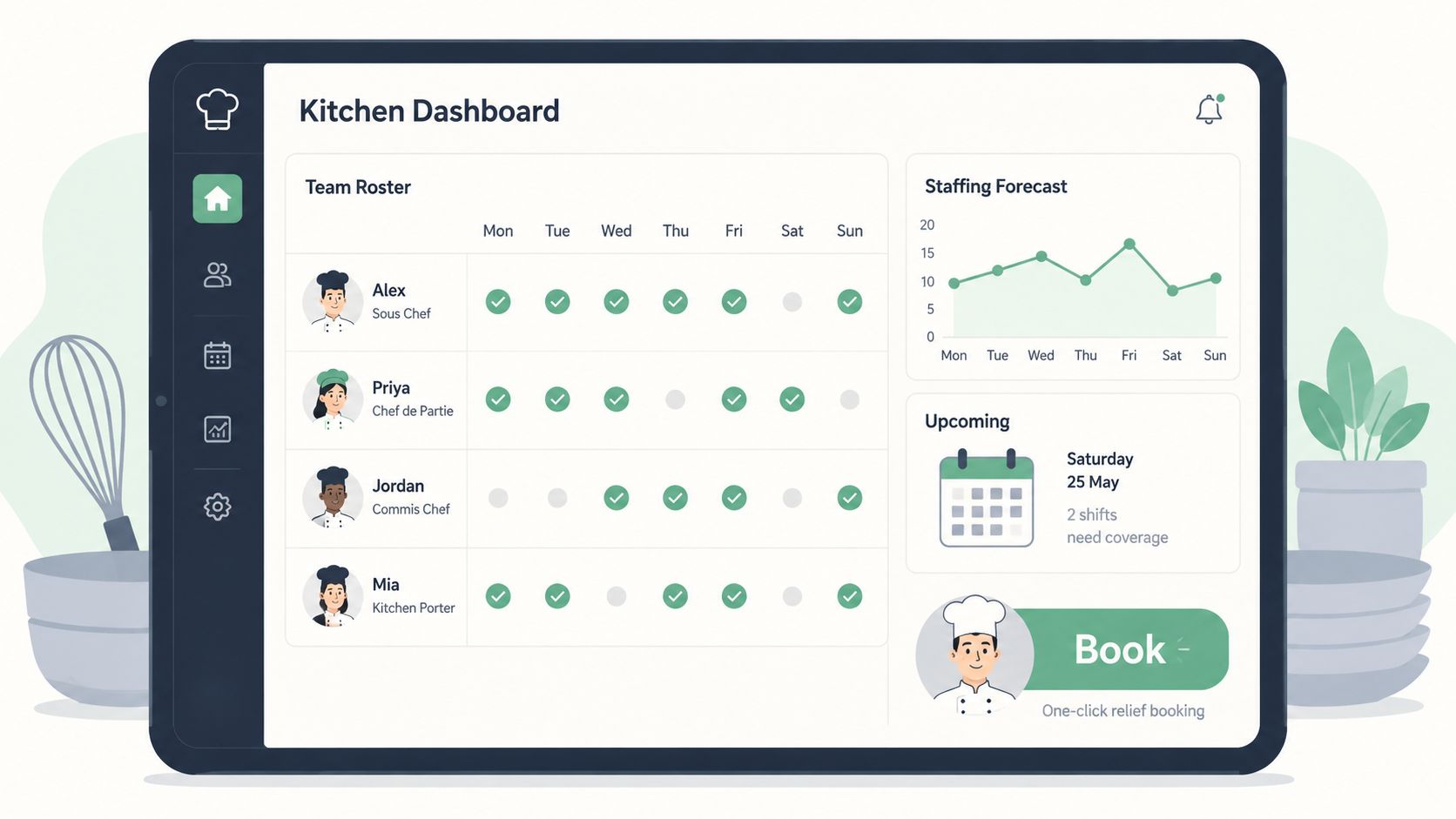
Multi-site hotel groups often get the most value here because they can compare weekend trade patterns across locations. But independent venues benefit too. A pub chain might use EPOS-linked forecasting to identify likely pressure on bank holidays. An independent restaurant can use rota software to lock availability and see where cover is thin days before service, not hours before.
Useful systems only work if people use them
Buying the software is the easy bit. Training managers to use it properly is where most venues slip.
Use your system for three things first:
- Forecast trading patterns: Match labour to covers, events, and seasonal peaks.
- Track actual availability: Stop relying on memory and WhatsApp replies.
- Flag risk early: Identify under-covered services soon enough to book relief support.
A simple video explainer can help teams understand the logic before rollout:
Technology is strongest when linked to action. If the rota shows risk for Saturday dinner in Reading or Sunday lunch in Wales, book support immediately. A system without a staffing response plan just gives you a better view of the problem.
6. Apprenticeships and Training Pipelines
Long-term staffing gets cheaper when you grow your own people.
Apprenticeships and structured junior training programmes don't fix tonight's service, but they do reduce long-term dependence on expensive last-minute hiring. For hotels in Berkshire, pubs across Wales, and restaurant groups in Bristol, this is one of the few sustainable ways to create future commis, CDPs, and supervisors.
The mistake many operators make is hiring apprentices as cheap labour and calling it development. That doesn't build a pipeline. It builds churn. Apprentices need structure, mentoring, and exposure to multiple stations, otherwise they leave before they become useful.
Build a pipeline that actually feeds the kitchen
Register for the apprenticeship route available to your business, assign one experienced mentor, and map training in stages. Start with prep, food safety, stock rotation, and service basics. Then move them through sections with clear expectations.
This works well when paired with relief chefs. Let the relief chef hold standards and protect service while the apprentice develops at the right pace. That way, you don't put learning and live pressure into direct conflict every night.
Operator's view: Hire apprentices for attitude. Train for pace, section discipline, and consistency.
The trade-off is patience. Apprenticeships need time before they produce a strong return. But if your business recruits the same junior roles again and again, you're already paying for instability. A pipeline gives you a route out of that cycle.
7. Outsourced Kitchen Operations and Chef-Led Concessions
Sometimes the right answer is to stop running the kitchen yourself.
That isn't the right move for every site, but it can work when the front-of-house business is strong and the kitchen keeps draining management time, cash, and energy. An outsourced kitchen operation or chef-led concession can hand menu development, staffing, and daily kitchen control to an operator who lives and breathes the back of house.
This is often worth considering in pubs where food is important but not the owner's strongest area. A Slough pub might have a solid wet trade and local following but no stable kitchen leadership. A concession agreement with an experienced chef operator can turn that around faster than another cycle of failed hires.
Where outsourcing helps and where it goes wrong
Boutique hotels in Windsor sometimes use contracted private chef teams for a more controlled offer. Cafés in Reading may use freelance chef operators on revenue-share agreements for brunch or evening concepts. The attraction is simple. You gain expertise and reduce direct staffing headaches.
The risks are just as clear:
- Standards can drift: If contracts are vague, quality slips and nobody owns the fix.
- Margins can get squeezed: Revenue-share sounds attractive until the numbers are reviewed properly.
- Brand fit matters: A strong chef concept that doesn't suit your guests still fails.
Use written agreements, trial periods, service standards, food cost expectations, and review points. If you're outsourcing because you're overwhelmed, keep control over reporting and guest feedback. Don't swap one blind spot for another.
8. Remote and Freelance Chef Services
Friday afternoon, a wedding party adds dietary requests, your pastry section is uncovered, and the head chef is already juggling prep for 120 covers. That is where freelance chef support earns its keep. It gives operators a way to cover specialist work, private events, and short trading spikes without carrying another full-time salary through quieter weeks.
Used properly, this model solves specific problems. A hotel in Devon may bring in a freelance chef for a run of weddings. A Bristol restaurant group might book a pastry specialist for a peak trading period. A boutique Dorset venue may hire a private chef for a one-off guest experience where the brief is high-touch and short-term. Villa chefs, yacht chefs, and private household bookings often sit in the same category. The work is skilled, irregular, and hard to justify as a permanent role.
The mistake is treating freelance cover as informal labour. It is still a commercial and compliance decision.
Buy freelance cover with the same discipline as any other supplier
Check right-to-work documents, references, insurance where relevant, and whether the chef can handle your menu, service speed, and kitchen standards. Agree rates, hours, prep responsibilities, kit requirements, and cancellation terms in writing before the shift starts. If the booking is high risk, ask who covers the shift if the freelancer drops out.
That matters more now because penalties are higher. The UK Government increased civil penalties for illegal working from 13 February 2024, raising the maximum fines to £45,000 for a first breach and £60,000 for a repeat breach per illegal worker, as set out in the Home Office employer guidance on illegal working penalties. If a site is pulling in self-employed chefs at short notice, document checks cannot be treated as a box-ticking exercise.
Freelance chefs work best inside a wider staffing plan. Use them for specialist briefs, premium events, and overflow demand. Use emergency chef cover when service cannot fail. Use permanent hiring and training to reduce how often you need either. That is the trade-off. Freelance support gives speed and flexibility, but it only pays off when it sits inside a system that protects standards, margin, and compliance.
For operators building that mixed model, Relief Chefs UK can support both ends of the problem. Immediate cover when a key shift is exposed, and flexible chef support when the business needs breathing room while longer-term recruitment catches up.
9. Staff Retention and Culture Investment
If your kitchen keeps losing people, recruitment will never catch up.
Most operators focus on hiring because the gap is visible. Retention matters more because it prevents the gap appearing in the first place. Competitive pay, fair rotas, better communication, progression, and basic respect all reduce churn. None of that is soft. It is operational.
This matters across hospitality because shortages remain widespread. Recent UK surveys found that 61% of hospitality businesses reported active staff shortages. If your people leave, replacing them happens in a market where everyone else is hiring too.
What keeps good chefs from walking out
Hotels in Windsor often retain better when they offer visible progression and training. Pub groups in Bristol tend to do better when they give teams flexible shifts and proper support during heavy periods. Restaurant groups in Berkshire usually keep stronger junior chefs when they invest in development rather than treating every role as disposable.
Focus on practical retention moves:
- Pay fairly and clearly: Confusion over rates, tronc, overtime, or hours damages trust fast.
- Show a route forward: Good commis and CDPs stay when they can see the next step.
- Protect rest and dignity: Chaotic rotas and poor communication push people out.
A stable culture doesn't mean a soft kitchen. It means clear standards, fair treatment, and no surprises on payday or rota day.
Retention doesn't remove the need for temporary staffing support. It changes how you use it. Relief cover should protect holidays, sickness, and peak demand. It shouldn't become the only thing holding the brigade together.
10. Outsourced Temporary Staffing Partnerships and Local Industry Collaboration
The most resilient venues don't source cover from scratch every time they have a problem.
They put formal staffing partnerships in place before the crisis hits. That means agreed response expectations, a known account manager, clear vetting standards, and a booking process that doesn't waste half the afternoon. Then they support that with local industry relationships for backup options during peak periods.
Relief Chefs UK fits this model well because it works nationwide across independent pubs, restaurants, boutique hotels, private households, and yacht staffing. For operators comparing agency models, this page on working with temp agencies gives a useful view of what to ask before committing.
Build a staffing network, not just a supplier list
A hotel group in Berkshire may want one point of contact for multiple sites. An independent pub in Bristol might need a reliable relief chef partner for bank holidays while also keeping local relationships with nearby operators for occasional swaps. Devon venues often benefit from shared awareness of summer pressure points and early cover planning.
The absence of clear ROI benchmarks for short-term emergency staffing in hospitality is a significant factor. The Centre for Global Development has noted a wider evidence gap around immediate short-gap temp staffing and decision-making. In practice, operators still have to make commercial calls based on service risk, reputation risk, and the cost of closing sections or cancelling bookings.
The best arrangement is simple. Use a formal temporary staffing partner as your main line of cover. Use local collaboration as a secondary backup. Review performance regularly, especially after peak seasons, and tighten the plan before the next pressure period arrives.
10-Point Staff Shortage Solutions Comparison
| Solution | 🔄 Implementation complexity | ⚡ Resource requirements | ⭐ Key advantages | 📊 Expected outcomes | 💡 Ideal use cases |
|---|---|---|---|---|---|
| Specialist Chef Recruitment Agencies | Low, agency handles vetting and rapid sourcing | Moderate, agency fees quoted per booking; account management | Rapid same‑day/weekend cover; pre‑vetted chefs; industry expertise | Fast fill rates; reduced hiring admin; predictable response | Independent pubs, boutique hotels, same‑day or seasonal cover |
| Flexible Part‑Time & Zero‑Hours Staffing | Medium, contracts, scheduling and compliance needed | Low–Moderate, variable labour costs; scheduling tools | Aligns labour to demand; scalable staffing | Lower costs in quiet periods; quick scaling for peaks | Seasonal venues; highly variable trading patterns |
| Cross‑Training & Multi‑Skilled Teams | High, structured training programs and SOPs | Moderate–High, trainer time, documentation, rotation | Internal resilience; reduced single‑point failures; staff development | Fewer station closures; improved internal cover; long‑term stability | Small pubs/cafés, independent restaurants, hotels building talent |
| Permanent Chef Recruitment & Retention | Medium–High, recruitment, onboarding, retention systems | High, salaries, benefits, training budgets | Consistent standards; leadership; institutional knowledge | Stable teams; lower agency spend over time | Established year‑round venues, hotels, multi‑site groups |
| Technology & Kitchen Management Systems | Medium, setup, POS integration and staff training | Moderate, software subscriptions, data and IT support | Automated rostering; labour forecasting; one‑click bookings | Fewer emergencies; better labour utilisation; less admin | Multi‑site groups, high‑volume restaurants, seasonal venues |
| Apprenticeships & Training Pipelines | High, compliance, structured curricula and mentoring | Moderate, mentor time, training costs; funding can offset | Long‑term talent pipeline; funding support; loyalty | Reliable internal hires in 12–24 months; reduced shortages | Hotels, multi‑site groups, venues committed to long‑term growth |
| Outsourced Kitchen Operations & Chef‑Led Concessions | High, complex contracts and quality control | Moderate–High, fixed fees or revenue‑share; contractor oversight | Removes day‑to‑day burden; contractor accountability | Reduced HR complexity; possible loss of direct control | Pubs struggling to recruit, boutique hotels, niche menus |
| Remote & Freelance Chef Services | Low–Medium, per‑shift sourcing and vetting | Variable, higher hourly rates; minimal long‑term liability | On‑demand specialist skills; no payroll obligations | Flexible event/peak cover; potential inconsistency | Events, banquets, pop‑ups, specialist covers |
| Staff Retention & Culture Investment | Medium, policy changes, pay reviews and development | High, wage increases, development & wellbeing budgets | Significantly reduces turnover; improves standards & morale | Long‑term staff stability; better customer experience | Venues able to invest in teams; brands focused on sustainable growth |
| Outsourced Temporary Partnerships & Local Collaboration | Medium, SLAs, account management and community building | Moderate, monthly plans, account managers, network time | Predictable cover + local backups; replacement guarantees | Reliable weekend/seasonal cover; scalable across sites | Independent pubs, multi‑site hospitality, tourist‑dependent areas |
From Crisis Management to Strategic Advantage
Solving a staffing shortage isn't about finding one magic answer. It is about building a system that can take a hit and still trade properly. That system usually has two parts. First, you need immediate protection for sickness, holiday cover, seasonal pressure, chef shortages, and those weeks when recruitment hasn't caught up. Second, you need a long-term plan that reduces how often you face the same crisis.
For most hospitality businesses, that means combining several of the staff shortage solutions above rather than betting everything on one approach. A strong permanent head chef and sous chef team gives structure. Cross-training makes the brigade more flexible. Apprenticeships build future capacity. Technology gives managers earlier warning. Retention stops avoidable churn. Relief chefs and temporary chefs protect service when reality gets in the way of the rota.
There are trade-offs in every option. Agency staffing costs more than using your own team. Permanent recruitment takes longer. Apprentices need time before they add real value. Flexible staffing can create unpredictability if it isn't managed properly. Outsourcing can fix one problem while creating another if the contract is weak. The right answer is the one that protects standards, keeps the kitchen open, and makes commercial sense for your site.
That matters whether you're running a food-led pub in Devon, a hotel in Berkshire, a restaurant in Bristol, a coastal venue in Dorset, or a private placement brief for yacht chefs or villa chefs. The staffing mix will differ by site, but the principle stays the same. Build stability where you can. Buy flexibility where you need it. Never leave your busiest services exposed.
Relief Chefs UK is one option for operators who need that flexible support. Established in 2013, it works as a nationwide chef recruitment agency for relief chefs, temporary chefs, permanent chef recruitment, yacht chefs, villa chefs, and wider hospitality staffing support. For businesses dealing with short notice sickness, peak-season pressure, unreliable agency cover, or longer-term kitchen rebuilding, that kind of partner can give you room to operate properly again.
Don't wait for the next Friday-night call-off to decide your plan. Put the cover, systems, and recruitment support in place now, while you're still choosing from a position of control.
If your kitchen needs dependable cover or a longer-term recruitment plan, contact Relief Chefs UK. Whether you need relief chefs within short notice, temporary chefs for peak trading, permanent chef recruitment, or specialist support for boutique hotels, private households, yachts, and villas, the team can help you keep service running and standards intact.
Call the team.
Office 01392 715474 · info@reliefchefs.co.uk