

Friday service is fully booked. One chef has called in sick. Another is already covering prep, deliveries, allergens, and the pass. You're not thinking about recruitment theory at that point. You're thinking about whether you can get food out on time, protect standards, and avoid burning out the team you've still got.
That's why searches for The Chef Worcester Park usually aren't about filling a vacancy on paper. They're about keeping a kitchen stable when the rota has fallen apart. In Worcester Park, where local pubs, restaurants, cafés, and smaller hotel operations depend on consistency, one missing chef can turn into slower tickets, tighter covers, reduced menus, and unhappy regulars very quickly.
Facing a Chef Shortage in Worcester Park
A Worcester Park venue doesn't need a dramatic crisis for staffing problems to hurt. It can be something as ordinary as a chef going off sick before a Friday dinner service, a commis handing in notice with no overlap, or a kitchen porter not turning up when the dishwasher is already under strain. Those are the shifts that expose whether your staffing plan is real or just hopeful.
Across the trade, the pressure is sitting in the middle of the kitchen, not just at senior level. A survey of over 350 UK hospitality businesses found that 67% lack non-head chefs and 36% lack kitchen porters according to hospitality labour shortage findings from Infraspeak. That rings true in day-to-day operations. Most services don't fail because a venue suddenly loses a celebrity head chef. They fail because there's nobody solid on garnish, nobody on prep, or nobody reliable backing up the section.
What that looks like on the ground
For a pub near Central Road, the problem is often speed and consistency. The menu might be straightforward, but the pace isn't. If one section falls over, the whole service drifts.
For a boutique hotel or event-led site, the issue is different. Breakfast still has to land. Room service still has to go out. Banqueting prep can't stop because one chef is missing.
Practical rule: When you lose one competent mid-level chef, you don't lose one pair of hands. You lose tempo, judgement, and stability.
There's also a planning mistake many operators make. They treat short-term chef cover as a last resort instead of part of normal risk control. That usually leads to rushed freelance hires, favours from old contacts, or accepting whoever a general temp desk can find first. None of those options helps if you need someone who can walk into your kitchen and function.
A better approach is to build cover into your operating plan before the rota breaks. Worcester Park operators dealing with recurring hiring pressure can start by reviewing practical skills shortage solutions for hospitality businesses and identifying where the kitchen is most exposed.
The Real Reason Your Kitchen Is Under Pressure
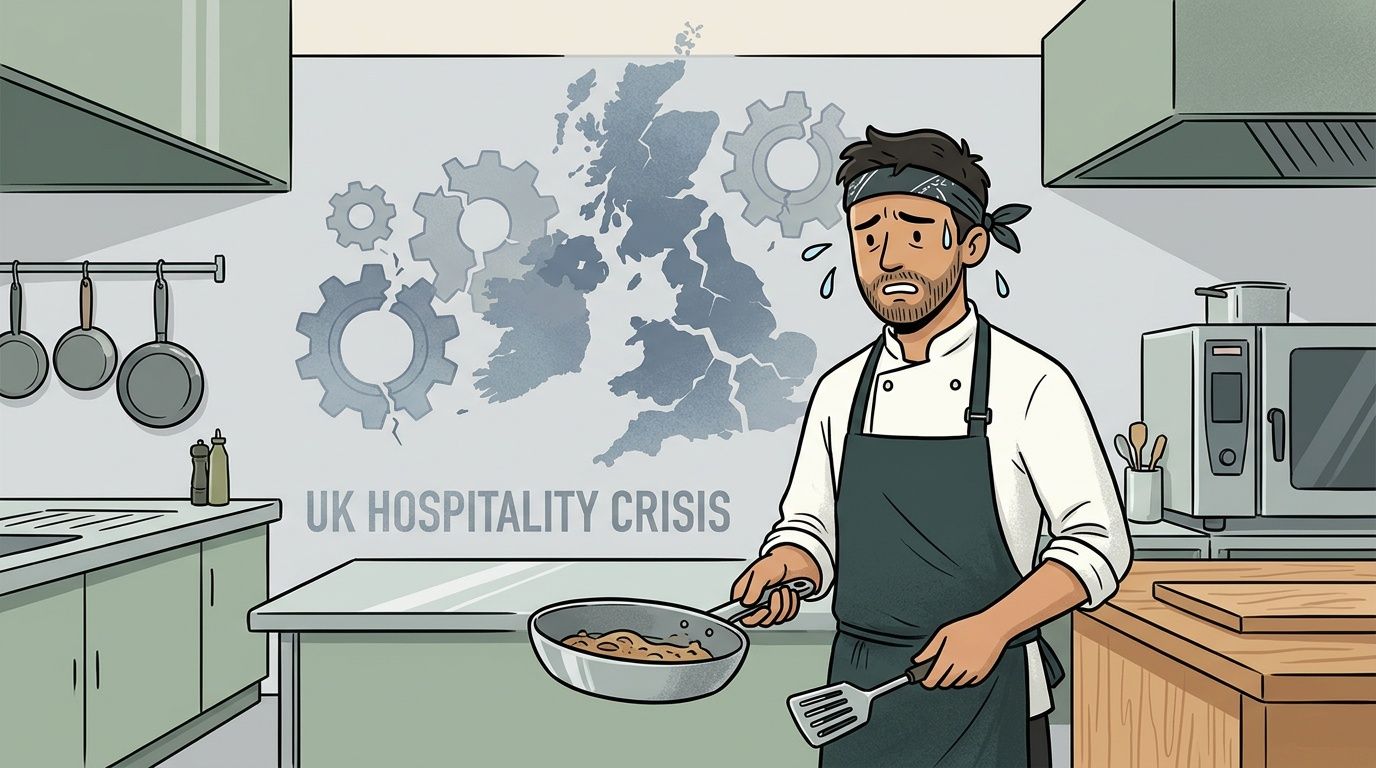
The staffing problem in Worcester Park isn't local bad luck. It's part of a national operating environment that has changed the way kitchens have to recruit, schedule, and protect service.
In the UK hospitality sector, vacancies remain approximately 48% above pre-pandemic levels, with about 132,000 open roles nationwide, forcing many businesses to cut hours or close on certain days, as noted in this UK hospitality staffing trends analysis.
That matters because old recruitment habits don't work well in a short market. Waiting for the right permanent applicant can leave sections exposed for weeks. Leaning on the same few freelancers creates dependency. Using a generalist agency often means speaking to someone who understands availability, but not necessarily service standards, GP pressure, prep flow, or how one weak chef affects the whole brigade.
Why traditional fixes keep failing
A lot of operators still try one of these three routes first:
- Internal stretch cover: Existing chefs work extra days, longer shifts, or split sections. It works briefly, then fatigue shows up in standards, sickness, and retention.
- Last-minute freelancers: Sometimes you get lucky. Sometimes you get someone who can cook but can't adapt to your spec, pace, or team.
- General temp agencies: They can fill a slot. They often struggle to fill it with somebody who suits your kitchen.
A chef shortage isn't just a recruitment problem. It's a margin problem and a reputation problem. If a weak service leads to reduced menu choice, delayed tables, or poor guest feedback, the cost lands well beyond one shift.
The smarter way to judge staffing decisions
Ask one question. Does this option protect service, or just patch the rota?
That's the difference between tactical panic and operational thinking. For Worcester Park sites, especially owner-led businesses and smaller groups, the right decision usually isn't the cheapest-looking one on the day. It's the one that protects the weekend, keeps standards steady, and stops the rest of the kitchen from carrying the damage.
If you're weighing permanent hires against flexible cover, it's worth understanding the wider cost of employing hospitality staff before assuming a fixed hire is the safest answer.
How Our Vetted Chef Service Works
The best short-term chef cover is structured. It shouldn't feel like calling around in hope. It should feel like using a system that gets the details right quickly.
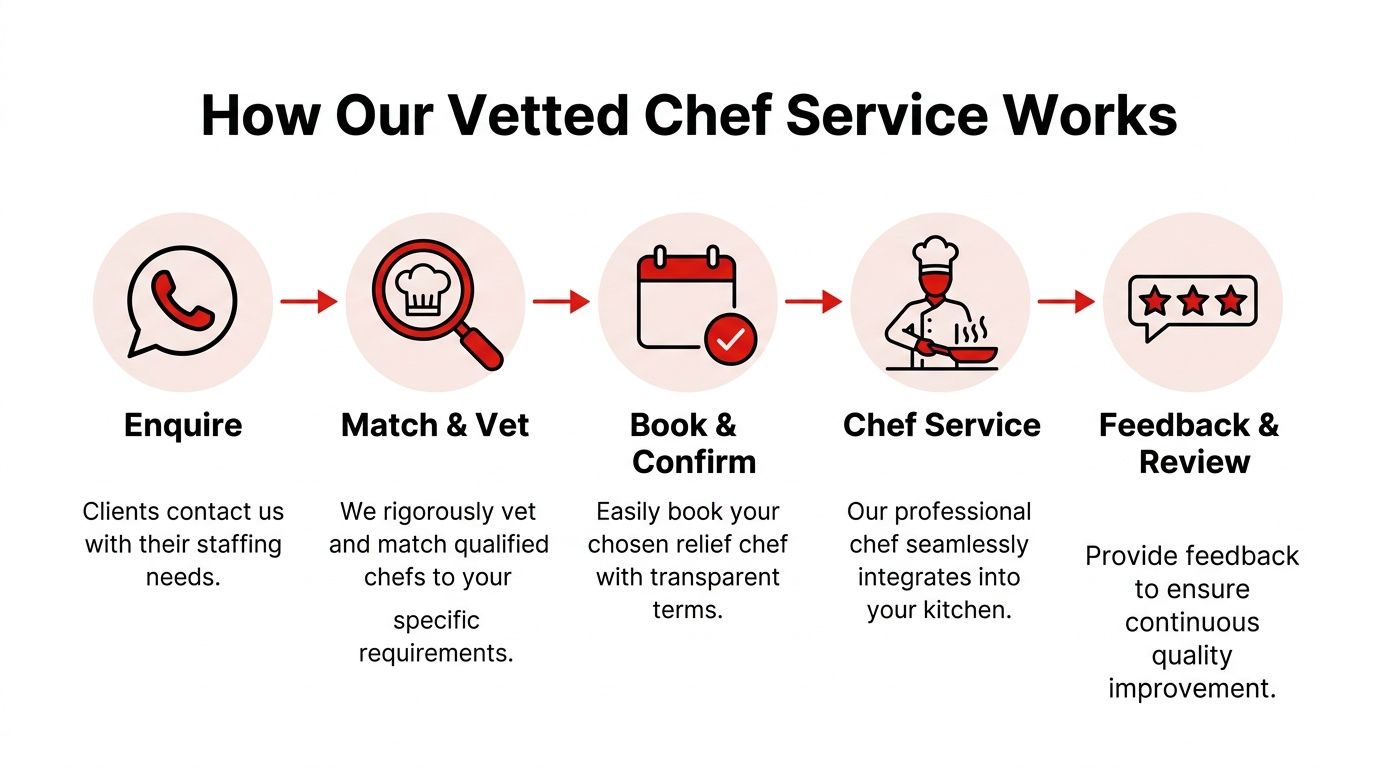
For businesses searching for The Chef Worcester Park, the process matters almost as much as the chef. If the brief is vague, the checks are weak, or the matching is rushed, you often end up paying for disruption twice. Once in fees, and again in service problems.
Step one to three
You send the brief clearly
The useful details are simple. Role level, shift pattern, menu style, start date, service pressure, and whether the job is emergency cover or part of a longer staffing gap. A pub needing a solid CDP for a busy weekend requires a different match from a care setting needing a compliant chef for ongoing cover.The role is matched properly
Good matching isn't about sending the nearest available person. It's about judging whether the chef fits your kitchen. Pace, section ownership, volume, standards, and attitude matter more than a polished CV.Terms are confirmed before service risk grows
The quickest placements usually happen when the client is decisive and the brief is specific. Delays normally come from unclear requirements, unrealistic expectations, or trying to compare unsuitable options.
Later in the process, seeing the model in action helps:
Step four and five
The compliance side is where weak suppliers often get exposed. A critical gap exists where some agencies overlook right-to-work checks. Data shows 12% of relief chefs in the UK may lack active, verified share codes, creating legal risk for operators, according to chef hire compliance guidance from The Chef Tree. For schools, care homes, and other regulated environments, that's not a minor admin point. It's a hard operational risk.
If an agency talks confidently about DBS checks but can't show robust right-to-work verification, you're carrying a risk that should never reach the rota.
After placement, the review stage matters too. Feedback helps sharpen future matching. If a chef was strong on service but weaker on paperwork, or ideal for banqueting but not a la carte pace, that should inform the next booking.
For kitchens that need dependable short-term cover, the benchmark is simple. The chef should arrive prepared, slot into the brigade fast, respect the kitchen's systems, and reduce pressure rather than add to it. That's the standard to expect from a proper temporary agency chef service.
Benefits for Your Pub Restaurant or Hotel
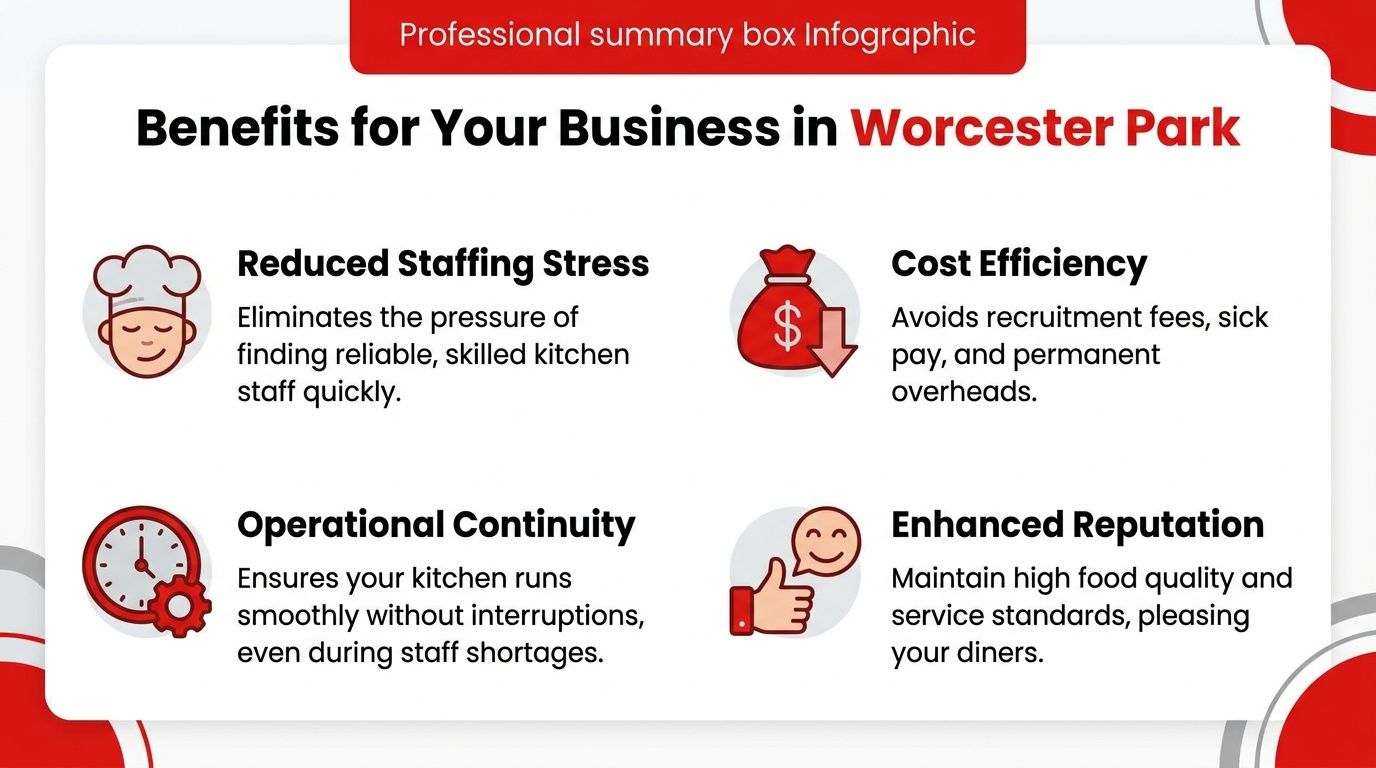
A relief chef only has value if the booking protects the business. That means revenue, standards, team stability, and guest confidence. For Worcester Park operators, that's the key commercial case.
For pubs and casual dining sites
A pub kitchen usually doesn't need theatrics. It needs continuity. If your second chef drops out before a bank holiday weekend, the immediate benefit of vetted cover is that you keep the menu live, maintain ticket flow, and stop the head chef from firefighting every section.
That matters in commuter-led areas like Worcester Park, where guests expect reliability. They may forgive a busy room. They won't forgive a patchy menu, slow service, or a sense that the kitchen is scrambling.
For boutique hotels and event venues
Hotels carry a wider operational load. Breakfast, bar food, private dining, events, and resident expectations can all hit on the same day. Flexible chef support allows managers to increase kitchen capacity when needed without locking the site into permanent overheads it may not want all year round.
A strong operator sees temporary cover as a way to keep labour aligned with actual demand. That's useful in local service, and it's equally useful across busy regions such as Devon, Bristol, Wales, Berkshire, Windsor, Reading, Slough, and Dorset where seasonal and event-led trade can swing hard.
Operations view: The right relief chef doesn't just cover absence. They give your permanent team breathing room to cook properly again.
What improves when the booking is right
| Business pressure | What good cover protects |
|---|---|
| Short notice sickness | Service continuity |
| Holiday gaps | Team morale and rota balance |
| Seasonal peaks | Menu consistency under volume |
| Recruitment delays | Revenue while you hire properly |
| Multi-site pressure | A stable fallback option |
The same logic applies beyond pubs and hotels. Restaurants use temporary chefs to hold standards during recruitment gaps. Private households use specialist cover when regular chefs are unavailable. The model also extends to permanent chef recruitment, yacht chefs, villa chefs, and wider hospitality staffing support when the need is specialist rather than purely urgent.
What doesn't work is treating every vacancy as identical. A high-volume breakfast chef, a country house private chef, and a yacht chef may all be “a chef” on paper. Operationally, they are different hires with different failure points.
Our Flexible Plans and Service Guarantee
Most operators don't object to paying for chef cover. They object to uncertainty. They want to know what they're buying, how it's charged, and what happens if the first option doesn't hold.
That's where flexible plans matter. A small independent pub usually needs something very different from a hotel group or multi-site operator.
Which kind of plan suits which venue
- Starter: Best suited to smaller pubs, cafés, and owner-led restaurants that need occasional support without carrying a large fixed commitment.
- Growth: Better for busier sites with regular rota exposure, repeat holiday cover, or ongoing recruitment gaps.
- Premium: Usually the right fit for hotel groups, larger operations, and businesses that need priority response, continuity, and tighter account handling.
The practical difference isn't just access to chefs. It's the service around the booking. Replacement protection, priority support, responsive communication, and transparent terms make a major difference when a shift is at risk.
What good pricing transparency looks like
To help you budget, it's useful to know how rates are structured. A Head Chef's base rate of £20 to £30+/hr is increased by statutory costs like holiday pay (12.07%), NI (15%), and pension (3%), plus margin, to reach the final charge rate, as explained in this relief chef cost breakdown.
That's why headline hourly pay never tells the full story. Venue operators need to budget against total charge rate, not the chef's base wage alone. If you're comparing suppliers, ask them to explain the build-up clearly. If they can't, there's a fair chance the final invoice will answer the question later.
A clear rate is usually safer than a vague cheap one. Hidden cost nearly always appears somewhere, whether in fees, quality, or replacement headaches.
The strongest service guarantees are practical rather than flashy. Fast response, realistic matching, no hidden agency fees, and support when plans change are what operators need.
Your Questions Answered and Next Steps
When a business searches for The Chef Worcester Park, the final questions are usually practical, not theoretical.
How quickly can a chef be arranged
For urgent gaps, speed matters most when the brief is clear and the venue knows what level of chef it needs. The fastest successful placements happen when the operator gives accurate shift, menu, and service information from the start.
What if the chef isn't the right fit
That's why vetting and matching matter before the booking is confirmed. The right supplier should treat replacement and ongoing support as part of the service, not as an argument after the event.
Is this only for temporary cover
No. Temporary cover is often the immediate problem, but many businesses also need support with permanent chef recruitment, seasonal reinforcement, specialist private placements, yacht chefs, villa chefs, and broader hospitality staffing support.
Is there a minimum commitment
That depends on the type of support required. Some venues need a single urgent shift solution. Others need an ongoing staffing partner because the rota pressure is structural, not occasional.
What should you do before making an enquiry
Have these details ready:
- Role level: KP, commis, CDP, sous, head chef, or specialist private role
- Kitchen type: pub, hotel, restaurant, events, school, care, yacht, villa
- Shift pattern: days, evenings, split shifts, weekends, or live-in
- Operational pressure: sickness, vacancy, holiday cover, peak season, launch, event period
If your kitchen is exposed, waiting rarely improves the options. Early action gives you a better match, steadier service, and less pressure on the team already carrying the load.
If you need a dependable staffing partner rather than another risky agency punt, contact Relief Chefs UK. Established in 2013 and run by chefs, not recruiters, they support independent pubs, restaurants, boutique hotels, private households, yachts, and villas across the UK with relief chefs, temporary chefs, permanent chef recruitment, and wider hospitality staffing support. If your Worcester Park kitchen needs urgent cover or a longer-term plan, get in touch now and protect your service before the next shift becomes the problem.