
Agency Chefs Bournemouth: Your Expert Kitchen Relief
5 May 2026

A chef calls in sick at the worst possible time. It’s Friday afternoon, the bookings are stacked, the prep list is half done, and your Bournemouth kitchen can’t absorb the loss. You don’t need “someone who can cook”. You need someone who can walk into a live service, read the pass, protect standards, and stop the rest of the brigade from unravelling.
That’s why most conversations about agency chefs Bournemouth miss the point. The issue isn’t access. It’s reliability under pressure. Plenty of agencies promise availability. Fewer can tell you what happens when the chef doesn’t show, can’t handle the menu, or turns up needing hand-holding your team hasn’t got time to provide.
If you run a pub, boutique hotel, restaurant, care home kitchen, or multi-site operation in Dorset, you need a staffing plan that protects revenue first. Temporary cover is part of that. So is permanent chef recruitment. So are specialist options such as yacht chefs, villa chefs, and wider hospitality staffing support. But none of it matters if the cover isn’t dependable when service is on the line.
The Real Cost of a Kitchen Crisis in Bournemouth
Bank holiday weekend. Full dining room. Wedding reception upstairs. Breakfast numbers strong. Then your sous chef texts in sick.
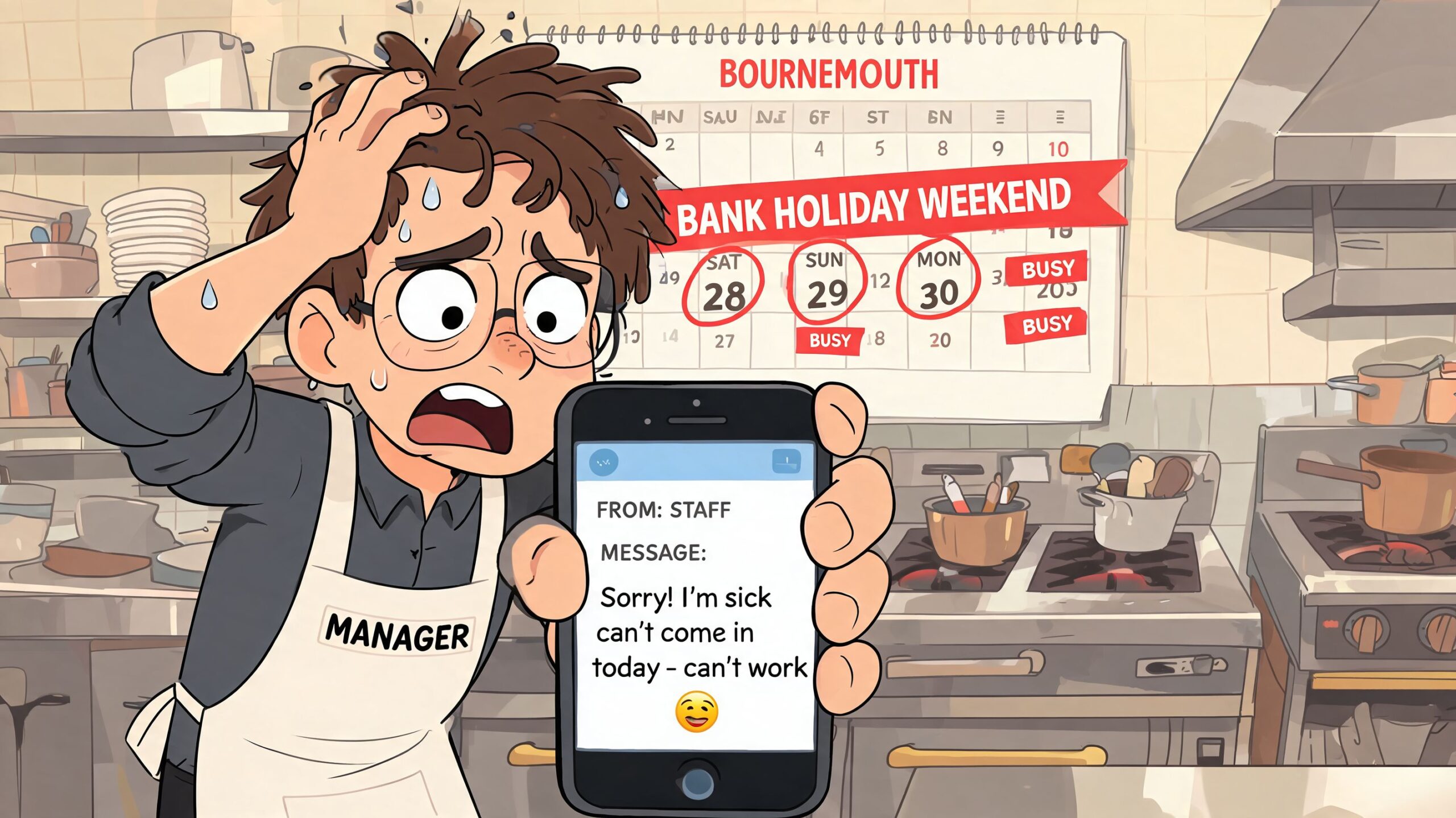
At that point, the question isn’t whether you can “get agency”. The question is whether the person sent can save service. A weak replacement creates more damage than an empty slot. Your head chef slows down to supervise. Prep gets missed. Tickets drag. Front of house starts apologising. Guests don’t care that staffing was difficult. They judge what lands on the plate.
That’s why I push owners and GMs to stop treating emergency cover as a procurement task. It’s an operational risk issue. A kitchen gap is a revenue problem, a standards problem, and a leadership problem all at once.
UK hospitality surveys from 2025 indicate that 65% of independent venues report significant operational chaos and lost revenue due to last-minute no-shows from agency chefs, which is exactly why reliability matters more than glossy sales language in a crisis (hospitality no-show data referenced here).
Practical rule: Don’t ask an agency only, “Can you send someone?” Ask, “What happens if they fail to arrive or can’t do the job?”
Most Bournemouth operators already know labour is expensive. The bigger mistake is ignoring the hidden cost of bad cover. If one poor shift wrecks guest experience, burns out your core team, and forces compensation, the cheapest option becomes the most expensive one on your rota.
If you haven’t reviewed your labour exposure properly, start with this breakdown of the cost of employing hospitality staff. It sharpens the comparison. Fixed staffing, overtime, burnout, agency risk, and service failure all hit the same profit line.
What a real crisis looks like
A proper kitchen crisis usually includes several failures at once:
- Production failure: Prep doesn’t get finished, so the menu narrows by default.
- Quality failure: Your strongest chef plates less and supervises more.
- Pace failure: Service slows, and every delay multiplies at the pass.
- Team failure: Good people start asking why they’re carrying weak cover again.
That’s why dependable emergency cover isn’t a luxury. It’s protection for the business you’ve already built.
Why a Chef Agency is Now a Core Business Strategy Not a Backup
The old view says agency chefs are for panic moments only. That view is outdated and expensive.
Bournemouth doesn’t trade on a flat, predictable pattern. Hotels, pubs, event venues, coastal restaurants, care settings, and seasonal operators all face periods where labour demand shifts fast. If you still build your kitchen around the idea that a permanent team alone will cover every peak, every illness, every holiday, and every recruitment gap, you’re planning for failure.
Fixed labour hurts when trade moves
Permanent hires matter. So does continuity. But permanent staffing alone can trap you in one of two bad positions.
You either overstaff to protect busy periods and carry cost in quieter weeks, or you run lean and ask your core team to survive every spike. The first option damages margin. The second damages retention, standards, and consistency.
Agency cover changes that equation because it lets you treat parts of labour as variable cost, not fixed overhead. That matters when you have:
- Planned leave: You know annual holiday is coming. Use cover early instead of stretching the brigade.
- Events and functions: Big bookings don’t justify permanent hires if the demand is temporary.
- Recruitment gaps: A solid temporary chef buys you time to hire properly instead of rushing the wrong permanent appointment.
- Seasonal surges: Dorset summer trade can expose every weakness in rota planning.
Temporary cover is cheaper than chaos
Some operators still resist agency support because the hourly rate looks high on paper. That’s a narrow view. The smarter comparison is between controlled temporary spend and uncontrolled operational damage.
A tired team makes mistakes. An overworked head chef stops managing and starts firefighting. Menus shrink because capability shrinks. Guests notice. Revenue follows.
A stable kitchen doesn’t come from hoping your rota survives. It comes from building backup into the business model.
There’s also a commercial benefit to using one staffing partner consistently instead of ringing around every time a problem lands. Agencies work better when they understand your menu style, site standards, service volume, and absolute standards. That reduces mismatches.
For operators who need on-demand support built into the year, not bolted on after a panic, a 24/7 chef recruitment solution makes more sense than ad hoc scrambling.
Where this matters beyond Bournemouth
The same pattern shows up across Devon, Bristol, Wales, Berkshire, Windsor, Reading, Slough, and wider Dorset. Independent venues, hotel groups, and private hospitality clients all need a staffing model that flexes without lowering standards.
That also applies outside the usual restaurant rota. If you run private households, villas, yachts, or mixed-site hospitality operations, specialist placements matter just as much as standard relief shifts. The principle is the same. You protect the operation by planning flexible cover before the pressure arrives.
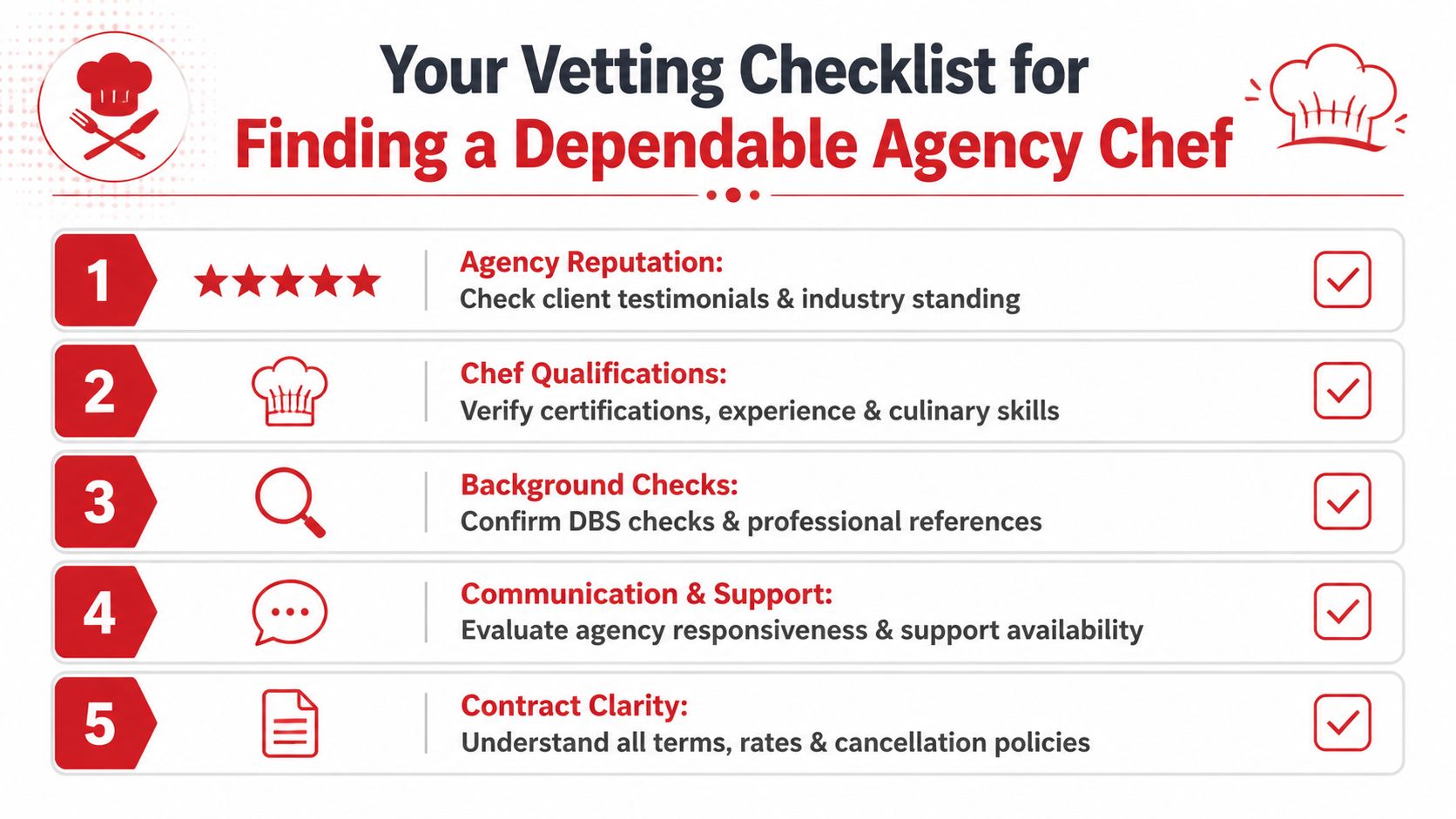
Your Vetting Checklist for Finding a Dependable Agency Chef
A chef CV tells you very little. A proper agency vetting process tells you whether the booking is safe.
In the Bournemouth and South Coast region, agency chef hiring is now so professionalised, especially in care settings, that an Enhanced DBS Check and specific experience with modified diets are mandatory requirements for many roles (South Coast agency chef requirements). That should shape how every serious operator thinks about vetting. If a role has legal, safeguarding, dietary, or reputational risk, “available tomorrow” isn’t enough.
Start with agency standards, not chef charisma
A likeable chef with a decent phone manner can still be a poor booking. Judge the agency first.
Ask these questions:
How do they verify right to work?
If the answer is vague, stop there.What checks are role-specific?
Care homes, schools, private estates, and hotels with vulnerable guests need tighter controls than a generic pub shift.Do they assess actual environment fit?
A volume banqueting chef and a fine dining restaurant chef aren’t interchangeable.What support exists out of hours?
A booking made at noon is one thing. A failure at 5.30pm is another.What’s their replacement process if the chef is unsuitable?
If there’s no clear answer, you’re carrying the risk.
Vet for the site, not just the section
A chef who succeeds in one kitchen can fail badly in another. Good agencies screen for more than rank.
Use this checklist when you brief an agency:
- Menu style: Gastropub, hotel banqueting, breakfast-heavy, fresh seafood, care catering, event production.
- Service pressure: Quiet lunch site, busy brunch trade, weddings, coach parties, peak holiday volume.
- Kitchen setup: Brigade size, equipment, prep support, ordering responsibility, allergens process.
- Leadership expectation: Do you need a pair of hands, a section leader, or someone who can run the pass?
If your brief is lazy, your booking will be lazy. Agencies can only match properly when you describe the kitchen honestly.
The documents that matter
This is the minimum standard I’d expect any competent agency to handle cleanly:
| Check | Why it matters |
|---|---|
| Right to work | Protects you from legal and compliance exposure |
| Food safety certification | Basic professional requirement for kitchen work |
| References | Helps verify reliability and recent performance |
| DBS status where relevant | Critical for care, education, and some private roles |
| Relevant experience | Reduces the chance of service collapse on arrival |
If the placement involves nursing homes or similar care settings, prior experience with modified diets and older adult dietary needs isn’t a bonus. It’s part of the job.
Red flags owners ignore too often
Most bad agency experiences were visible before the shift started. Operators just ignored the warning signs because they were desperate.
Watch for:
- Vague language about the chef’s background: “He’s good” is not a profile.
- No clarity on insurance or liability: That’s administrative sloppiness, and sloppiness spreads.
- No real briefing questions: If the agency doesn’t ask about service style, they’re matching on availability only.
- Pushy behaviour around quick confirmation: Urgency is fine. Evasion isn’t.
- No discussion of attitude: Skill matters. So does whether the chef can walk into another brigade and work like an adult.
What dependable looks like in practice
A dependable agency gives you a clear process, not a sales pitch. It asks about your operation. It tells you what documents are checked. It explains how timesheets work, who to call if there’s an issue, and what happens if a booking changes.
One option in this space is Relief Chefs UK, which supplies relief chefs, temporary chefs, permanent chef recruitment, yacht chefs, villa chefs, and wider hospitality staffing support for venues that want one partner across multiple staffing needs. The important point isn’t branding. It’s whether the agency can prove standards before your service starts.
Decoding Agency Chef Pricing and Contract Terms
Most complaints about agency pricing come from operators who don’t understand what they’re buying.
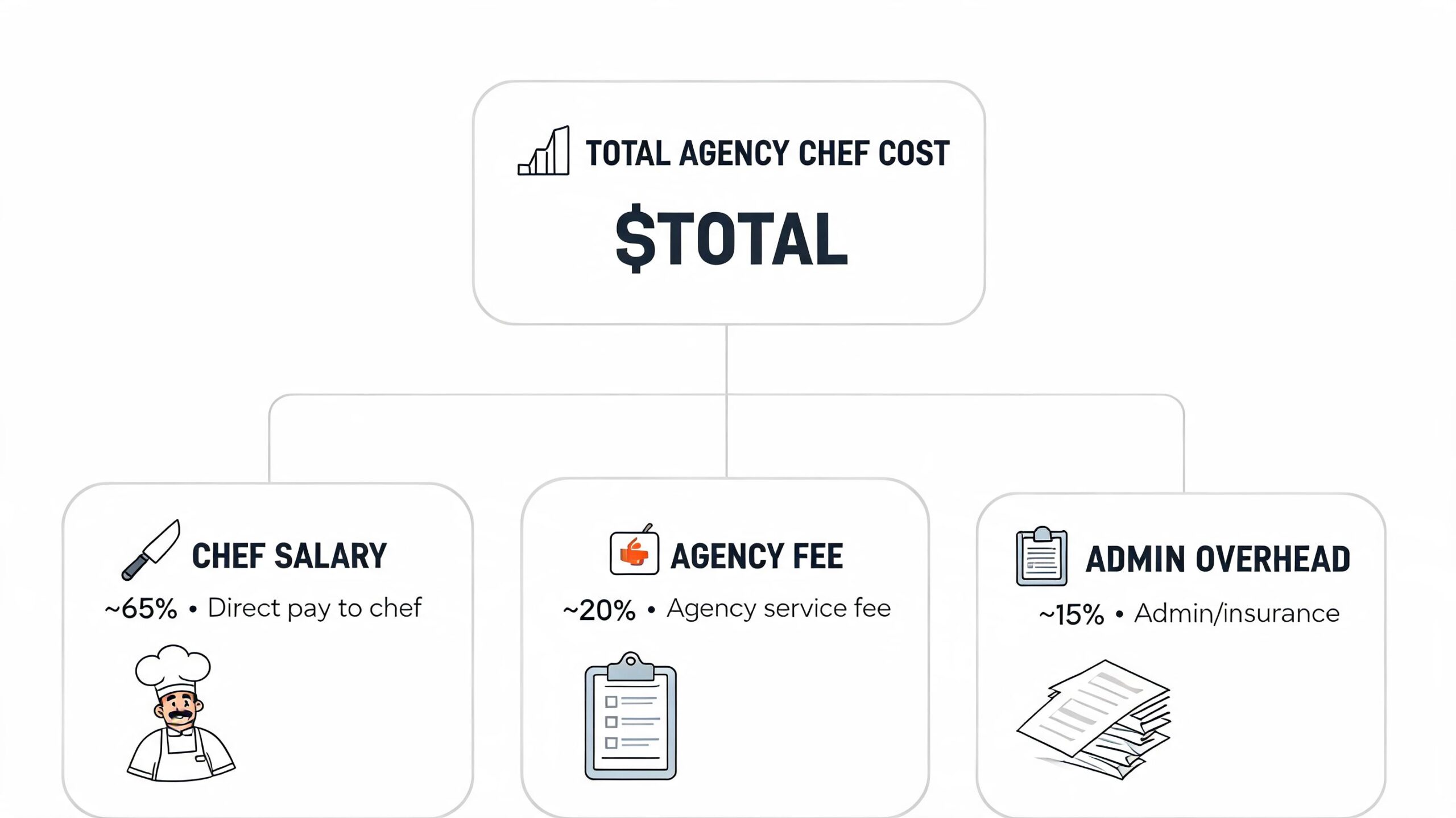
You are not buying a salary replacement. You are buying speed, flexibility, vetting, payroll handling, and reduced commitment. That’s why agency chefs cost more by the hour than permanent staff. If you compare the wrong things, you’ll always think the rate looks inflated.
What Bournemouth rates actually look like
Agency chef pay in the Bournemouth area reflects role, responsibility, urgency, and kitchen type.
According to Platinum’s Bournemouth and Dorset market overview, Chef de Partie roles start from £16.75 per hour including holiday pay, Sous Chef roles begin at £19.00 per hour including holiday pay, and Head Chef roles sit above those levels (Bournemouth chef pay overview).
Separate UK agency chef pay guidance also shows tiered rate bands of £16 to £20 per hour for Chef de Partie, £20 to £24 for Sous Chef, and £24 to £30 for Head Chef, while Bournemouth job activity was noted in a £13.50 to £27 per hour range depending on experience and role type, with higher rates on key dates and Sundays (agency chef pay bands and Bournemouth range).
Why the premium exists
The premium isn’t random. It reflects what the agency chef gives up and what the venue gains.
Agency chef pay is generally handled through hourly, timesheet-driven billing rather than fixed weekly salary, and agency chefs are paid for hours worked in the kitchen rather than receiving the broader structure of permanent employment. The same UK guidance notes that agency chefs typically command a 15 to 25% premium over permanent chef hourly equivalents because they don’t receive the same employment security and benefits (agency chef payment model explained).
For the venue, that means you’re not carrying fixed labour cost when trade drops. For the chef, it means they’re pricing in flexibility and uncertainty.
Cheap agency cover usually turns expensive when the chef needs managing, can’t cope with service, or disappears before the next shift.
Planned cover versus emergency cover
Not all bookings should be priced the same. If they are, ask why.
Longer bookings usually give agencies more room to place efficiently. Emergency short-notice cover is different. It’s harder to source, more disruptive, and often needs immediate deployment into a live problem. That’s why panic bookings tend to sit at the premium end of the range.
Operators lose money through poor planning. They wait too long, then pay more for less certainty.
A simple comparison helps:
| Booking type | Typical commercial reality |
|---|---|
| Planned holiday cover | More predictable, easier to match, usually calmer onboarding |
| Recruitment gap cover | Useful bridge while hiring permanently |
| Short-notice sickness cover | Highest risk, most urgent, often premium-priced |
| Peak-date reinforcement | Valuable when booked early and properly briefed |
Contract terms you should insist on
Before you confirm any chef, get clarity on these points in writing:
- Hourly rate: Is holiday pay included or separate?
- Timesheet process: Who signs off, when, and how disputes are handled?
- Minimum hours: You need to know your floor cost per shift.
- Cancellation terms: Essential if trade changes or your own chef returns.
- Replacement terms: What happens if the chef is not suitable or doesn’t arrive?
Transparent pricing beats a low headline rate every time. Operators don’t go wrong because an agency is expensive. They go wrong because the terms are fuzzy, the booking is rushed, and the actual cost only shows up after service.
From Crisis Call to Calm Service A Sample Timeline
The first sign of a decent chef agency isn’t the invoice. It’s what happens in the first few minutes after your call.
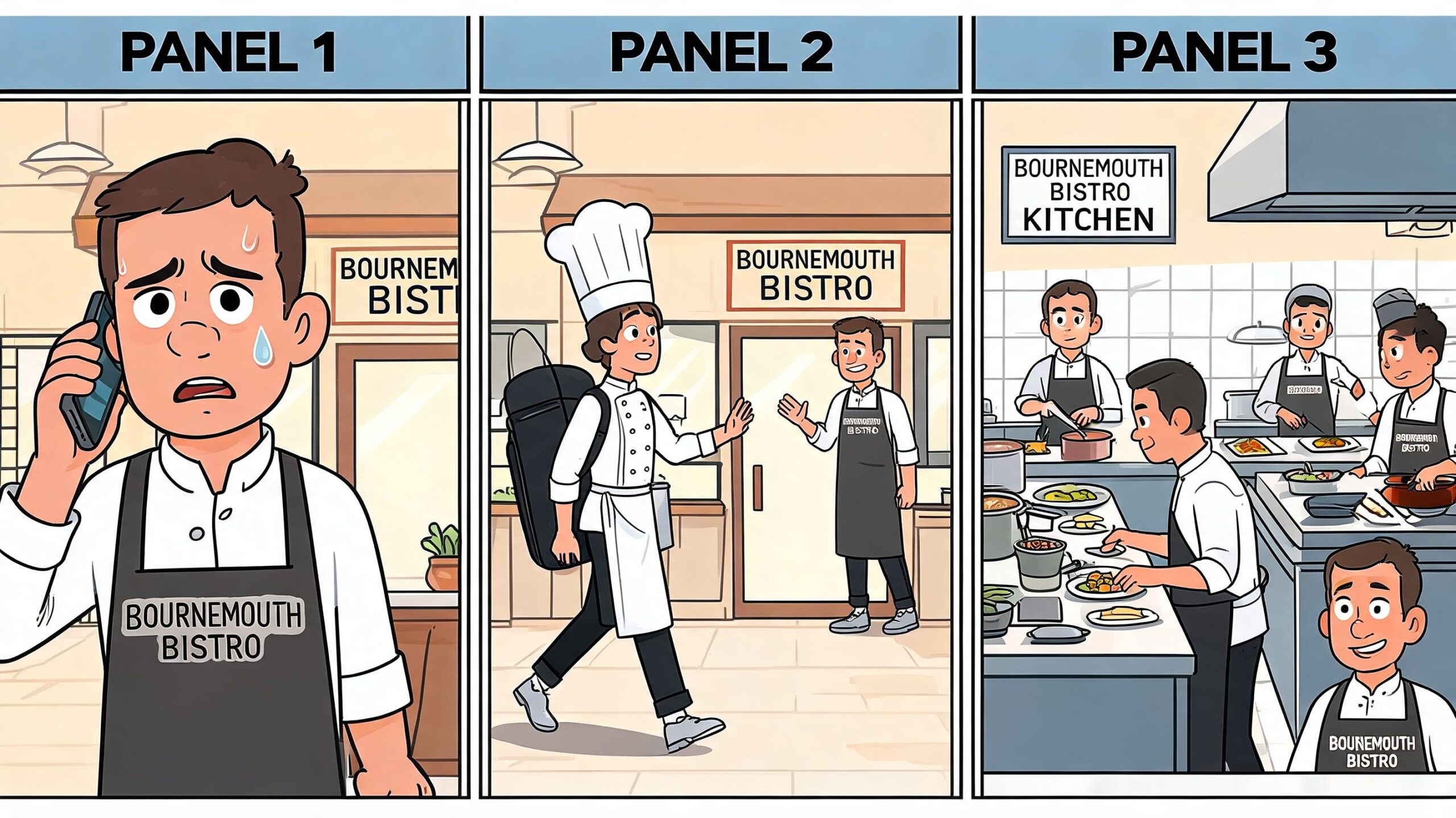
A practical timeline removes panic because everyone knows what happens next. If your current agency can’t explain its booking process clearly, it probably doesn’t have one.
The first call
You ring because the rota has broken. Don’t waste time with a vague request like “Need a chef ASAP.”
Give usable information straight away:
- Site and postcode
- Role needed
- Shift start and finish
- Kitchen type
- Menu style
- Service pressure
- Whether the chef needs to lead a section or to support one
- Any critical dietary or compliance needs
A serious agency will ask follow-up questions. That’s a good sign. It means they’re trying to avoid a bad placement.
The matching stage
Once the brief is clear, the agency should narrow to chefs who fit the site, not just the job title. A pub grill section, a boutique hotel breakfast shift, and a care home kitchen all need different profiles.
The process should feel controlled. You should know who is being proposed, what experience they have, and when they can start. For urgent or short-notice support, operators often want a response quickly and a start date fast. That’s reasonable.
Here’s a useful explainer on what kitchens should expect from relief staffing in practice:
Arrival and handover
The chef turning up is not the end of the process. It’s the handover point.
When they arrive, your team should cover:
- Kitchen layout and equipment
- Allergens and mandatory food safety rules
- Menu specs and service style
- Prep status and section priorities
- Who they report to during service
The best temporary chefs settle quickly because the site gives them the right briefing. Ten organised minutes at the start can save a miserable service later.
What good cover looks like during service
You don’t need the temporary chef to redesign your kitchen. You need them to stabilise it.
That means they should slot into the brigade, communicate clearly, respect your systems, and deliver at the level the role requires. If they’re in a senior booking, they should also lower pressure on your core team, not add to it.
After the shift, review the basics:
- Did they arrive ready to work?
- Could they handle the section?
- Did they improve stability or create supervision load?
- Would you book them again?
Over time, that feedback loop builds a stronger bench of trusted temporary chefs for Bournemouth and beyond.
Why Relief Chefs UK is the Trusted Partner for Bournemouth's Best Venues
If you run hospitality businesses long enough, you stop being impressed by promises. You want process, standards, and accountability.
Relief Chefs UK has been operating since 2013, and the proposition is straightforward. It’s run by chefs, not recruiters. The business draws on 60+ years of combined hospitality experience, offers 24/7 support, and can place fully vetted, right-to-work-checked chefs for temporary, emergency and permanent placements, subject to availability. For owners and operators, that matters because kitchen problems rarely happen at convenient times.
The model also fits the way serious venues buy labour. Some sites need emergency relief chefs. Some need temporary chefs for sustained gaps. Others need permanent chef recruitment done properly because rushed hiring keeps producing expensive mistakes. Then there are specialist needs such as yacht chefs, villa chefs, and broader hospitality staffing support across private and commercial settings.
Bournemouth doesn’t operate in isolation either. Operators with links across Dorset, Devon, Berkshire, Bristol, Wales, Windsor, Reading, and Slough need one staffing partner that can support multiple sites and service styles. That’s where a national network with local understanding becomes useful.
If your venue needs cover in Dorset, the practical place to start is the Relief Chefs Dorset service page. It gives you a direct route into short-term cover and longer-term staffing help without the usual scramble.
Frequently Asked Questions
Can a temporary chef become a permanent hire
Yes, that can make sense if the fit is right. It gives both sides a live working trial, which is often more useful than a polished interview. The key is agreeing the process with the agency before the booking starts so there’s no confusion around terms.
Do agency chefs only cover restaurants and pubs
No. Good staffing support goes wider than standard restaurant shifts. Many operators also need chefs for boutique hotels, events, care settings, private households, yachts, and villas. The important issue is matching the chef’s experience to the environment.
What if I run more than one site
Then consistency matters even more. Multi-site groups need a staffing partner that can handle different kitchen styles, different standards, and shifting labour gaps without creating extra admin for operations teams. That’s relevant whether your sites are in Bournemouth, Bristol, Wales, Windsor, or elsewhere in the UK.
Are agency chefs worth it for planned cover, not just emergencies
Yes, often more so. Planned cover is easier to brief, usually easier to match, and tends to create less disruption than a last-minute panic booking. Smart operators use temporary chefs to protect annual leave, events, and recruitment gaps before those issues become service problems.
Can agencies help with specialist roles like yacht chefs and villa chefs
Yes, if they understand hospitality, not just recruitment admin. Specialist placements need stronger matching because the environment is more personal, the standards are tighter, and the wrong hire becomes obvious very quickly.
If your kitchen in Bournemouth, Dorset, Devon, Bristol, Wales, Berkshire, Windsor, Reading, Slough, or anywhere else in the UK needs dependable chef cover, speak to Relief Chefs UK. Whether you need relief chefs, temporary chefs, permanent chef recruitment, yacht chefs, villa chefs, or broader hospitality staffing support, the priority is simple. Keep service stable, protect revenue, and stop staffing gaps from running your business.
Call the team.
Office 01392 715474 · info@reliefchefs.co.uk