
Allergen List Template: Free UK Chef Guide 2026
16 July 2026

Friday night. Two chefs down. A function table has just sat, the fryer is loaded, and a guest asks whether the sauce on the sea bass contains mustard or milk. Nobody should be guessing at that point, but plenty of kitchens still do. That's where services unravel.
A proper allergen list template stops that drift into memory, assumptions, and crossed wires. In a busy pub in Devon, a hotel in Berkshire, or a restaurant in Bristol running with agency cover and last-minute sickness, the matrix is the one document that tells every chef what can and can't leave the pass safely. It's not admin. It's kitchen control.
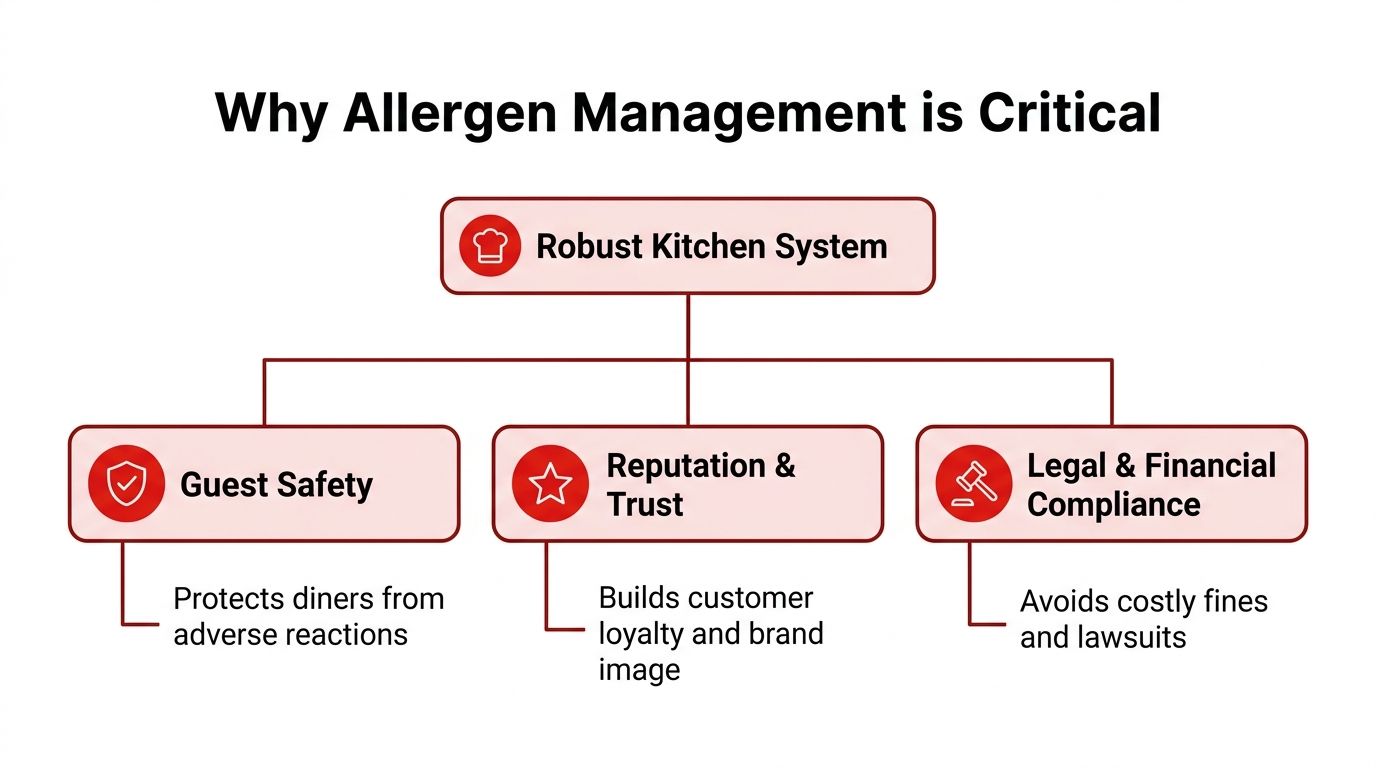
Why Your Allergen List Is a Critical Kitchen System
When a team can't answer an allergy question immediately, the problem usually isn't the question. It's the system behind it. If the recipe lives in one chef's head, if the spec sheets are stuffed in a drawer, or if the garnish changed last week and nobody updated the paperwork, the kitchen is already exposed.
In the UK, food businesses are legally required to identify and declare the presence of exactly 14 prescribed food allergens in all food and drink they supply under Article 9(1)(c) of the Food Information to Consumers Regulation, enforced by the Food Standards Agency, as set out in the UK government guidance on ingredients lists and allergen labelling.
The 14 allergens every kitchen must track
Your allergen list template needs to cover all of them, every time:
- Celery
- Cereals containing gluten
- Crustaceans
- Eggs
- Fish
- Lupin
- Milk
- Molluscs
- Mustard
- Peanuts
- Sesame
- Soybeans
- Sulphur dioxide and sulphites
- Tree nuts
That list is fixed. Your recipes aren't. That's why a static document created once and forgotten is useless.
Why this matters during real service
The kitchens that stay calm under pressure usually have one thing in common. The information is written down, current, easy to find, and simple enough that a new chef can use it without a tour guide.
Practical rule: If a relief chef, sous chef, or duty manager can't read your allergen list template and trust it within minutes, it isn't fit for service.
This becomes even more important when the rota is unstable. Short notice sickness, holiday cover, sudden coach bookings, seasonal peaks in Dorset or Wales, and unreliable agency attendance all put pressure on the pass. In that environment, structure is what protects guests and protects the business.
A professional kitchen treats the allergen matrix the same way it treats temperature records, traceability, and cleaning controls. It's part of the operating system. If you're tightening standards, health and safety compliance procedures for hospitality teams should sit alongside your allergen process, not separately.
How to Create a Bulletproof Allergen Matrix
A usable matrix starts on the shelf, not on the spreadsheet. If the raw information is weak, the finished template will be weak. The method matters.
Start with the visual guide below, then build the matrix the same way you'd build a reliable prep system. One stage at a time, checked properly.
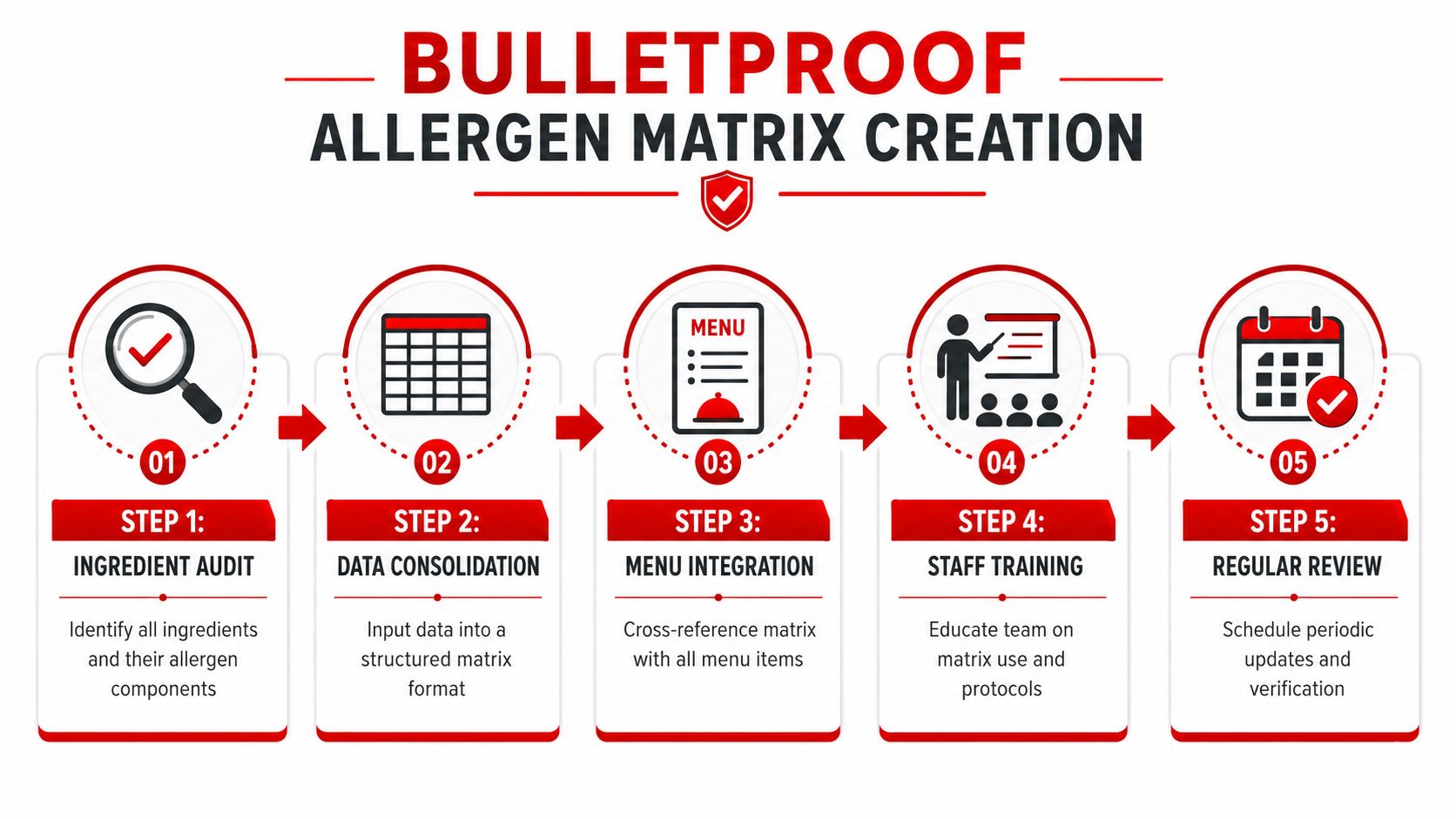
The process used in UK food businesses requires listing every product, collecting full supplier specifications, creating recipe cards for every dish, then building a grid with products as rows and the 14 statutory allergens as columns. It also requires independent second-person verification and management sign-off, as described in this UK allergen matrix guide for food businesses.
Build from ingredients, not menu descriptions
Menu wording hides detail. Ingredients don't.
If your menu says “chicken burger”, that tells you very little. The recipe card should break that down into bun, chicken marinade, flour or crumb, burger sauce, slaw, cheese, pickles, fries, seasoning, and fryer oil. You also need to capture garnishes, salad dressings, finishing oils, and any bought-in elements such as chutneys or dessert decorations.
Use a simple process:
- List every stocked product. Include sauces, spice blends, marinades, oils, dressings, desserts, bar snacks, and specials ingredients.
- Collect supplier specifications. You need the current spec sheet or label for each item.
- Write recipe cards for every dish. Include every component, even the small ones.
- Create the grid. Put dishes or products down the side and the allergens across the top.
- Mark entries clearly. Use “C” for contains, “MC” for may contain, or leave blank where not applicable.
Include the fields people forget
Most weak templates fail because they don't show who made them, when they were updated, or when they should be reviewed. A proper allergen list template should include:
- Business details such as venue name and site
- Document control including title, version number, creation date, and last update date
- Ownership with author and verifier named
- Review control with next review date
- Legend explaining symbols such as C and MC
- Update statement stating that reviews are required whenever recipes or ingredients change
A matrix without version control becomes an argument waiting to happen. The kitchen says one thing, the manager says another, and the supplier label says something else.
Verify it with a second pair of eyes
Teams frequently cut corners. Don't.
The matrix needs an independent cross-check against packaging and supplier specifications. After that, do a physical kitchen walk-through. Open containers. Check decanted products. Confirm the blue-labelled tub on the shelf is what the recipe says it is.
Then get management sign-off and file the dated evidence properly. If it isn't controlled, it isn't reliable.
A short video can help if you're training a team lead to own the process:
What a practical template looks like in service
The best format is boring in the right way. Clear rows. Clear columns. No fancy colour logic that only one manager understands.
A practical matrix for service should let a chef answer questions like these fast:
| Dish | Milk | Egg | Mustard | Gluten | Notes |
|---|---|---|---|---|---|
| Steak sandwich | C | C | C | Mustard in mayo, gluten in bread | |
| Fish and chips | C | Check fryer use and batter | |||
| Caesar salad | C | C | C | Dressing and croutons | |
| Vegan curry | Check naan or garnish separately |
Use your own full matrix for compliance, but train from examples like this. It helps new staff understand how the logic works under pressure.
If you offer a downloadable allergen list template internally, keep it simple enough that a relief chef walking into an unfamiliar kitchen can read it immediately and trust what it's telling them.
Avoiding Costly Allergen Management Mistakes
Most allergen failures aren't caused by a missing spreadsheet. They happen because somebody believed the spreadsheet was enough while the kitchen kept changing around it.
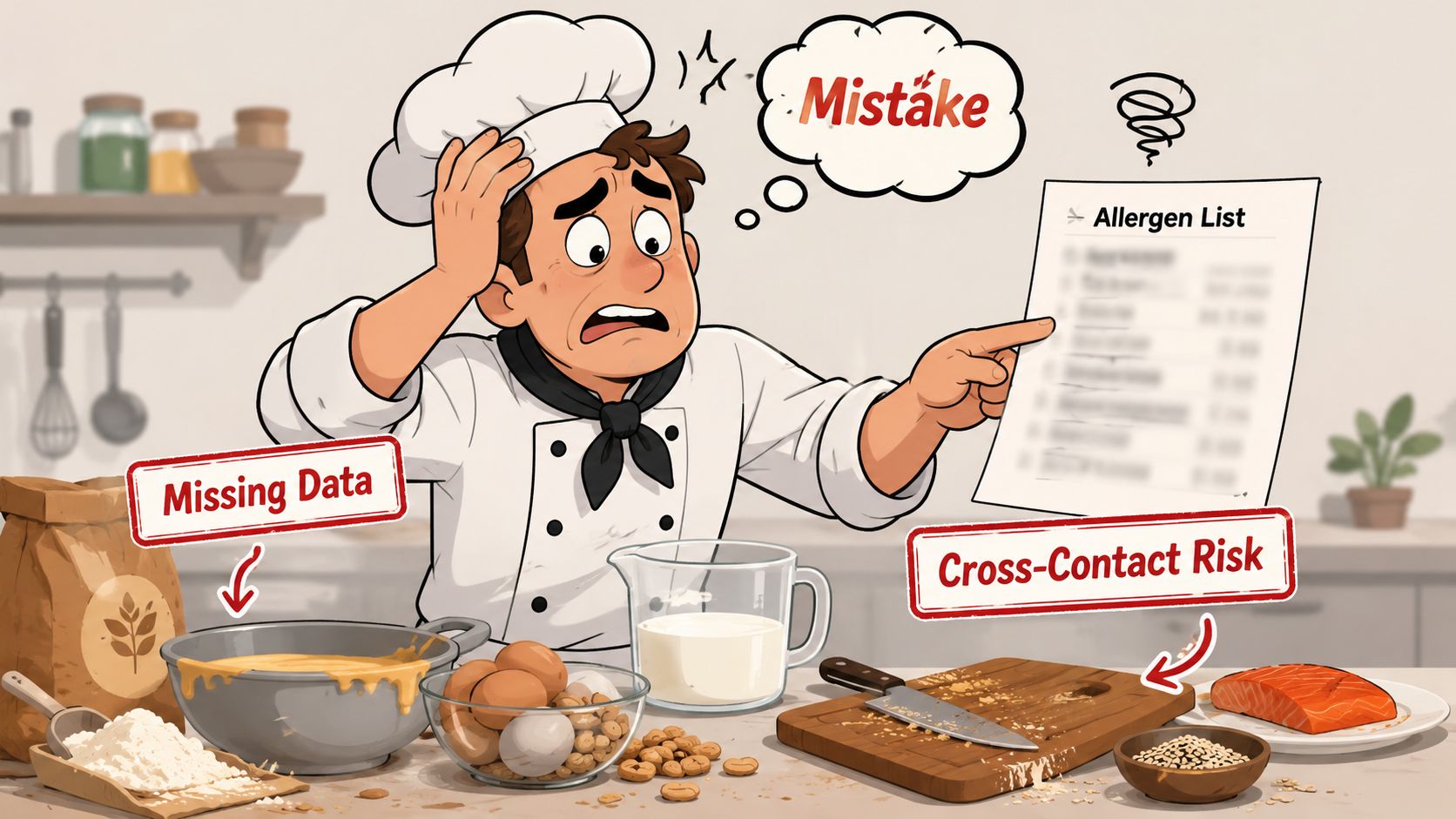
The classic example is the fryer. UK food safety guidance flags cross-contamination through shared cooking oil as a critical pitfall, and it also identifies failure to update written records when recipes change as a primary cause of allergen-related enforcement action in Food Standards Agency allergen guidance for food businesses.
The fryer problem that catches people out
A team may think the chips are fine because the potato itself contains no gluten. Then the same oil has already been used for battered items. At that point, the “gluten-free” claim has fallen apart.
That's not a theory problem. That's a service problem. It happens when the menu promise is made by front of house, but the cooking method isn't checked by the kitchen.
The paperwork trap
A matrix can look polished and still be wrong. That usually happens in one of these situations:
- Supplier swap when the ordered product is unavailable and a different brand turns up
- Chef tweak when a special becomes a permanent dish but the paperwork stays old
- Shift handover gap when the day team knows about a change and the night team doesn't
- Memory-based service when one senior chef answers every allergy query and nobody else can
The dangerous phrase in any kitchen is “I'm pretty sure”.
Staffing pressure makes weak systems collapse faster
Allergen control and staffing stability are closely linked. If your kitchen depends on one long-serving head chef to know every ingredient by heart, you don't have a system. You have a single point of failure.
That's risky in any town, but especially in hospitality hotspots where rosters move constantly. In Bristol, Windsor, Reading, Slough, and coastal sites dealing with summer pressure, it's common to rely on temporary cover, split shifts, and cross-site support. When chefs are moved around, informal knowledge gets lost first.
Use this quick check against your own operation:
| Weak setup | Strong setup |
|---|---|
| Verbal answers only | Written matrix at point of use |
| One person updates recipes | Named owner and named verifier |
| Specials communicated on WhatsApp | Specials added to written allergen control |
| Front of house asks chef every time | Team trained to access approved information |
The fix is simple, but it does require discipline. Update the document every time the recipe changes. Check the fryer use. Check the garnish. Check the bought-in dessert. Then train the team to trust the written version, not the loudest voice on shift.
From Template to Team Practice
A document in a folder won't save a service. A team that uses it will.
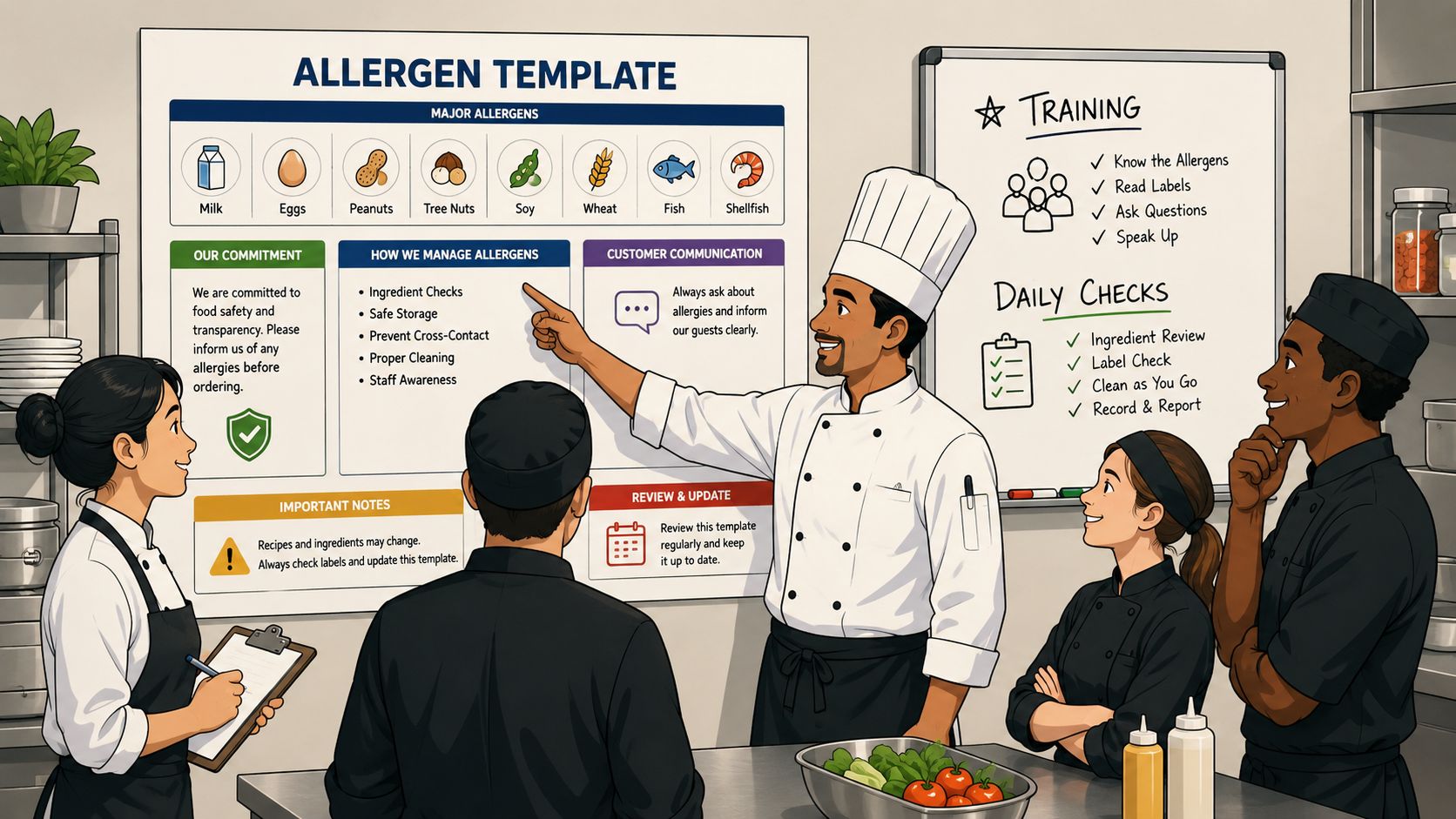
That's why implementation matters more than layout. You can have a clean allergen list template and still run a confused kitchen if nobody knows where it lives, who updates it, or how to use it during a rush.
The pressure on staffing makes this even more important. The accommodation and food services sector recorded the largest year-over-year employee decline of any UK industry at 2.7% as of late 2025, with tens of thousands of roles still unfilled, according to this UK restaurant labour shortage analysis.
Digital or printed
Both can work. The wrong choice is the one your team won't use.
A digital system suits multi-site groups, hotel operations, and businesses that update menus frequently. It gives better version control, especially when head office or senior operations managers need visibility.
A printed matrix still works well in independent pubs, smaller restaurants, and kitchens where chefs need instant access at the pass. If you use printed copies, make sure there's one controlled master and old versions are removed straight away.
Here's the practical trade-off:
- Digital works best when updates happen often and access is well managed
- Printed works best when speed and visibility on shift matter most
- Hybrid works best for many operators, with a digital master and printed service copy
Train by role, not by theory
Front of house doesn't need the same training as the grill chef. The KP doesn't need the same detail as the sous chef. Keep the briefing relevant to the job.
A working routine might include:
- Induction briefing for every new starter, including temporary chefs
- Pre-service reminders when specials, supplier changes, or menu edits affect allergens
- Role-based checks so each person knows what they can answer and when to escalate
- Visible storage point so nobody wastes time hunting for the current matrix
If a temporary chef has to ask six people where the allergen file is, your onboarding has already failed.
For venues tightening standards, formal allergen awareness training for hospitality teams helps turn the matrix into daily practice instead of occasional paperwork.
Briefing temporary and relief chefs properly
Strong systems prove their worth. A good chef joining for a weekend in Wales or covering sickness in Dorset can get up to speed quickly if the handover is clean.
The handover should include the current allergen matrix, recipe cards for key dishes, fryer separation rules, known cross-contamination risks, and any specials or substitutions running that day. That removes guesswork and keeps standards consistent even when the brigade changes.
Keep Your Kitchen Compliant and Your Service Running
A robust allergen list template does more than satisfy compliance. It gives the kitchen a fixed point when the rest of the shift gets messy. That matters when orders stack up, a commis calls in sick, or you bring in outside cover and need them safe from the first ticket.
The staffing pressure across hospitality hasn't gone away. UK hospitality vacancies fell to 69,000 in March 2026, but that reflected operators cutting back on advertising rather than roles being filled, which points to ongoing shortages and higher operating risk for businesses without contingency plans, according to this hospitality staffing costs report.
What keeps standards intact
The venues that handle disruption best usually get three things right:
- They document properly so recipes, allergens, and changes are written down
- They hand over clearly so the next chef doesn't inherit confusion
- They build for cover so a temporary chef can step in without compromising safety
A clean matrix is part of that wider discipline. So is proper kitchen handover documentation for chef transitions. When both are in place, you're not relying on luck or memory to get through service.
If your site operates across changing rotas, seasonal spikes, hotel breakfast to dinner turnover, or regular temporary staffing support, allergen control has to be built for movement. The paperwork needs to hold steady even when the team doesn't.
If you need reliable chef cover without lowering standards, contact Relief Chefs UK. Established in 2013, they support pubs, restaurants, boutique hotels, private households, yachts and villas across the UK with relief chefs, temporary chefs, permanent chef recruitment, yacht chefs, villa chefs, and wider hospitality staffing support. When short notice sickness, seasonal demand, chef shortages, or agency reliability issues put pressure on your kitchen in Devon, Bristol, Wales, Berkshire, Windsor, Reading, Slough, Dorset, or further afield, they help keep service stable. Speak to Relief Chefs UK to secure dependable nationwide chef support and keep your kitchen compliant, covered, and operational.
Call the team.
Office 01392 715474 · info@reliefchefs.co.uk