
Hire Expert Cooks at /chef-agency-wales | 2026 Relief Staff
8 May 2026
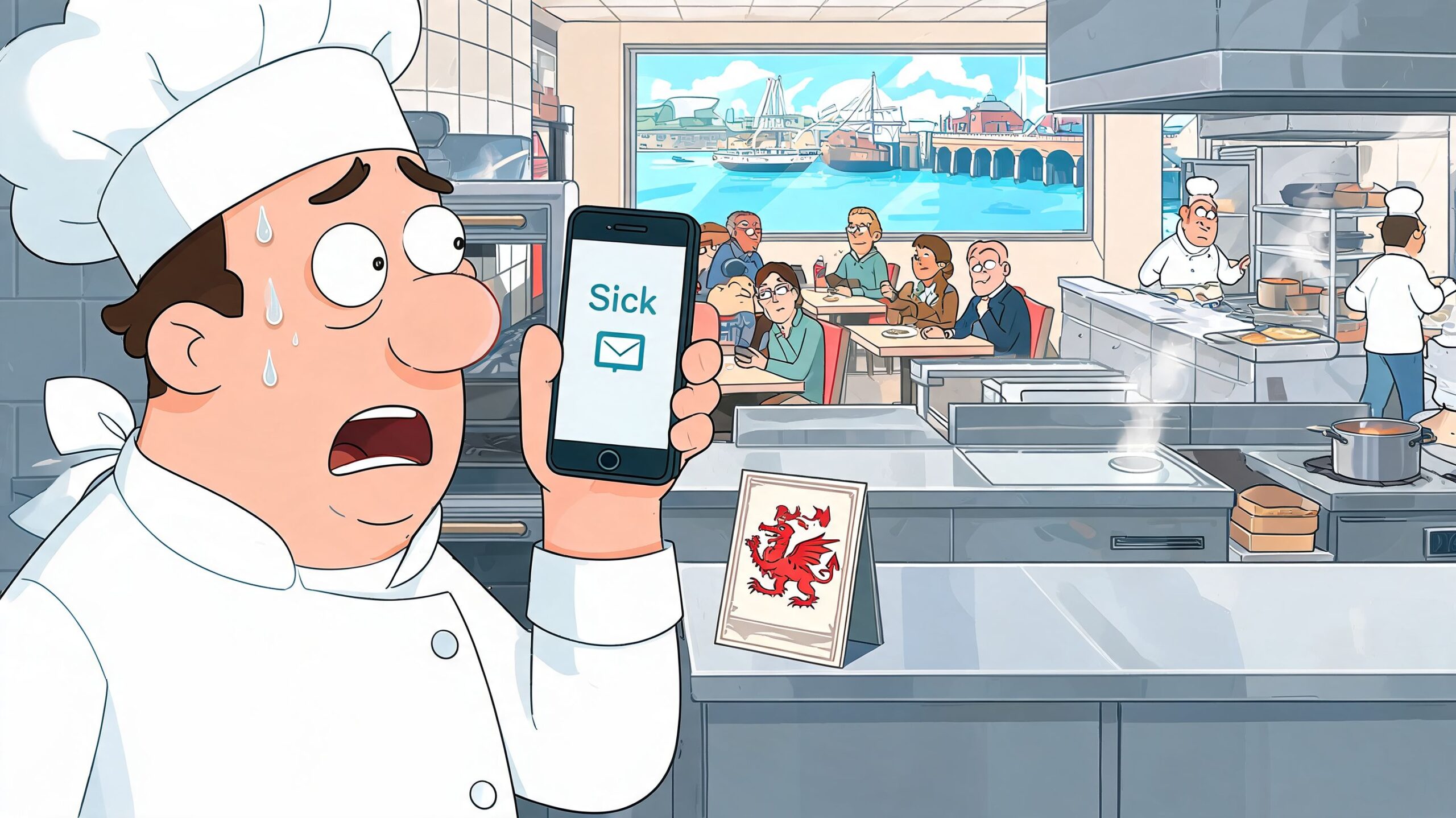
Friday night. Full book. Bar already three deep. Starters flying out. Then the phone goes.
Your sous chef is off sick. Your breakfast chef has already done a stretch. Your Head Chef is staring at the rota like it might magically fix itself. It won't.
That's the moment most Welsh operators know too well. You're not thinking about “recruitment strategy”. You're thinking about whether service survives, whether standards slip, and whether tonight's takings disappear because one key person didn't make it in.
For independent pubs and boutique hotels in Wales, staffing gaps aren't a minor inconvenience. They hit service, menu execution, hygiene discipline, team morale, and guest confidence all at once. If you're searching for /chef-agency-wales, you're probably already in that pressure zone.
Your Kitchen on the Brink? Why Welsh Hospitality Needs a Reliable Chef Agency
A short-notice chef absence can wreck a day before prep is finished.
In Cardiff, that might mean a city-centre kitchen heading into a busy Friday with no one steady enough to run the pass. In Pembrokeshire, it can mean a bank holiday lunch service with tourists arriving and no proper cover for mains. In Snowdonia, it can mean a boutique hotel trying to protect dinner service while the remaining team is already stretched.
What the pressure looks like on the ground
When owners haven't lived it, they often assume one missing chef can be covered with goodwill and a bit of graft. That's not how kitchens work.
A strong service depends on rhythm, section control, prep discipline, ordering, stock awareness, and timing. Pull one skilled chef out at short notice and the pressure lands on everyone else. The KP gets dragged into jobs they shouldn't be doing. The junior chef starts rushing. The menu suddenly becomes too big. Standards start moving.
Practical rule: The problem is rarely just one absent chef. The real problem is the chain reaction that follows.
That's why generic temp supply often fails. A recruiter who doesn't understand the difference between a solid Chef de Partie and someone who can hold a section under pressure will send the wrong person. Then you lose time twice. First covering the gap, then managing the damage.
Why Wales feels this especially hard
The issue isn't isolated. According to this Wales hospitality staffing report, UK-wide hospitality data reveals 45,000 pubs, with 58% independents, facing acute staffing shortages, and Wales' independent hospitality vacancy rate was listed at 12.4% in Q1 2026, described there as double the national average.
Independent operators feel this hardest because they don't have the depth of labour that large groups can sometimes lean on. A small pub in Ceredigion, a boutique hotel in Conwy, or a food-led inn near Brecon can't just shuffle three spare chefs around the rota. They need fast, competent cover that fits the site.
That's why many operators now treat a specialist agency as a continuity tool, not an emergency luxury. If you need Welsh kitchen cover and want a local service page that reflects that reality, the practical place to start is chef agency support in Wales.
- Short-notice sickness hits hardest during service-led trading periods.
- Seasonal peaks expose weak staffing plans fast.
- Generic agencies often understand CVs better than kitchens.
- Independent venues can't afford repeated no-shows or weak placements.
The Relief Chefs UK Difference: Run by Chefs for Welsh Kitchens
There's a big difference between an agency that fills vacancies and one that understands service.
A chef-run agency looks at your kitchen the same way a Head Chef would. Who's missing. Which section needs protecting. Whether this is a stabilising CDP, a senior pair of hands, or someone who can lead the team without drama. That judgement matters more than sales patter.
Why chef-run vetting works better
If someone has never worked a live service, they often ask the wrong questions.
They'll focus on availability before capability. They'll ask if a chef has “experience in hospitality” instead of whether they can run grill, manage prep, hold standards on garnish, or step into a breakfast-to-dinner operation without slowing the brigade down. In Welsh pubs and boutique hotels, that mismatch causes trouble fast.
According to Relief Chefs Wales, the agency was founded by chefs with over 60 years of combined hands-on experience in the catering and hospitality sector. The founders launched the business after seeing that existing suppliers were failing to deliver the standard of temporary staffing the market needed.
That matters because proper vetting in this trade is practical, not theoretical.
What experienced operators actually look for
A capable chef-run agency should be checking for things like:
- Section competence: Can this chef hold the station you need covered?
- Kitchen fit: Are they suited to a gastro pub, hotel banqueting operation, private household, yacht, or high-volume restaurant?
- Working attitude: Will they slot into the brigade and get on with it, or create friction?
- Compliance basics: Right-to-work checks must be done properly, every time.
A kitchen under pressure doesn't need a CV forwarded over email. It needs someone who can walk in, read the setup quickly, and cook to standard.
There's another point owners often miss. A specialist chef agency isn't just for emergency shifts. It's also useful for temporary chefs, permanent chef recruitment, yacht chefs, villa chefs, and wider hospitality staffing support when the operation needs more than one fix.
The trade-off most operators learn the hard way
Cheap, generic supply can look attractive when you're desperate.
But if the person sent can't cope, the team still carries the strain. Your Head Chef works the extra hours. Your standards dip. Guests notice. Managers firefight instead of running the business. In practice, the cheapest option often becomes the most expensive one.
A chef-run model works because it respects the specific circumstances of Welsh kitchens. Pubs in market towns, coastal hotels, destination dining rooms, rural wedding venues, and private hospitality settings all need slightly different things. One-size-fits-all recruitment rarely copes with that.
How to Get a Vetted Chef in Your Welsh Kitchen at Short Notice
When a chef calls in sick, speed matters. But speed without judgement is how venues end up with the wrong person in whites.
The right process is simple, direct, and ruthless about fit. Not flashy. Not complicated. Just fast enough to protect service and careful enough to avoid sending a problem into an already stressed kitchen.
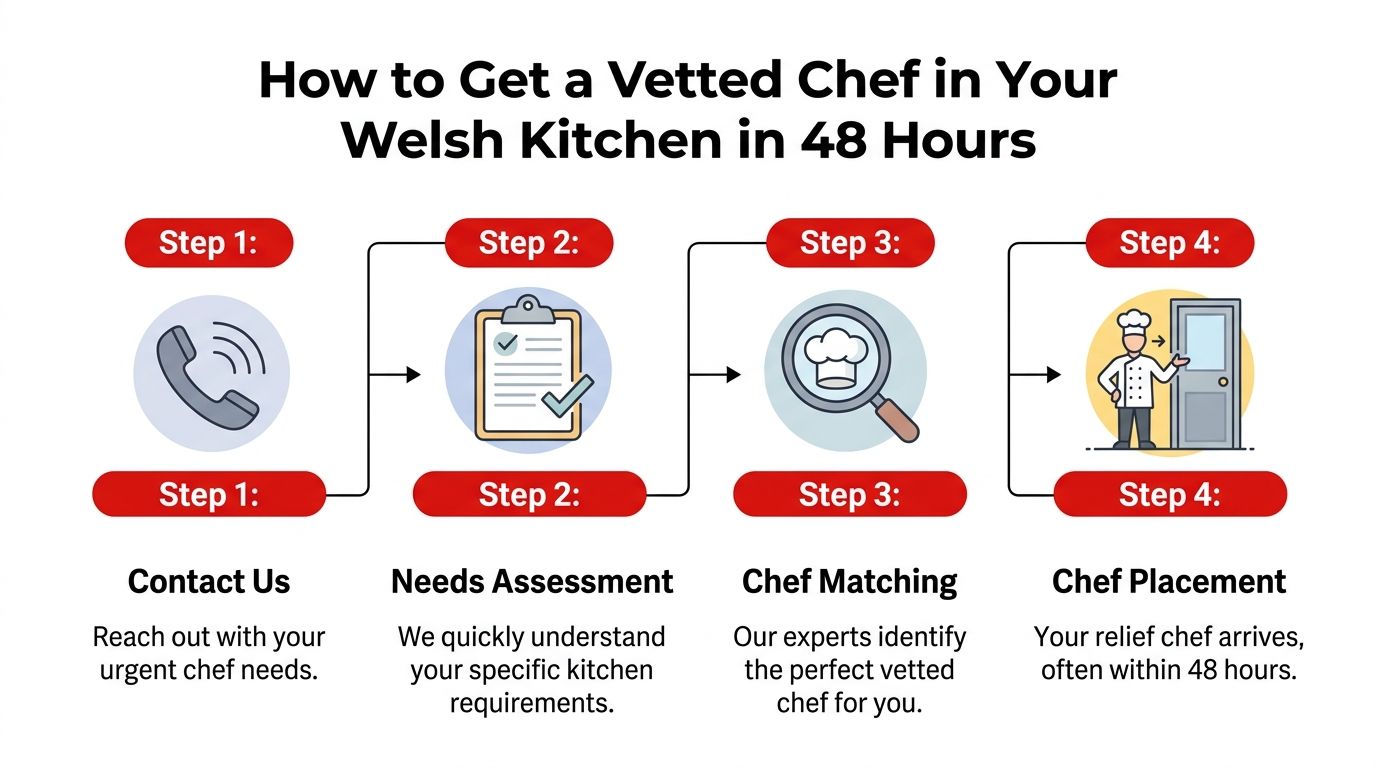
Step 1 Contact with the real brief
The first call needs to be honest.
Don't ask for “a chef” if what you really need is a calm Senior Sous-level chef who can steady a hotel kitchen through breakfast and dinner. Don't say “anyone will do” if the venue is food-led and standards matter. Good agencies can only match properly when you tell them the truth.
That first brief should cover:
- What level you need, from CDP to Head Chef.
- What sort of site you run, such as pub, boutique hotel, restaurant, private household, yacht, or event venue.
- How urgent the cover is and how long you need it for.
- What the pressure points are, such as service volume, menu style, prep backlog, or leadership gap.
Step 2 Rapid assessment and matching
A specialist chef-run process works because it filters quickly.
According to Take a Chef's Wales page, specialist agencies leveraging chef-run vetting achieve 95% fill rates for short-notice requests versus 60% for generic recruiters. The same source states that a model with a 2-hour response SLA and 48-hour deployment is proven to reduce operational downtime by 40% for independent venues facing short-notice absences.
That tells you something practical. The gap isn't just about speed. It's about whether the agency understands what the kitchen actually needs.
If you want the process through a Wales-specific service route, use relief chefs in Wales.
Step 3 Vetting that protects the venue
Weak agencies frequently make their weaknesses evident.
Real vetting isn't just checking whether someone can turn up. It means confirming right-to-work status, checking background properly, and validating skill level against the role. A pub kitchen near Tenby doesn't need the same chef as a private dining job in Berkshire or a yacht placement on the South Coast.
Kitchen test: If the agency can't explain why a chef suits your venue, they probably haven't vetted deeply enough.
Step 4 Placement and handover
Once the chef is confirmed, the handover matters.
Send menu notes. Explain service style. Flag any supplier quirks, equipment issues, prep standards, or allergens that matter on your site. Good relief chefs adapt quickly, but every kitchen runs differently. The cleaner your briefing, the faster they settle.
A strong placement process usually includes:
- Clear arrival expectations
- Named site contact
- Shift pattern and section detail
- Any critical standards the chef must protect from the first service
That's how you move from panic to a functioning service again.
Flexible Cover for Every Welsh Venue from Pubs to Yachts
Not every staffing problem looks the same, so the solution shouldn't either.
A village pub in Carmarthenshire usually needs something different from a boutique hotel in Conwy, a private household in Pembrokeshire, or a yacht operation moving between Welsh coastlines and the South West. Some venues need emergency cover for tonight. Others need a reliable stream of temporary chefs across a season. Some need permanent recruitment because the core team has gone thin for too long.
What kind of cover actually suits your venue
The most common support models tend to fall into a few practical categories.
- Emergency relief chefs for sickness, no-shows, walkouts, and sudden spikes.
- Temporary chefs for holidays, events, peak periods, refurb reopenings, and bridging gaps while you recruit.
- Permanent chef recruitment when the issue isn't one shift. It's long-term kitchen stability.
- Specialist placements such as yacht chefs, villa chefs, and wider hospitality staffing support beyond the kitchen.
The operator's job is to match the type of cover to the business problem. Too many venues use a short-term fix for a structural issue, then wonder why the rota keeps breaking.
Relief Chefs UK Services at a Glance
A useful agency setup should also recognise that small operators and multi-site groups don't buy support the same way.
| Service | Best for | Typical use |
|---|---|---|
| Emergency relief chefs | Any venue hit by sickness, a no-show or a sudden rush | Short-notice cover, subject to availability |
| Temporary chefs | Busy pubs, boutique hotels and seasonal venues | Holidays, events, peak periods and bridging gaps while you recruit |
| Permanent chef recruitment | Venues that need long-term kitchen stability | Head chefs, sous chefs and brigade roles, matched to your kitchen |
| Private, yacht and villa chefs | Private households, yachts and villas | Short stays, seasons and permanent private placements |
Matching the cover to the problem
A small independent pub may only need emergency relief chefs if staffing issues are occasional. A seasonal coastal hotel may need regular temporary chefs because the demand comes in waves. A group with sites in Wales, Bristol, Devon, or Dorset will usually want planned cover across several kitchens, because consistency and communication become as important as the chef itself. Contact our team for a quote based on the role, location and dates.
For operators looking specifically at temporary support, temporary chefs in Wales is the most relevant route.
If your venue keeps using emergency cover every few weeks, the problem probably isn't temporary anymore.
That's also where specialist hospitality staffing support adds value. You may solve the chef shortage, then realise the wider operation needs bar staff, catering assistants, housekeeping, or front-of-house support around the same pinch points. Better agencies understand the full pressure of service, not just the kitchen section list.
Real Scenarios Solved by Our Welsh Relief Chefs
The ultimate test of any chef agency isn't the website. It's what happens when the venue is under pressure and there's no room for mistakes.
Across Wales, the same patterns come up again and again. Last-minute departures. Holiday clashes. Sickness on the wrong day. Busy weeks with no depth in the brigade. The details change. The operational pain doesn't.
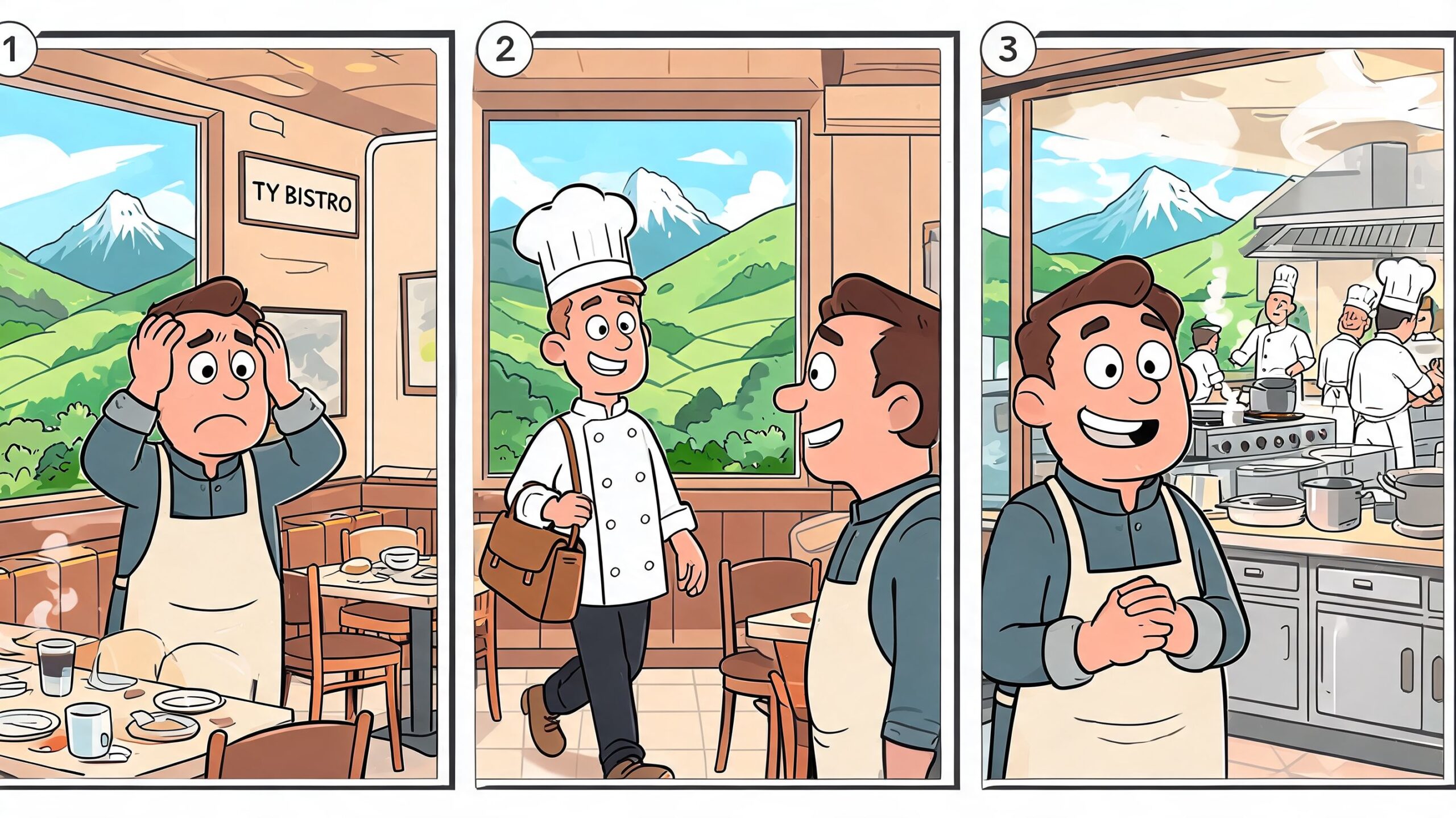
A food-led pub losing leadership before a big week
A gastropub in Monmouthshire loses its Head Chef just before a local food event. The owner doesn't need a body in chef whites. They need someone who can control prep, tighten the menu where necessary, and keep the team calm.
A chef-run agency approach solves that by sending a senior chef who can step in with enough authority to steady the kitchen and enough sense not to turn the whole place upside down on day one.
The best relief chefs don't arrive trying to impress everyone. They arrive trying to keep service smooth.
A boutique hotel bracing for the summer rush
A boutique hotel on Anglesey sees bookings build and realises the permanent team won't hold through the season. Breakfasts will stretch the brigade. Dinner service will suffer. Standards will drift if they just ask everyone to “dig in”.
Planned temporary support works far better than last-minute panic. Experienced temporary chefs can reinforce the kitchen through the heavy weeks, giving the permanent team a chance to maintain quality instead of sliding into fatigue.
According to The Chef Tree's South Wales page, the UK chef market shows steady demand, and agencies with over ten years of experience have become essential for placing chefs in busy kitchens across Wales and the South West. The same source notes that success depends on presentable, timely, and vastly experienced staff who can support menu planning, food prep, and standards during emergencies.
A restaurant group needing repeatable support
A Cardiff restaurant group with multiple sites doesn't just have one gap. It has ongoing holiday cover, sickness gaps, and pressure moving between venues. In that environment, random agency supply creates more work than it saves.
The answer is consistency. Operators need chefs who are properly briefed, turn up when expected, and can work across sites without needing hand-holding every shift. That's where a structured relationship with a specialist agency beats ad hoc booking every time.
- Pub scenario: Protect leadership and service flow.
- Hotel scenario: Add seasonal strength without damaging standards.
- Group scenario: Build a repeatable staffing pipeline, not a weekly scramble.
Our Service Area Across Wales
A proper chef agency for Wales can't only work the obvious city postcodes.
The pressure isn't limited to Cardiff and Swansea. Some of the toughest cover jobs sit in rural pubs, destination inns, coastal hotels, and privately run venues where the guest expectation is high but the local labour pool is thin. Good coverage means being useful in busy centres and harder-to-fill locations alike.
Where support is typically needed most
Across Wales, demand often comes from:
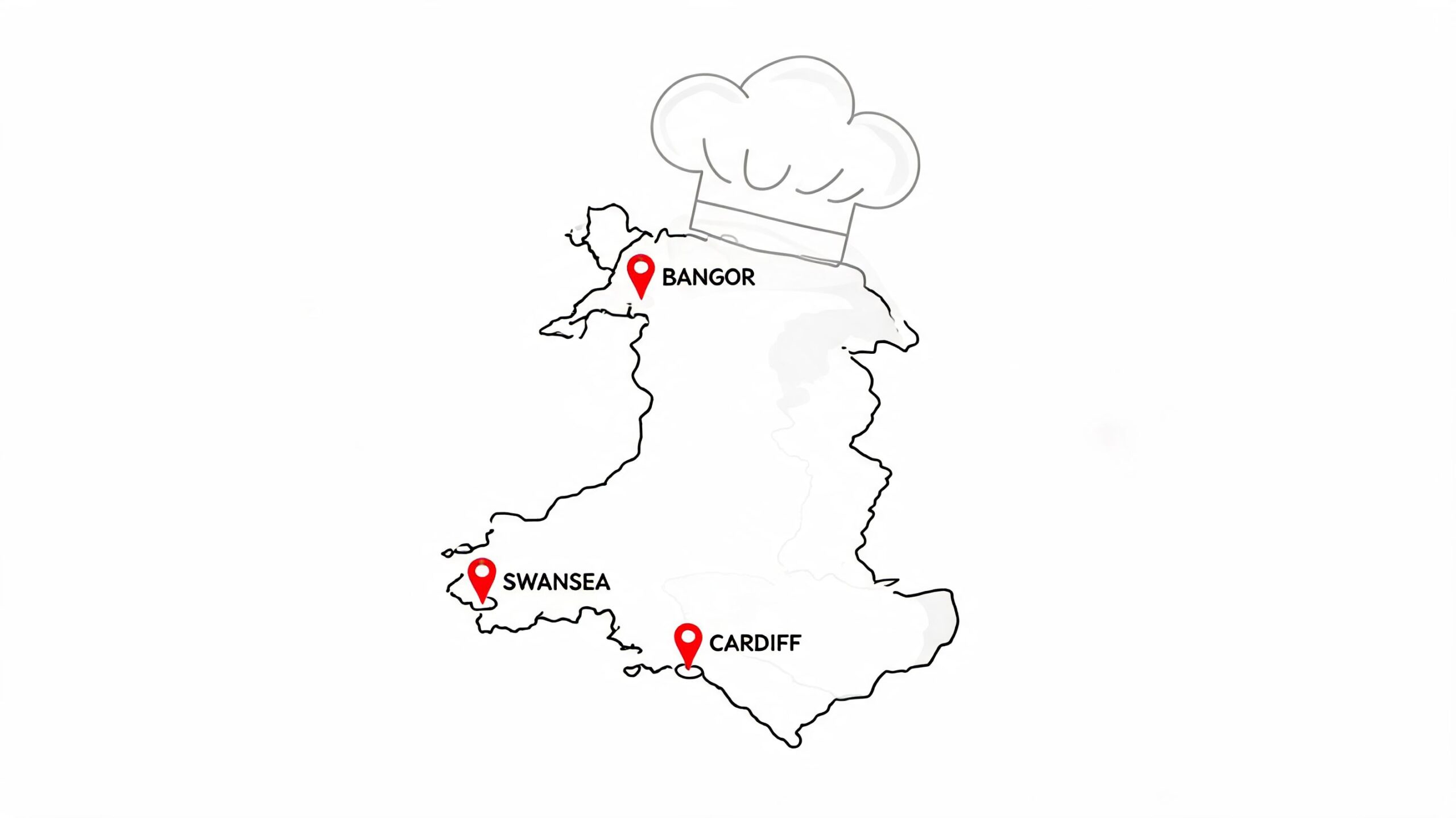
- South Wales including Cardiff, Newport, Swansea, Bridgend, the Vale, and the Valleys
- West Wales including Carmarthenshire, Pembrokeshire, Ceredigion, Tenby, Saundersfoot, and surrounding coastal hospitality areas
- Mid Wales where rural hotels, inns, and event venues often need flexible temporary support
- North Wales including Wrexham, Llandudno, Conwy, Bangor, Anglesey, and Snowdonia-facing destinations
Beyond Wales into nearby hospitality hotspots
Welsh operators don't work in isolation. Staff often move between regions, and many hospitality groups run sites across borders. That's why practical coverage also needs awareness of nearby English markets such as Bristol, Devon, Berkshire, Windsor, Reading, Slough, and Dorset.
That broader footprint matters when you need continuity, especially for groups with multiple venues or owners balancing Welsh operations with sites further afield. The best staffing support doesn't stop at a county line if the business itself doesn't.
Local knowledge matters, but so does reach. A good agency should understand both.
For independent hotels, private households, yachts, and food-led pubs, that mix of local understanding and wider UK coverage is what makes staffing support useful rather than patchy.
Your Questions About Our Chef Agency Answered
The final hesitation is usually practical. Cost. Risk. Fit. Booking length. Fair enough. Any operator who has been burned by weak agency cover will ask the hard questions.
Here are the ones that matter most.
How do agency costs work
Costs should be transparent and discussed up front.
The core issue isn't whether an agency chef costs money. Of course they do. The issue is whether the cover protects service, standards, and revenue better than trying to patch the rota internally. Hidden fees, vague terms, and unclear replacement terms are usually warning signs. Ask direct questions and expect direct answers.
What if the chef isn't the right fit
It can happen.
Even with proper vetting, one chef may suit one site better than another. That's why responsive agencies matter. If the fit isn't right, the agency should act quickly, not argue with you. A serious staffing partner treats replacement and continuity as part of the job, not an inconvenience.
Is there a minimum booking length
That depends on the role and the urgency.
Some venues need one emergency shift. Others need a block booking across a busy period, a series of weekends, or a longer temporary placement while permanent recruitment runs in the background. The sensible approach is to book according to the operational problem, not to force every venue into the same shape.
Can agencies supply more than chefs
They should be able to, especially in hospitality.
Chef cover is usually the pressure point that drives the call, but many venues also need broader staffing support. That can include front-of-house, bar staff, catering assistants, housekeeping, porters, and service staff around events or peak periods. If the kitchen gap is only part of the problem, the staffing solution should reflect that.
Should I use an agency only in emergencies
No. That's often the most expensive way to use one.
Emergency cover matters, but the stronger use of a chef agency is planned support. Seasonal pressure, holiday cover, pre-booked events, expansion periods, and permanent hiring gaps all benefit from organised staffing before the crisis lands.
Good operators use agency support before service is at risk, not after the damage starts.
What makes a specialist chef agency different from a generic recruiter
The difference is judgement.
A generic recruiter often works from availability first. A specialist chef agency works from kitchen fit first. That means understanding sections, pressure, hierarchy, standards, service style, and the difference between someone who can cook and someone who can help your venue trade properly.
If your kitchen can't afford another weak shift, another no-show, or another last-minute scramble, speak to Relief Chefs UK. They provide relief chefs, temporary chefs, permanent chef recruitment, yacht chefs, villa chefs, and wider hospitality staffing support across Wales and the UK. If you need fast, practical cover that protects service, get in touch and sort the problem before the next rota gap hits.
Call the team.
Office 01392 715474 · info@reliefchefs.co.uk