
What a Cook Staffing Agency Does and How It Helps
22 October 2026
A chef calls in sick just before lunch service. The prep list is unfinished, the pass is already under pressure, and the permanent team can't safely absorb another station. You need someone who can step into a working kitchen, understand the menu and keep service moving, not just another name on a list.
A cook staffing agency can arrange relief cover for an urgent absence, supply temporary chefs during a busy period or support permanent recruitment when a role needs filling for the long term. The value isn't just having another pair of hands. It's matching the right experience to the kitchen, making responsibilities clear and knowing the full cost before the shift begins.
What a Cook Staffing Agency Actually Does
A cook staffing agency does more than circulate vacancies or pass on a phone number. It sources and screens kitchen professionals, matches them to a business's needs and coordinates the placement. A good match considers the actual job: the station, service style, menu, shift times and level of independence required.
Consider a restaurant where the grill cook calls in sick shortly before service. A suitable relief chef may be able to take over that station while the head chef manages the pass. A general kitchen assistant or cook unfamiliar with the menu might be available, but could need close supervision at exactly the point the team has least time to give it.
The terms relief chef, temporary chef and permanent placement describe different arrangements:
- Relief chef: Short-term cover for an immediate gap, such as sickness, an unexpected departure or a planned absence.
- Temporary chef: Cover arranged for a defined period, which could include a busy season, a project or a longer recruitment gap.
- Permanent placement: Recruitment support to find a candidate for an ongoing position within the business.
A manager looking for a particular role can compare options through the agency's guide to different types of chef. The key is to specify the work, rather than assuming that a job title alone tells the agency what the kitchen needs.
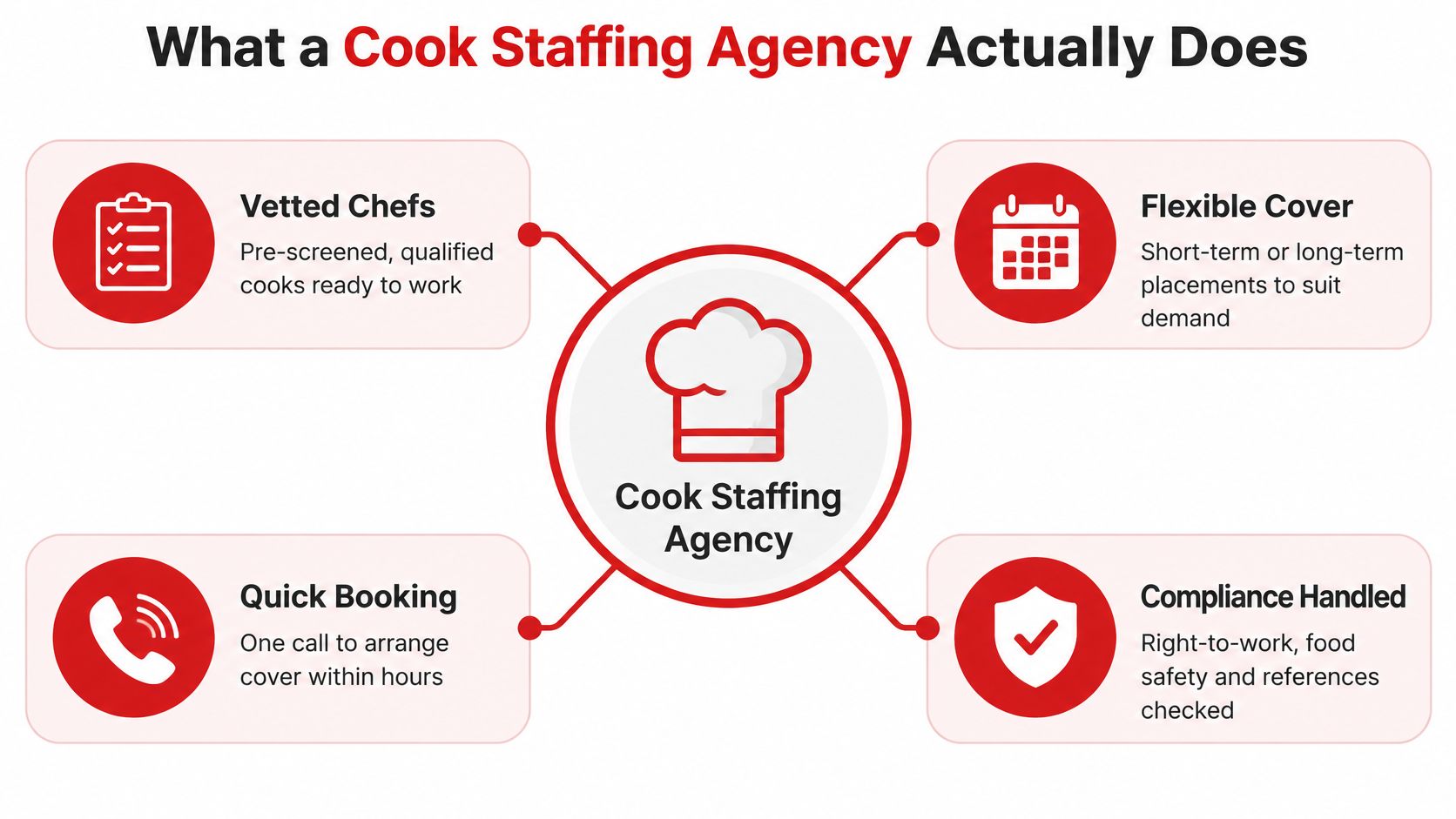
Temporary cover can help with a rota gap, a walkout, a holiday period or a scheduled event. But the agency can only make a useful match if the manager explains the kitchen's standards, the expected workload and what support will be available on shift. Tell them whether the chef will work independently, report to a sous chef or take direction from the head chef.
The need isn't limited to occasional emergencies. The UK hospitality sector recorded approximately 95,000 vacancies in the three months to September 2024, equivalent to 3.6 vacancies per 100 workers, around 38% higher than the economy-wide average of 2.6 per 100 workers, according to a House of Commons research briefing on vacancies. That helps explain why short-term cover can be part of normal workforce planning, not just a last resort.
Why UK Hospitality Needs Flexible Chef Staffing
A kitchen vacancy doesn't pause the booking list or cancel a service. The remaining team still has to prepare the food, maintain standards and manage the pass. If the absent chef covers a critical station, the manager has to decide quickly whether to find experienced cover, reduce the offer or ask colleagues to take on more.
The pressure was clear during the 2022 staffing crisis. 76% of hospitality operators with vacancies were trying to recruit chefs, while 45% had reduced trading hours or capacity because of labour shortages. The same reporting estimated £21 billion in lost trade. Those figures were reported by The Morning Advertiser in its coverage of hospitality staffing shortages and lost trade.
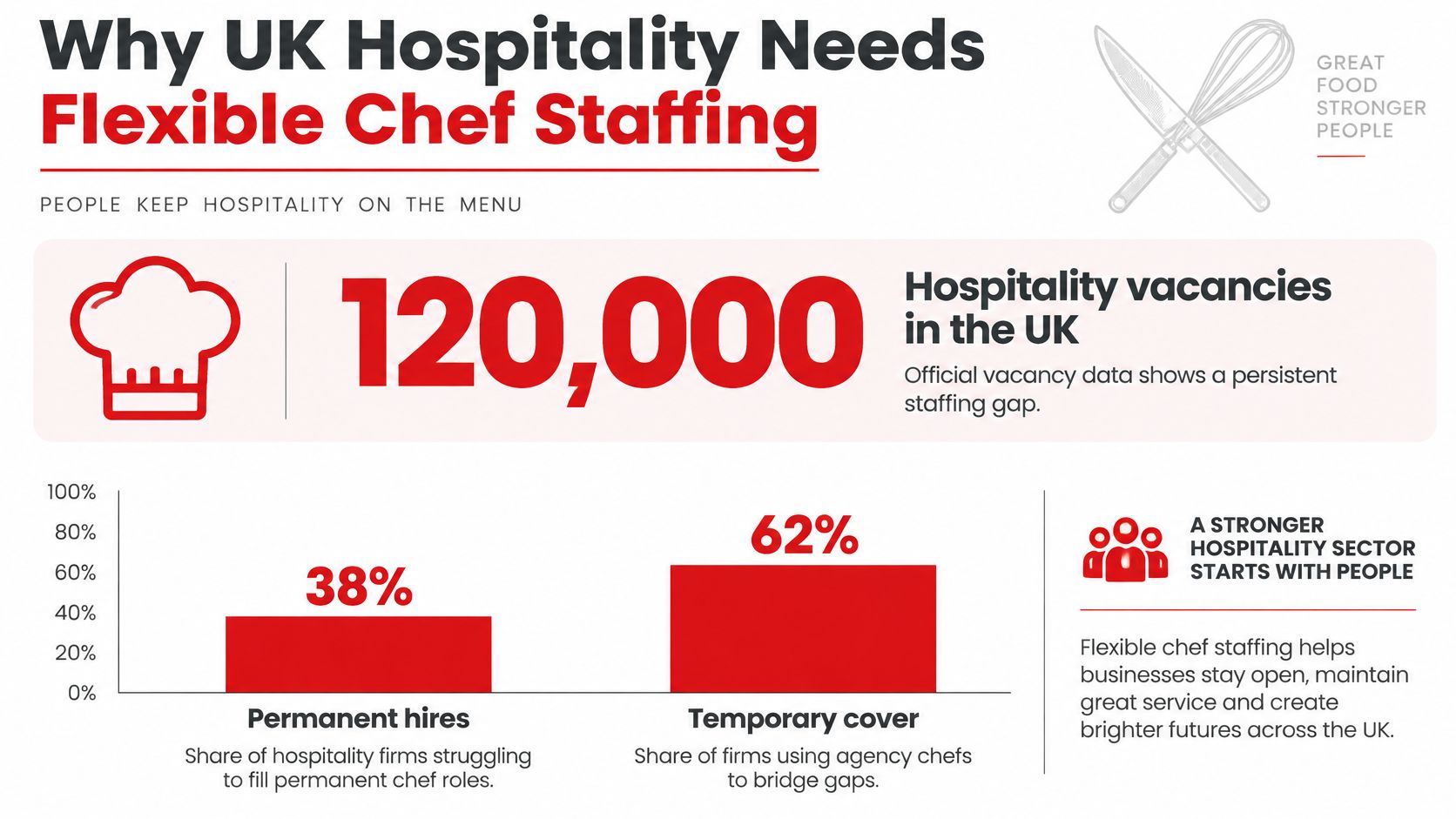
The image contains figures that aren't supported by the verified data in this article. Use the cited figures above, not numbers shown in the infographic, when assessing the scale of the staffing problem.
A rota gap has operational consequences
A missing cook may mean fewer covers, a simplified menu, slower ticket times or more pressure on the senior team. A hotel might protect dinner service by booking temporary cover, while a pub might decide that a planned event needs a chef on a particular station rather than relying on overtime. The right decision depends on the shift, but doing nothing also has a cost.
Permanent recruitment remains important, but it can't always solve a same-day absence or cover a defined seasonal spike. Flexible staffing gives the manager another option while the longer-term hiring process continues. It works best when the business has a clear brief and the agency understands the kitchen's expectations.
Practical rule: Keep recruiting for the permanent role, but don't leave today's service dependent on a vacancy being filled in time.
Planning also matters. Reviewing expected covers, functions and holidays in advance can help a business identify pressure points before the rota fails. A seasonal demand forecasting guide can support that planning, especially for venues whose trade changes with tourism, events or the local calendar.
Agency Cover Versus the Realistic Alternatives
When a chef is missing, managers often weigh four choices: book agency cover, close or reduce a service, run short, or ask the permanent team to work extra hours. None is automatically right for every kitchen. The sensible choice depends on service demand, the role that's uncovered and whether the remaining team can deliver safely and consistently.
| Option | What it may protect | Main trade-off |
|---|---|---|
| Book agency cover | Service continuity and the existing menu | You pay a placement cost and need to brief the chef clearly |
| Close or reduce service | The team's workload and ability to maintain standards | Guests may be turned away, and planned trade may be lost |
| Run understaffed | The rota's immediate labour cost | Service can slow, the menu may suffer and the team carries extra pressure |
| Use overtime | Familiarity with the kitchen and menu | Fatigue can build, especially if extra shifts become routine |
The cheapest hourly option isn't necessarily the least expensive outcome. An uncovered station may force the manager to reduce the menu or turn away covers. Overtime may seem straightforward, but relying on it repeatedly can leave permanent staff tired and less resilient when another absence occurs.
Match cover to the actual problem
A relief chef should be briefed against the position that needs covering. If the missing cook handles the grill, a chef with experience on that station may be a better fit than a more senior candidate whose background is primarily in a different style of kitchen. A clear menu brief, service time and reporting line help the agency identify a suitable match.
There's also a difference between availability and readiness. A chef who arrives without the right station experience may need constant direction. That can shift the pressure onto the head chef rather than relieve it. Explain what the cook must be able to do independently, and what can be taught during the handover.
Cost pressures matter, too. ONS-based analysis reported approximately 79,000 vacancies in accommodation and food services in the three months to May 2025, while payrolled employment fell 4.6% year on year and average weekly earnings rose 4.3%, as reported in Restaurant Online's coverage of hospitality employment and pay. Compare a placement's full cost with the practical alternatives, including overtime, reduced capacity and the consequences of a service that can't run as planned. A guide to how much chef cover can cost can help frame the questions to ask before confirming a booking.
How the Booking Process Works from First Call to First Shift
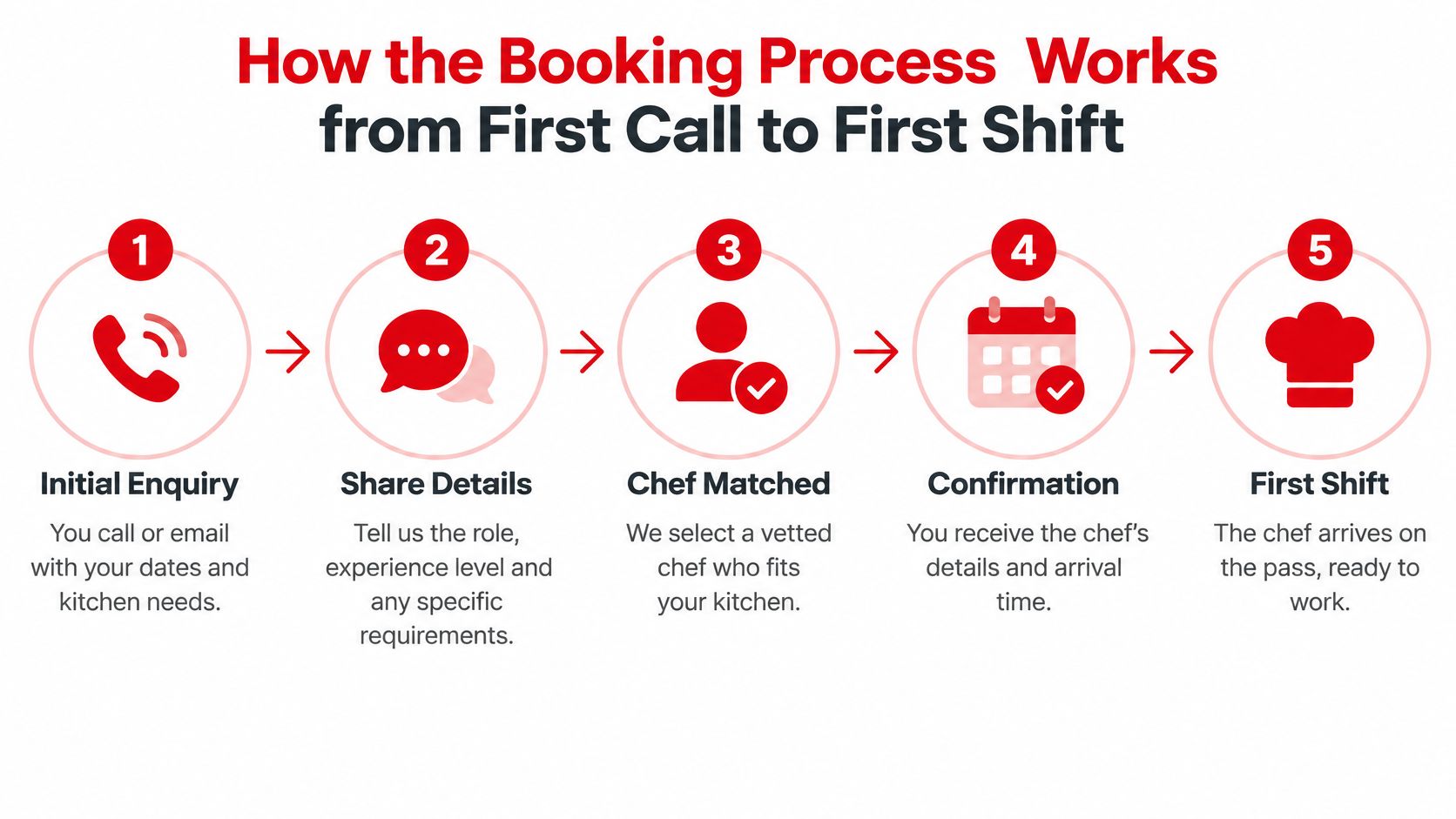
A useful booking starts with a clear description of the gap. “We need a chef tomorrow” tells the agency when, but not what kind of chef can help. Explain whether you need a Chef de Partie, Sous Chef or another role, which station is uncovered and how the kitchen works during service.
Give the agency an operational brief
Share the shift times, location, menu style, expected covers and the equipment the chef will use. Mention any accommodation arrangements if relevant, and be clear about the level of supervision available. A city restaurant in Bristol with a busy à la carte service has different needs from a country hotel running a set menu for a function.
Specificity matters because a skills shortage can be a capability problem as well as a headcount problem. A London government hospitality assessment reported 46,000 vacancies in 2024 that were hard to fill because of skills shortages, representing 24% of vacancies, and identified 310,000 employees who were not fully proficient, according to the London hospitality-sector assessment. A job title alone won't tell an agency whether a chef can handle your station, service pace or menu.
Confirm checks and shift arrangements
Before accepting a booking, establish what checks the agency completes and what documents or information the business must provide. Confirm the chef's arrival time, who will meet them and who will lead the handover. The on-duty manager should be ready to explain kitchen layout, service expectations, food-safety routines and any relevant allergen procedures.
On the day, a concise induction is still necessary. Show the chef the storage areas, equipment, pass routine and station mise en place. Point out how the team communicates during service, and name the person who can answer questions. Even an experienced temporary chef needs local information to work safely and consistently.
After the shift, check the timesheet and raise any issues promptly with the agency. If the placement has worked well, record the chef's role and the type of service they handled. That makes future bookings easier to brief without assuming every kitchen or shift is interchangeable.
How Relief Chefs UK Stands Apart
The key difference between a chef-led agency and a general recruiter is the quality of the conversation before anyone arrives. A recruiter who understands kitchen work will ask what station is open, how busy service gets and whether the chef must work independently. Those questions help separate a role that needs immediate cover from one that needs a longer-term recruitment plan.
Relief Chefs UK was established in 2013 and provides nationwide relief chefs, temporary chefs and permanent chef recruitment support for businesses needing continuity during vacancies, seasonal demand or emergency absences. Its chef recruitment and temporary staffing services cover hospitality businesses across the UK.
The placement should fit the kitchen
A chef's experience has to match the job, not just the title. A hotel looking for a Sous Chef to support a large brigade may have different requirements from an independent restaurant that needs a Chef de Partie to take charge of a section. A good brief gives the agency the information to discuss that distinction before confirming a placement.
Businesses can ask about the checks behind a booking, including right-to-work verification, references and insurance. Relief Chefs UK states that its chefs are professionally screened, reference-checked and verified for the right to work, and that chefs carry public liability insurance up to £10 million. Managers should still confirm the details relevant to their own placement and responsibilities.
The service range includes temporary and emergency cover, permanent chef recruitment and support for specialist settings. A business might need a relief chef for a short absence, a permanent appointment to stabilise its kitchen team, or a yacht chef or villa chef for a private or seasonal operation. Those are different briefs, so be direct about the working environment, accommodation and expectations.
Nationwide coverage also matters when an operation sits outside a major city or has several venues. A hotel in Wales, a pub in Berkshire or a venue near Windsor, Reading or Slough may need a different staffing approach from a central London restaurant. The useful question is not just whether an agency operates nationally, but whether it can understand and respond to the needs of your particular kitchen.
Real Scenarios Where Temporary Chefs Save the Day
A Bristol restaurant loses a chef shortly before evening service. The manager's immediate decision is whether to reduce bookings, strip dishes from the menu or seek someone who can take over the affected station. A well-briefed relief chef can help the permanent team keep the service workable while the manager handles the longer-term vacancy.
At a Devon hotel, the challenge may be different. The rota can be stable during quieter periods, then come under pressure when school holidays, weddings or local events bring more guests through the door. Booking temporary cover for known busy dates can give the head chef room to manage the brigade and protect the planned service rather than wait until a rota gap becomes an emergency.
A Berkshire gastro pub may face a short-notice sickness absence on a busy weekend. If the team has no spare capacity, asking the same cook to work another shift could solve today's rota and create a problem later. A manager should check the chef's experience against the menu and station, then confirm who will provide the handover.
Plan around local demand, not headlines
A Dorset venue hosting weddings has to think about event dates and service requirements, not just its ordinary weekly rota. Recruitment and Employment Confederation data reported in 2025 showed hospitality job postings for summer work were down 25% year on year, yet coastal and tourism-led areas such as Dorset, Devon and Cornwall still face intense demand during school holidays and events, as reported by The Caterer. A fall in advertised roles doesn't tell a venue that it has enough chefs for a specific function.
The same planning approach applies to hotels in Wales, seasonal resorts and event venues across the UK. Look ahead at confirmed functions, expected covers and holiday requests, then identify the dates when the permanent team can't cover service comfortably. Share those dates with the agency early and reserve suitable chefs where possible.
Relief cover is most useful when it solves a defined problem. It won't repair a poor rota or replace a retention plan, but it can protect a shift while permanent recruitment continues. Keep the role, menu and service brief practical, and tell the agency about changes as soon as they arise.
What to Look for When Choosing a Cook Staffing Agency
Don't choose an agency on the headline hourly rate alone. The placement has to work in your kitchen, arrive as agreed and come with clear responsibilities. A specialist hospitality agency should be able to discuss stations, service style and chef seniority, rather than treating every kitchen role as interchangeable.
Ask these questions before confirming:
- Vetting: What experience is checked, and how does the agency assess a chef's suitability for the role?
- Compliance: Who verifies right to work, references, qualifications and relevant food-safety competence?
- Insurance: What cover applies to the placement, and what documentation can the business review?
- Reliability: What happens if the chef cancels or doesn't arrive as agreed? Who should the manager contact?
- Terms: What are the minimum shift length, cancellation conditions and any permanent conversion fees?
- Aftercare: How are timesheets handled, and who follows up if the match isn't right?
Compare the all-in cost
Ask for an itemised explanation of the charges before accepting the shift. Depending on the arrangement, the total may include chef pay, the agency margin, VAT where applicable, travel or accommodation, an unsocial-hours premium, a minimum shift and cancellation terms. Don't assume these are included in a quoted hourly rate; have the agency confirm what applies.
Then compare the full placement cost with the realistic alternatives. If the uncovered station means cancelled covers, overtime or a reduced menu, record those implications alongside the agency quote. That gives the general manager or owner a more useful basis for deciding than comparing hourly rates in isolation.
Hospitality continues to face recruitment pressure. The sector recorded about 77,000 vacancies between September and November 2025, roughly three vacancies per 100 workers, while hospitality hourly pay remained well below the UK full-time median, according to The Drinks Business' reporting on hospitality rates and wages. A pre-vetted roster can help with continuity, but it's still worth checking that the agency's process, service and costs suit your operation.
Frequently Asked Questions About Cook Staffing Agencies
Who checks a temporary chef's right to work and references?
Ask the agency to confirm which checks it completes, when they're done and what records are available. Relief Chefs UK states that it verifies right to work and checks references. The employer should also clarify its own responsibilities, particularly for workplace induction and any venue-specific requirements.
How are timesheets, PAYE and holiday pay handled?
The answer depends on the employment and supply arrangement. Before booking, confirm who employs or pays the chef, how time is recorded and approved, and how PAYE and holiday pay are treated. Ask for these points in writing so the manager and finance team know what the invoice covers.
What's included in the cost of an agency chef?
Request an all-in breakdown, not just an hourly figure. Check whether the price includes the chef's pay and agency margin, and whether VAT, travel or accommodation, unsocial-hours premiums, a minimum shift or cancellation charges apply. If you may want to hire the chef permanently, ask about any conversion fee before the placement begins.
When can agency cover make more sense than permanent recruitment?
Temporary cover can be a practical option when demand changes by season, a vacancy is being recruited for or an absence leaves a shift uncovered. A rural pub, seasonal hotel or care home may not have the same predictable need for a permanent role throughout the year. Compare the temporary booking with the likely cost of overtime, reducing service or closing, then consider permanent recruitment if the requirement is ongoing.
The staffing picture changes over time, but a business still needs enough people to run each shift. ONS figures for April to June 2025 recorded an estimated 79,000 vacancies in accommodation and food services, compared with 727,000 across the wider UK economy. Hospitality had also lost 84,000 jobs since October 2024, approximately 45% of total UK job losses, according to The Morning Advertiser's report on hospitality vacancies and job losses. For a manager, the practical question is whether the kitchen can deliver the planned service with the team available.
Need relief chefs, temporary chefs, permanent chef recruitment or specialist support for a yacht or villa kitchen? Contact Relief Chefs UK with your location, dates, role and service requirements, and discuss a suitable staffing option for your operation.
Call the team.
Office 01392 715474 · info@reliefchefs.co.uk