
Friday night in a pub kitchen is rarely calm. The ticket rail is full, the second chef is plating mains, and then the phone lights up with a short-notice sickness call. By the time the guest complaint lands in the inbox, the meal is long gone, the shift is over, and the person who could've fixed it in the moment has already clocked off.
That's why customer feedback systems matter in hospitality. In a pub, restaurant, boutique hotel, or yacht charter, feedback isn't a marketing extra, it's part of service recovery, rota resilience, and reputation control. If you run a venue in Devon, Bristol, Wales, Berkshire, Windsor, Reading, Slough, Dorset, or anywhere else in the UK, the question isn't whether guests will comment. It's whether your system catches the right comments early enough to do something useful.
Why Most Hospitality Venues Collect Feedback Too Late
A lot of venues still treat feedback like admin. A guest leaves, a manager checks reviews on Monday, and a bad experience has already hardened into a decision not to return. The operational problem isn't the complaint itself, it's the delay between the moment something went wrong and the moment anyone took ownership.
In hospitality, that delay is expensive in a practical sense, even when you can't put a neat number on it. A diner who had a cold plate on Friday night doesn't want a generic apology three days later. A hotel guest who struggled at check-in needs acknowledgement fast, while the stay is still emotionally live.
The three failure modes I see most
The first is slow response. Feedback sits in a shared inbox, on a review site, or in a spreadsheet until someone has time to look at it.
The second is no owner. Everyone can see the issue, nobody knows who should act, and the complaint becomes background noise.
The third is no visible fix. Even when the kitchen changes a prep process or front of house adjusts a handover, nobody tells the guest. That's how venues miss the trust-building part of the job.
Practical rule: if a piece of feedback can't reach the person who can act on it, the system is just collecting noise.
That's why I think of feedback as service-recovery infrastructure, not a survey programme. The best venues don't wait for a monthly dashboard. They route comments to the shift lead, the duty manager, or the head chef while there's still something to salvage.
What a Customer Feedback System Actually Is
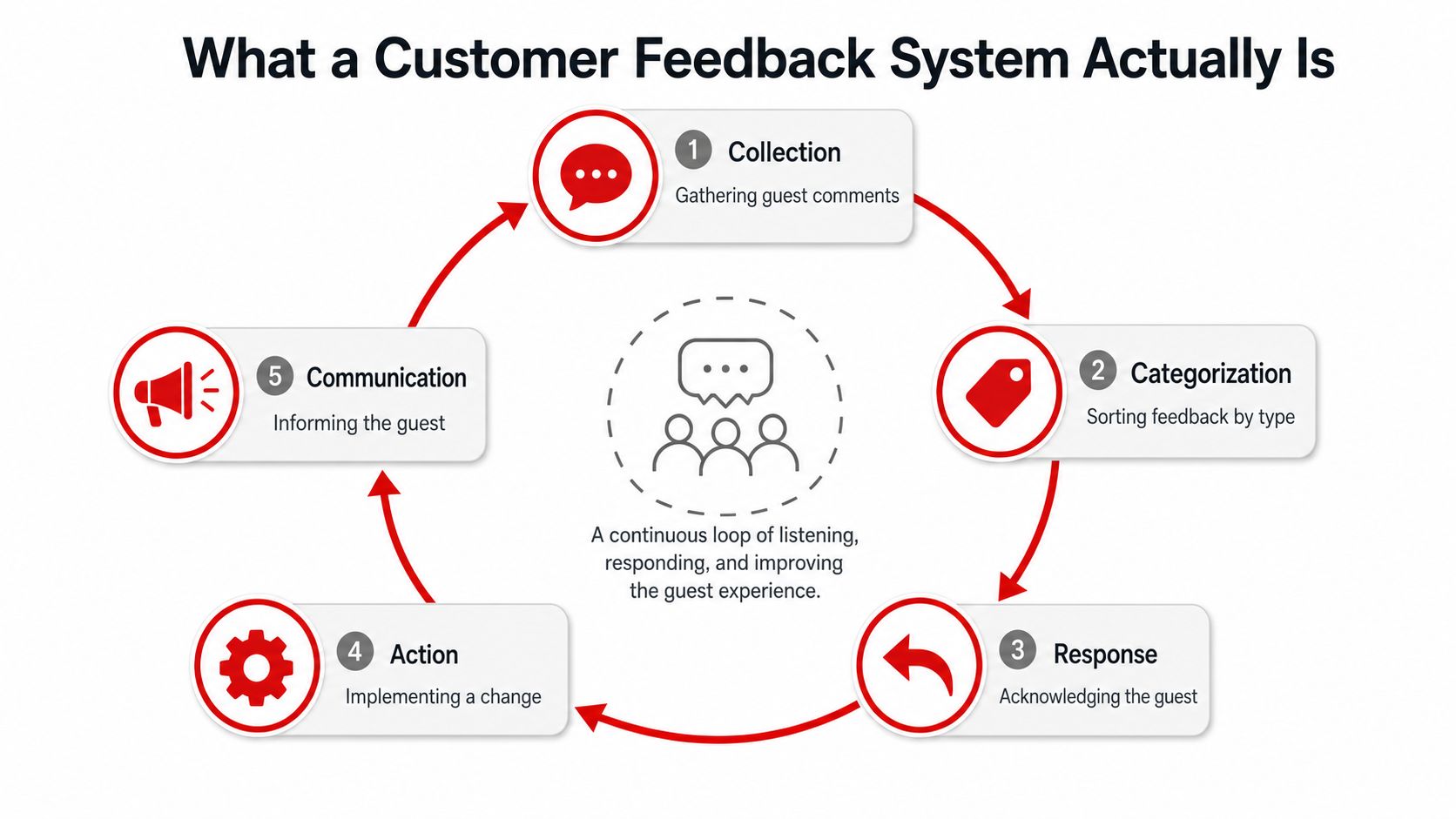
A customer feedback system is the full loop, not the form. It covers collection, categorisation, response, action, and communication, so every comment gets seen, prioritised, and cleared in a structured way, much like a kitchen pass where every ticket has a status and an owner. That definition matters because too many venues confuse a survey link or a review platform with a working system.
From comments to context
The input can be solicited or unsolicited. Solicited feedback is the survey you send after a meal, stay, or charter. Unsolicited feedback is the Google review, the TripAdvisor note, the WhatsApp complaint, or the support ticket that arrives without being asked for.
The system gets stronger when you attach behavioural context. It helps to know what the guest ordered, which room they stayed in, what time they arrived, or where the service broke down. A vague “service was poor” note is less useful than the same note tied to a specific booking, table, or shift.
Why the loop matters
Collection without response creates a dead end. Response without action creates a polite delay. Action without communication leaves the guest unsure whether anyone listened.
A working system does all five stages well:
- Collection gathers guest comments at the right point in the journey.
- Categorisation sorts the feedback by issue type.
- Response acknowledges the guest quickly.
- Action changes the process, standard, or behaviour.
- Communication tells the guest what changed.
That's the mental model I use when I help teams improve their process. A survey tool can collect comments, but a real system tells the business what happened, who owns it, and what changed because of it.
Channels That Work in UK Pubs, Restaurants, Hotels and Yachts
The right channel depends on how your guests behave. In a city restaurant, a QR code on the table can work because the guest has their phone in hand. In a boutique hotel, a post-stay email makes more sense because the guest may want to reflect after checkout. On a yacht, SMS often beats email because Wi-Fi can be patchy and guests are moving between contexts.
Choose the channel that matches the service rhythm
For pubs and restaurants, I'd usually start with table QR codes and POS-linked prompts. Those are quick to trigger, simple to staff, and easy to tie to the meal itself. For hotels, booking confirmation emails and post-stay surveys give you a better chance of reaching the guest at a meaningful moment in the stay.
For checkout points, kiosk tablets can work where the guest has a natural pause, especially in smaller properties with limited front-desk traffic. For yacht guests, SMS or a short call-back approach can catch feedback when mobile access is more reliable than email. Review sites such as TripAdvisor and Google still matter, because they show what guests say when they're not inside your process.
A channel only works if the guest can use it without friction. If the venue is busy, transient, or phone-first, email alone will miss too much.
Feedback channels by venue type
| Venue type | Primary channel | Secondary channel | Best for |
|---|---|---|---|
| Pub | Table QR code | POS-linked prompt | Fast post-meal reactions |
| Restaurant | POS-linked prompt | Booking email | Service and food comments |
| Boutique hotel | Post-stay email | Kiosk at checkout | Stay-wide experience feedback |
| Yacht charter | SMS | Call-back or mobile form | Hard-to-reach guests |
| Private household or villa | Mobile form | Direct message follow-up | Discreet, time-sensitive feedback |
The segment-aware angle matters here. Busy or low-response guests often get missed when venues rely only on email. A system that includes SMS, IVR, or another fast route can surface views from people who are otherwise underrepresented, which is especially important when a small number of easy-to-reach customers dominate your data.
Closing the Loop When Service Is Already Short-Staffed
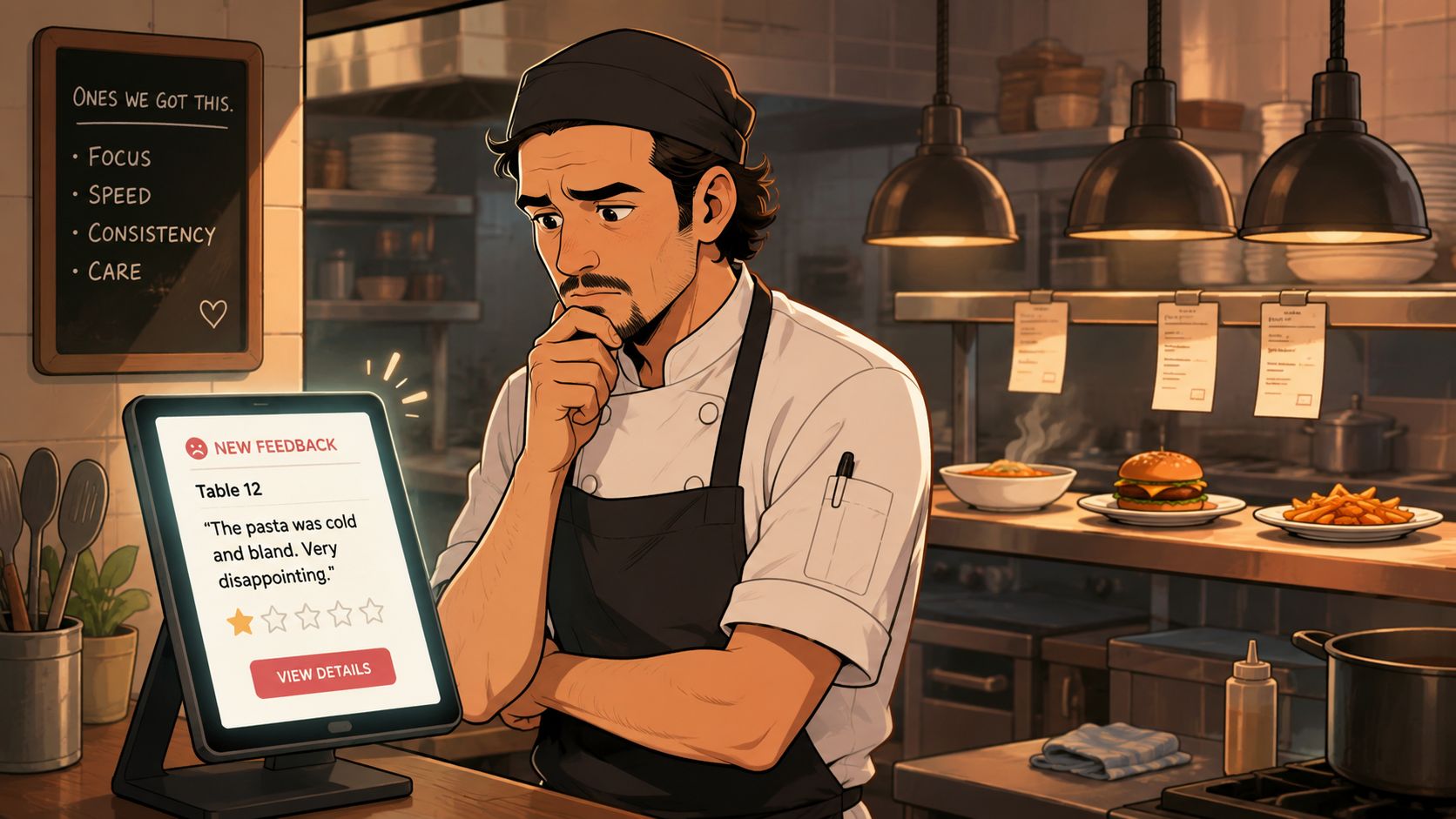
The hardest part of customer feedback systems in hospitality isn't capture, it's follow-through when the rota is already tight. If your only chef calls off at 4pm, nobody wants a complicated workflow. The complaint needs to land with the person who can do something now, not in a shared inbox that gets checked after service.
Build tiers, not one blanket response
I use three response tiers in fast-moving venues. Instant is for anything that affects the guest while they're still on-site, so the duty manager or head chef can step in straight away. Same-day covers issues that need a fix but not a rescue on the spot. Weekly review is for trends, process gaps, and recurring themes that need operational change.
That hierarchy stops everything from being treated as equally urgent. A cold dish and a spelling mistake in a follow-up email don't belong in the same queue.
Ownership beats volume
The best process assigns one person per type of issue. Food quality goes to kitchen leadership. Room standards go to the property lead. Booking friction goes to reservations or front office. Reputation management also needs a review-monitoring rhythm, and Relief Chefs UK's reputation management tips are a useful reminder that response discipline matters as much as collection.
The trade-off is volume versus clarity. More feedback sounds good, but if the sample is skewed towards the guests easiest to contact, you can end up with a louder system and a less truthful one. In a mixed UK audience, that's a serious blind spot.
The goal isn't more comments. It's better routing, faster ownership, and a visible fix that staff can actually carry out.
Implementation Checklist for Hospitality Operators
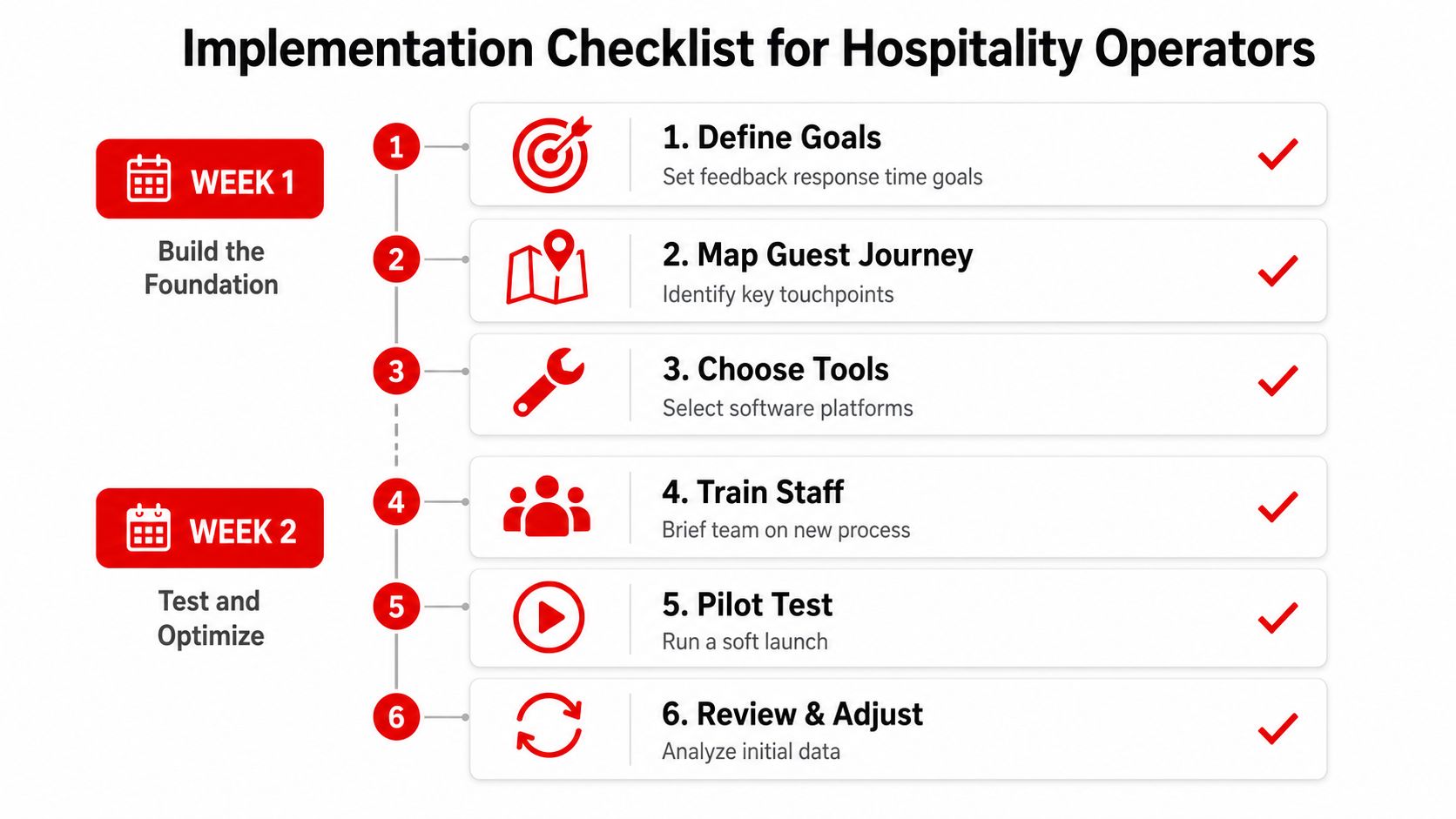
A usable system doesn't need months of setup. Most venues can get the bones of it working in two to four weeks if they stay focused on the basics. I'd start with a simple operating brief, not a software wishlist.
Week 1, define and map
Start by naming the goal. Are you trying to reduce complaints, improve service recovery, or catch problems before they hit reviews? Then map the guest journey and mark the moments where feedback makes sense, like after ordering, after check-in, or after checkout.
A few sample questions help teams stay practical:
- Pub: “Was your food served at the right temperature?”
- Restaurant: “Did the team handle your booking and table service smoothly?”
- Boutique hotel: “Was check-in clear and straightforward?”
- Yacht charter: “Did communication before departure feel timely and useful?”
Week 2, choose, test, and brief
Pick two channels first. Don't launch six and hope the team keeps up. Connect the system to your PMS, POS, or booking platform where possible, then set named owners for every feedback type so no issue lands in limbo.
A pre-service briefing should tell staff what gets escalated immediately, while a post-service debrief should review what came in, who handled it, and whether a fix was visible. If you want one operational standard to borrow, Relief Chefs UK's service continuity planning sits well alongside this kind of resilience thinking.
A pilot also needs a short feedback loop back to the team. If staff can't see what changed, they'll stop trusting the process. That's true in a pub kitchen, a hotel breakfast room, and on a charter itinerary.
Choosing the Right Vendor Without the Sales Pitch
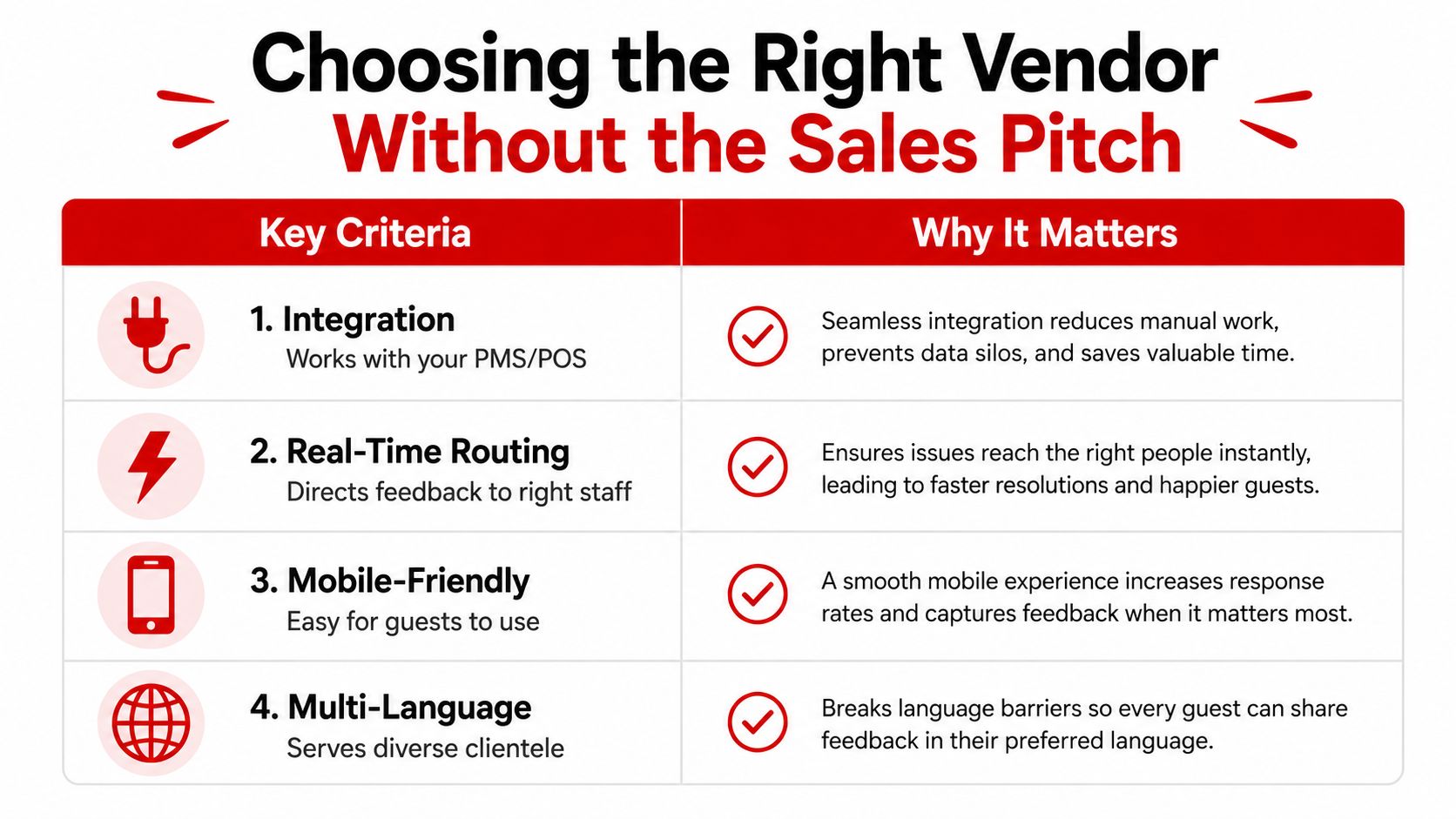
Vendor selection gets easier when you stop asking which platform looks polished and start asking which one fits the way your venue works. The right tool should plug into your existing systems, move feedback to the right people fast, and make it easy for guests to respond on a phone. If it can't do that, the dashboard won't save it.
What matters in a demo
I'd score vendors on four things. Integration with your PMS, POS, or booking system matters because manual exports create delay and errors. Real-time routing matters because the right manager needs the issue now, not after close of play. Mobile-friendly design matters because guests won't complete clunky forms on the move. Multi-language support matters when your guests aren't all using the same language preference.
Ask direct questions in the demo. Can it aggregate review platforms as well as survey responses? Can it route by venue, department, or issue type? Can it store data in line with your UK compliance needs? Can it handle anonymous and identifiable responses differently?
What to walk away from
Walk away from vague pricing, hidden setup charges, and contracts that make it hard to leave. Avoid vendors that promise “AI” but can't explain how tags, routing, and escalation work. If the rep spends more time on branding than on workflow, you'll probably end up with software your managers don't use.
A good shortlist is boring in the right way. It should feel operational, not theatrical. The system has to fit your kitchen, front office, or charter desk, not the other way round.
GDPR, Data Protection and Consent the Right Way
UK feedback programmes live or die on trust. The Data Protection Act 2018 came into force on 25 May 2018 and sits alongside UK GDPR, so feedback, complaint data, and identifiable opinions need to be collected and used in a traceable way. The ICO's updated guidance on direct marketing and consent in 2023 also reinforced the need for a lawful basis, clear notices, and respect for customer rights when running feedback programmes.
Make the compliance steps operational
The first fix is the privacy notice. Guests should be told what feedback you collect, why you're collecting it, and how long you'll keep it. If you're sending survey links, build consent into the journey where needed, and keep the wording plain.
The second fix is retention. Don't keep identifiable responses forever just because the spreadsheet is easy to store. Set a retention rule that fits the purpose of the data, then stick to it.
The third fix is handling free text carefully. Anonymise or redact comments when you don't need names attached, especially if the issue is being shared beyond the original service team. If your venue uses identifiable responses, store them securely and limit access to people who need it.
Anonymous isn't the same as unusable
Anonymous feedback can be powerful when the issue is sensitive or when the guest wants candour. Identifiable feedback is better when the team needs to follow up directly or recover service in real time. The mistake is treating every response the same way.
In practice, the best systems are transparent about the purpose, careful with access, and disciplined about retention. That's what turns compliance from a risk into part of the operating standard.
KPIs, Next Steps and Keeping Your Kitchen Open
The right KPIs tell you whether the system is helping the business. Track response rate by channel, time to first response, issue resolution rate, repeat-visit rate after service recovery, review rating movement, and the share of feedback that resulted in a visible change. If a metric doesn't connect to action, it's usually decoration.
A strong feedback programme also needs a link between customer insight and staff standards. Relief Chefs UK's customer service standards fit naturally here, because a feedback loop only works when the team knows what “good” looks like on shift and under pressure.
What to do next
- Pick your first two channels: choose the ones your guests will use.
- Set the owners: name who handles food, rooms, bookings, and reviews.
- Write better questions: keep them short, specific, and tied to a real moment.
- Brief the team daily: make feedback visible before service starts.
- Review the first month: look for gaps in coverage, not just volume.
For hospitality operators, feedback maturity and kitchen resilience go together. If you're dealing with short-notice sickness, seasonal demand, agency reliability issues, chef shortages, or kitchen instability, you can't afford a model where one absent person breaks the guest experience. That's where reliable staffing support matters, whether you need relief chefs, temporary chefs, permanent chef recruitment, yacht chefs, villa chefs, or wider hospitality staffing support.
If your venue needs dependable chef cover across the UK, contact Relief Chefs UK for practical support that helps keep service moving when the rota gets hit.