
Overcoming Hospitality Industry Challenges in 2026
20 August 2026
Friday service starts in ninety minutes, the bookings are full, and the chef has just called to say they're sick. The sous chef is off, the produce delivery is late, and the duty manager is trying to work out whether the kitchen can run the menu with half the specials missing. That's not an unusual crisis in UK hospitality. It's what happens when several small weaknesses meet at the same time.
The hospitality industry challenges facing pubs, restaurants, hotels, catering businesses, cafés and private dining operations all become kitchen-cover risks eventually. A labour shortage becomes a closed section. A supplier failure becomes a reduced menu. Rising payroll costs become fewer people on the rota. Poor planning turns one absence into lost bookings and exhausted staff.
The practical answer isn't to hope next Saturday behaves better. It's to build a staffing model that absorbs sickness, seasonal demand and recruitment gaps without sacrificing food quality or opening hours. The following approach combines direct diagnosis with actions an owner or general manager can start this week.
When the Pass Goes Down on a Saturday Night
At a 60-cover pub in Devon, the only chef phoned in sick at 4pm on a Friday. The sous chef was on her day off, and a delayed vegetable delivery had already removed half the specials from the board. The team could either run a reduced service or cancel bookings before guests arrived.
The duty manager tried to hold the operation together, running food while the remaining front-of-house team explained the menu changes. Thirty bookings were refunded. A two-star review appeared before midnight. By Monday, the management meeting had reduced the next rota to closed Sundays and Mondays because nobody trusted the kitchen to staff another full weekend.
That single evening exposed four connected problems:
- Staffing risk: one absence removed the venue's entire cooking capacity.
- Supply fragility: one late delivery narrowed the menu and increased pressure on the remaining dishes.
- Cost pressure: refunds, wasted preparation and reduced future trading all damaged the week's result.
- Guest-expectation management: diners don't see the rota problem. They see a venue that failed to deliver what they booked.
Practical rule: If one chef calling in sick can close your kitchen, you don't have a staffing plan. You have a single point of failure.
The visible failure starts earlier
The service collapse is usually the final symptom. The warning signs appear on the rota weeks before. Overtime rises, chefs take fewer days off, agency requests become more frequent, and managers remove complicated dishes because nobody has enough preparation time.
That pattern affects coastal pubs in Devon and Dorset, boutique hotels in Berkshire and Windsor, restaurants in Bristol, and larger operations across Wales and London. Each venue has a different trading pattern, but the exposure is similar when the permanent team carries every peak and every absence.
A reliable operation needs three layers: a stable permanent core, planned relief for predictable busy periods, and an emergency route for short-notice sickness. It also needs a menu and supplier plan that can survive a missing ingredient without forcing the brigade to improvise under pressure.
The rest of this article looks at why the chef pipeline remains difficult, how costs are changing rota decisions, and how seasonal and supply shocks combine. It then compares permanent recruitment, reactive agency cover and an ongoing relief-chef partnership before setting out a 90-day stabilisation plan.
Why the UK Chef Shortage Persists
“Just hire someone” sounds sensible until the labour market is examined. UK hospitality has been trying to replace staff in a sector where vacancies remain high, turnover is structurally heavy, and labour costs leave little room for a poor appointment. Every open role creates kitchen-cover risk, because the remaining brigade must absorb prep, service and absence cover while recruitment continues.
Official government data recorded 146,000 hospitality vacancies in the three months to January 2023, equal to a 6.6% vacancy rate, the highest of any sector in the ONS dataset at that time. The UK Government hospitality update also recorded vacancies 49% above pre-pandemic levels, while UKHospitality later reported 132,000 vacancies, still 48% above pre-Covid levels.
CIPD analysis of ONS Annual Population Survey data puts annual hospitality turnover at around 52%. Operators compete to recruit new chefs and replace staff they have already trained, while experienced workers cover the gaps. The result is a rota that may look filled on paper but remains exposed at prep and service.
The pipeline is narrower than local recruitment
The post-Brexit reduction in the EU chef pipeline has made recruitment harder for many UK operators. Colleges have also seen weaker catering enrolment, leaving businesses with fewer entry-level candidates to develop into commis chefs, chefs de partie and sous chefs.
Long-term illness has reduced the available workforce further. At the other end of the kitchen, experienced sous chefs are leaving the industry rather than accepting another 60-hour week with limited control over rotas, pay or progression. For operators, that means the missing person is often a trained section leader, not an easily replaceable extra pair of hands.
Agencies compete for the same small pool, counter-offers push wages beyond what a low-margin venue can sustain, and permanent teams become exhausted while vacancies remain open. Relief cover protects the pass while the underlying recruitment work continues, provided the chef understands the menu, standards and pace of the operation.
| Metric | Figure | Year | Source |
|---|---|---|---|
| Hospitality vacancies | 146,000 | Three months to January 2023 | UK Government hospitality update |
| Hospitality vacancy rate | 6.6% | Three months to January 2023 | UK Government hospitality update |
| Annual hospitality turnover | Around 52% | ONS Annual Population Survey analysis | CIPD turnover analysis |
A venue in Bristol may advertise continuously and still fail to secure a dependable sous chef. A hotel in Wales may find applicants for seasonal work but not enough people willing to commit to the full operating pattern. A Devon pub may recruit a cook quickly, only to lose them before the next busy period.
Separate permanent recruitment from short-term capacity. Build the long-term pipeline, then use structured relief cover while recruitment runs. Operators addressing the wider skills gap can review chef shortage solutions and set up a vetted relief option before the next absence, rather than relying solely on another job advert.
How Rising Costs Are Reshaping Every Menu
A kitchen can be fully staffed and still become unprofitable. In 2025, ICAEW reported median full-time hourly pay excluding overtime of £14.04 in hospitality, compared with £19.67 across the economy. It also reported that 24.6% of hospitality employee jobs were covered by the minimum wage, up from 21.8% in 2024. These figures appear in ICAEW's hospitality industry profile.
That concentration puts pressure across the brigade. Statutory pay changes affect many roles, while employer National Insurance contributions increase payroll costs. Energy contracts, food inflation and supplier substitutions add further uncertainty. Butter, beef, cooking oils and dairy can change a dish's cost before the next menu review.
The plate-level decision
Take a £14 lasagne. If its ingredient cost rises from £2.80 to £4.10, the gross contribution narrows before wages, rent, energy, card fees and waste. The operator then has three choices: raise the price, simplify the dish, or remove labour elsewhere.
Each option carries a cover risk. A price rise may reduce demand. Simplifying preparation can protect the section, but may change the dish guests expect. Cutting labour can leave the pass exposed when one chef is absent.
Some venues make the decision indirectly. They shorten opening hours, remove labour-intensive specials, run fewer sections or ask the same chefs to cover more work. Guests experience the result through slower service, shorter menus and inconsistent plates.
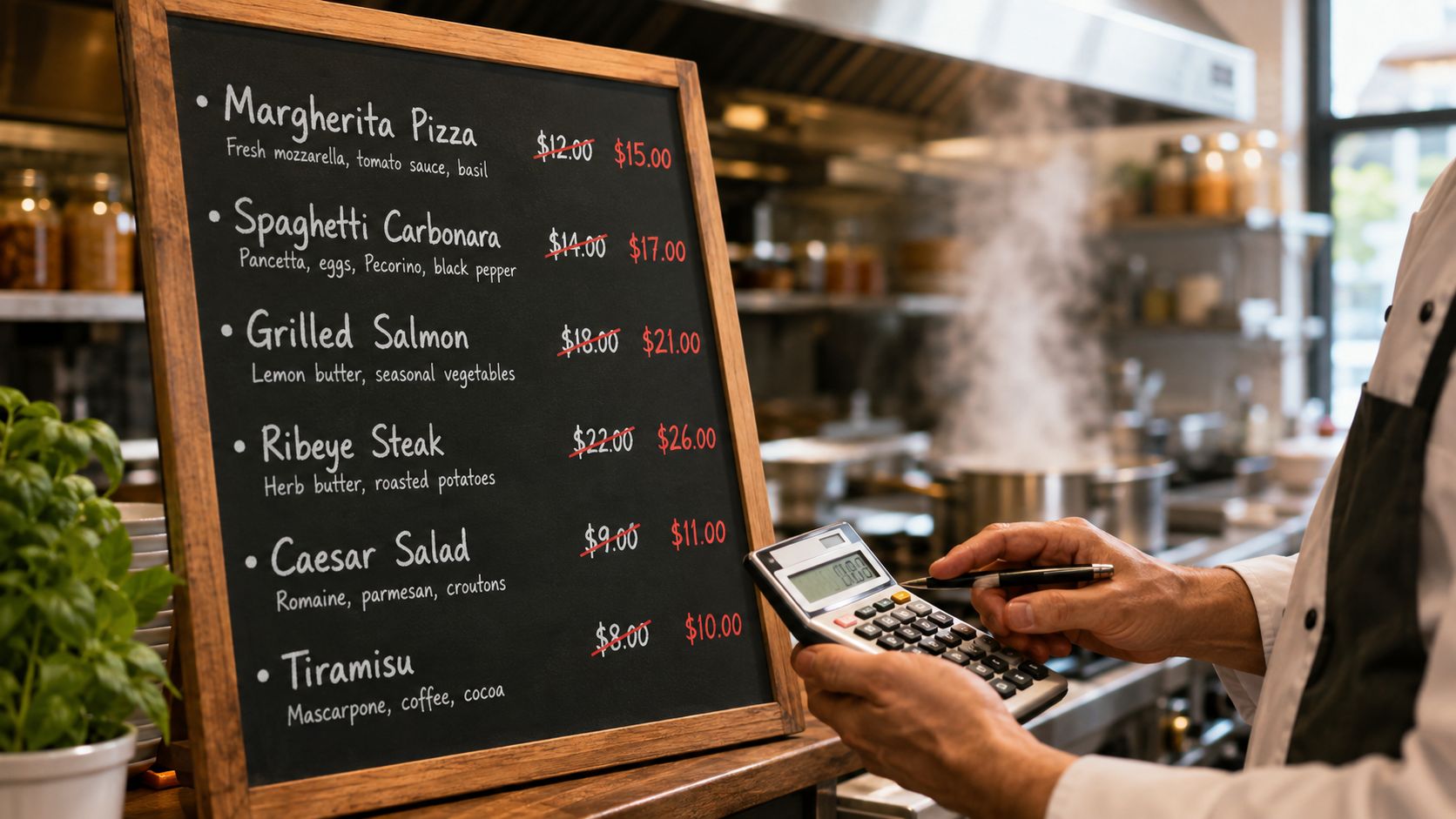
Start with menu engineering. Review contribution by dish, identify preparation that consumes excessive labour, and match the menu to the team you can reliably staff. A smaller menu that the brigade can execute under pressure is safer than a broad menu that fails during peak service.
The margin decision is operational: protect dishes that pay their way, remove avoidable preparation, and schedule labour around demand rather than carrying maximum staffing through quieter periods.
Use a kitchen operational cost reduction approach linking menu design, supplier choices and staffing. Cutting one chef from a busy Friday may look cheaper on paper, but delays, refunds and fatigue can cost more than planned relief cover.
Seasonal Peaks, Supply Chain Shocks and Same-Day Sickness
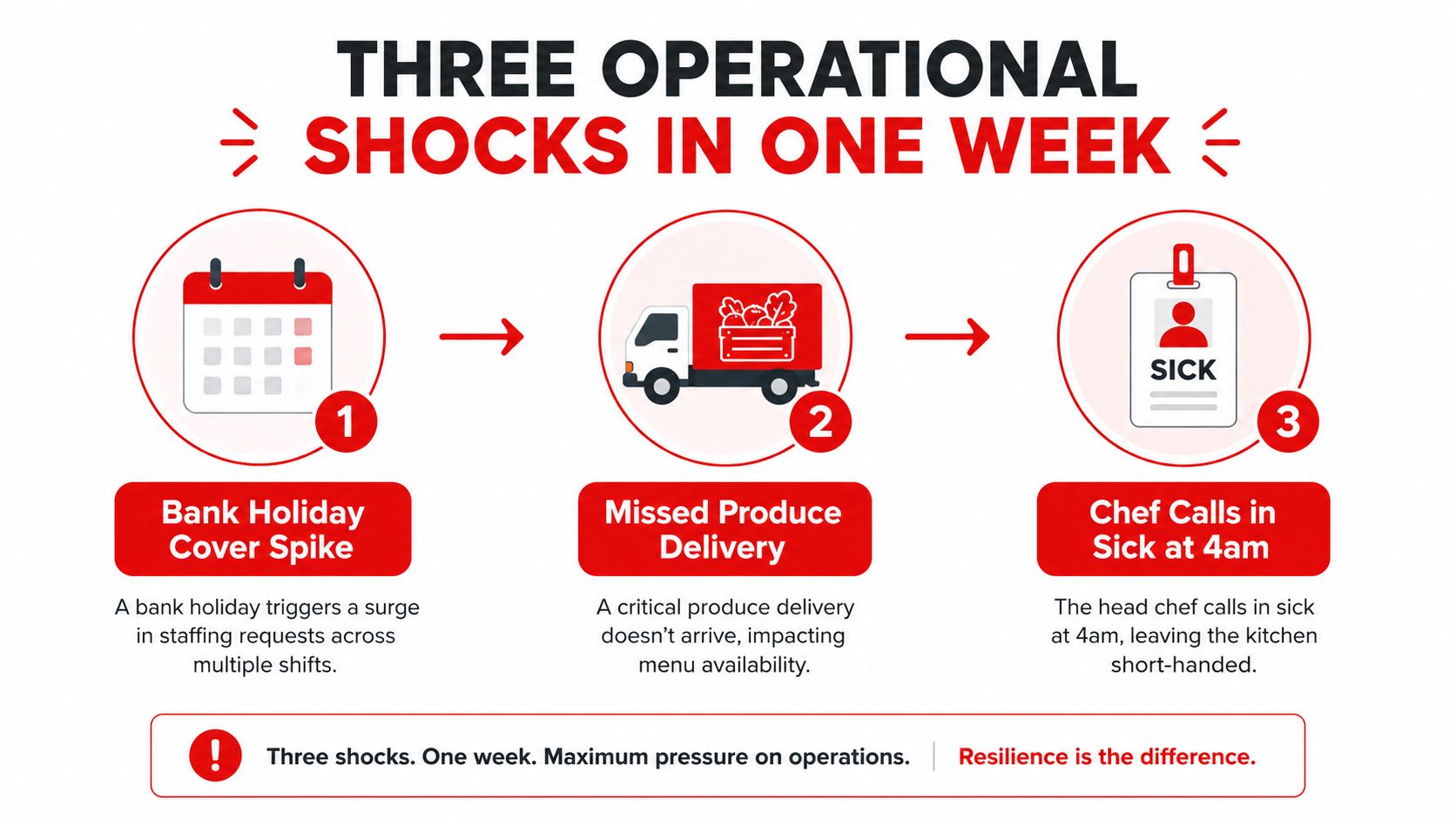
The most damaging weeks often combine predictable and unpredictable problems. A Bank Holiday creates a cover spike, a produce delivery is missed, and a chef calls in sick at 4am. Each issue is manageable alone. Together, they can close a kitchen.
The Recruitment and Employment Confederation recorded 107,239 active hospitality-related job postings in July 2026, down 5.7% from June but up 16.3% from July 2025, showing how quickly seasonal demand can move. Chef demand also fell 32.5% in April and May 2024 compared with the same period in 2023, according to the REC seasonal hiring update.
Build four layers of cover
Permanent core rota: Keep your experienced chefs responsible for standards, ordering, training and menu control. Don't design the base rota so tightly that one absence removes a whole section.
Planned weekly relief: Add a regular relief chef around known peaks. A coastal pub may need this for Friday and Saturday evenings, while a holiday park may need it during school-holiday turnover days.
Emergency on-call cover: Maintain a relationship with a vetted provider for short-notice sickness. The purpose is speed, but the chef must still arrive with the right experience and compliance checks.
Cross-trained front of house: Train selected FOH staff in basic plating, pass communication and safe support tasks. They won't replace a chef, but they can protect the kitchen from avoidable interruptions.
Warning signs include rising overtime, repeated last-minute rota edits, dependence on one supplier and no written fallback menu. A restaurant in London may need a deeper on-call bench than a rural pub, while a hotel in Berkshire may require cover that understands breakfast, banqueting and evening service.
Match the model to the trading pattern through seasonal demand forecasting. The aim isn't to staff every shift heavily. It's to know which shifts can't fail and protect them in advance.
Agency Cover Versus Permanent Hires Versus a Relief Chef Partner
A sous chef resigns on Thursday, and Easter bookings are already on the books. The operator has three routes: recruit permanently, book reactive agency cover, or build a relationship with a relief chef partner. The sound choice depends on the type of kitchen-cover risk, whether the gap is long term, tied to a short peak, or likely to recur.
A permanent hire gives the venue continuity, cultural fit and a clear owner for standards. Recruitment takes time, however, and the full-time salary continues through quieter weeks. The kitchen also remains exposed until the new chef starts. A reactive agency can respond quickly, but weak vetting or an unfamiliar chef may leave the head chef managing the cover instead of the service.
A relief-chef partnership preserves the permanent core while adding a known, vetted option for planned peaks and urgent gaps. Drawing on a decade of placing vetted chefs into pubs, boutique hotels and restaurants at short notice, Relief Chefs UK, established in 2013, provides relief chefs, temporary chefs and permanent chef recruitment for UK hospitality operators. Its services also cover yacht chefs, villa chefs and wider hospitality staffing support.
| Model | Typical Lead Time | Cost per Day | Best For |
|---|---|---|---|
| Permanent hire | Six to ten weeks | Full-time salary commitment | Long-term vacancies and core leadership |
| Reactive agency | Short notice | £220 to £320 | Immediate gaps where speed matters |
| Relief chef partnership | Agreed in advance, subject to availability | Pay for hours worked | Recurring peaks, sickness cover and flexible capacity |
The comparison uses figures and lead times from the supplied operator brief, so treat them as planning guidance rather than a general market guarantee. Confirm the rate, notice period and shift terms before booking.
An independent pub may need a permanent head chef to hold standards, with relief cover protecting weekend service. A boutique hotel may pair permanent leadership with a regular relief sous chef who knows its operation. A multi-site group can share flexible cover between venues, reducing the chance that one absence removes a whole service.
Choose cover by risk, not habit: permanent recruitment strengthens the long-term structure. Dependable relief covers service gaps while recruitment runs.
Why Flexible Chef Staffing Is Now a Core Strategy
A Saturday service can fail before the first ticket prints. At 11am, a head chef reports suspected norovirus and cannot work. By 11:15, the general manager has contacted the relief partner. A vetted chef receives the menu, allergen controls, service style and equipment briefing, then arrives for the evening pass. The booking survives because cover was arranged before the illness occurred.
That response should sit inside the operating model, not depend on a last-minute phone call. Relief Chefs UK draws on a decade of placing vetted chefs into pubs, boutique hotels and restaurants at short notice. For operators, the practical value is a known process for protecting kitchen cover when one absence threatens the whole shift.
Flexible staffing fits venues where demand changes sharply. A Devon pub can keep a lean weekday team and schedule relief for coastal weekend trade. A boutique hotel can use a part-time relief sous chef often enough to understand breakfast, banqueting and dinner standards. A multi-site operator can move a shared chef pool between four units according to occupancy and bookings.
The trade-off is control. Relief cover costs money and requires clear briefing, but carrying excess permanent capacity through quiet periods also affects margins. The right arrangement matches cover to the risk of closing sections, reducing the menu or exhausting the permanent brigade.
Consistency makes the arrangement work. When the same relief chef returns, they learn the section layout, prep lists, suppliers and service expectations. Induction takes less time, and the permanent team gains a familiar colleague instead of meeting an unknown chef on every visit.
Cover also tests the operation. If a relief chef cannot follow the allergen system, locate stock or understand the pass, management has found a process gap. Document those tasks and close the gap before the next busy service.
Treat relief capacity as resilience cover. It protects opening hours, guest commitments and the wellbeing of the permanent brigade when the rota changes suddenly.
A Practical 90-Day Plan to Stabilise Your Kitchen
Start on Monday with an owner-led audit. Don't wait for a consultant or a new piece of software. The aim is to identify where cover risk is costing money and where a small operational change can protect service.
Sprint one and sprint two
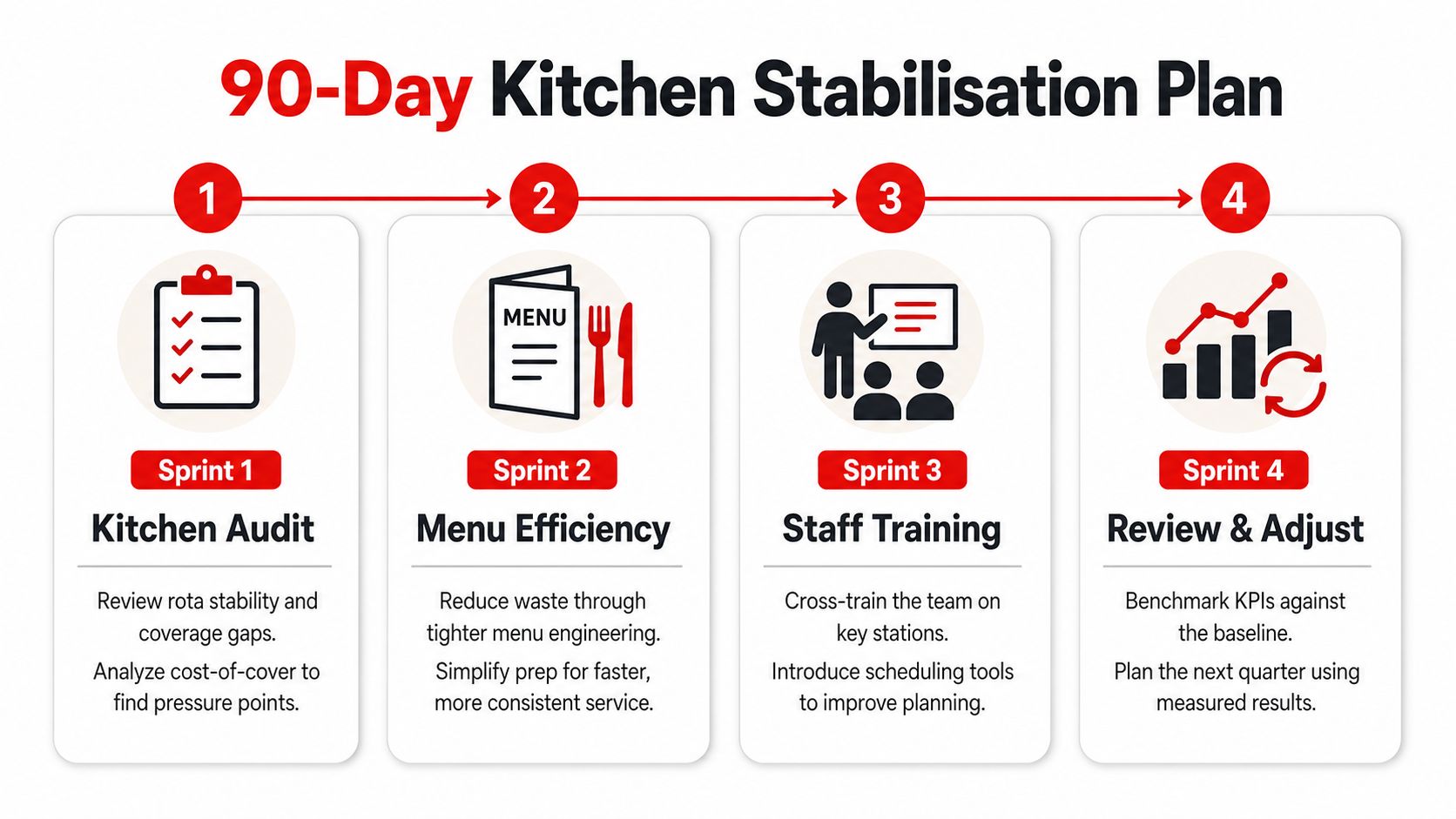
Sprint one, kitchen audit: Review rota stability, cover spending over the last six months, average hourly wage uplift, food-cost percentage and supplier lead times. The owner or GM should produce a one-page risk register showing which shifts fail if one person is absent.
Sprint two, flexible staffing ecosystem: Vet at least one relief-chef partner and register two freelance cover chefs. Set service expectations in writing, including dress code, HACCP sign-off, allergen procedures, menu familiarisation time and who briefs the incoming chef.
The head chef should also mark the shifts that need cover first. A Windsor hotel may prioritise breakfast and events, while a Bristol restaurant may protect Friday evening and Saturday dinner. A Dorset pub may need a dependable Sunday solution rather than another midweek full-timer.
Sprint three and sprint four
Sprint three, rota design: Rebuild the rota around predicted peaks, cross-train FOH staff in basic plating and pass support, and trial a digital rota tool with real-time sickness flagging. The GM owns the rota review, while the head chef signs off skill coverage for each service.
Sprint four, review and adjust: Add technology for allergen tracking and stock control, then review menu engineering against supplier price lists. At the end of the period, compare planned cover with actual cover, identify repeat failures and set the next quarter's staffing priorities.
Keep every deliverable visible. If a task has no owner, it won't survive the next busy weekend.
Frequently Asked Questions and How to Get Cover Today
How quickly can emergency chef cover be arranged?
Availability depends on location, shift length, cuisine and required seniority. Give the provider the venue address, start time, expected covers, menu style and reason for the gap. Those details allow a realistic confirmation rather than a vague promise.
What should I check before accepting a relief chef?
Ask how the chef was vetted, whether right-to-work and references were checked, and what relevant kitchen experience they have. Confirm food hygiene, allergen procedures, HACCP expectations, insurance and public-liability arrangements before the shift begins.
How does a chef learn our menu at short notice?
Send the menu, prep list, allergen matrix, section plan and equipment details before arrival. A short phone briefing with the head chef or duty manager should confirm the dishes that can be sold, substitutions and the service priorities.
What should the duty manager have ready?
Prepare the booking forecast, rota, menu, allergen information, dress requirements, parking instructions and induction contact. For a 24-hour call-out, expect confirmation timing, arrival details and an on-site briefing to be agreed before service.
Don't wait until the pass is empty. Contact Relief Chefs UK with the shift date, location, covers, cuisine, required level and start time, then ask for the fastest suitable option for your kitchen.
Relief Chefs UK provides nationwide relief chefs, temporary chef cover, permanent recruitment, yacht chefs, villa chefs and wider hospitality staffing support for pubs, restaurants, hotels and hospitality groups. Visit Relief Chefs UK to request cover and discuss a staffing plan that keeps your next service open.
Call the team.
Office 01392 715474 · info@reliefchefs.co.uk