
It usually starts with a complaint that doesn't look like an insurance problem.
A guest says the allergen wording on the menu was misleading. A corporate client says your events manager gave the wrong guidance on room layout or licensing. A chef helps shape a launch menu, costings, or dietary plan, and the client later says that advice caused financial loss. Nobody slipped. Nothing caught fire. There's no smashed plate, no burst pipe, no obvious injury claim.
That's where many hospitality businesses get caught out.
In pubs, hotels, restaurants, private households, and charter settings, teams give advice every day. Head chefs advise on menu design. General managers advise on event set-up. Operations teams advise on service capacity, compliance, and delivery. In a market dealing with short notice sickness, seasonal demand, patchy agency reliability, chef shortages, and constant pressure to keep kitchens stable, that advisory work often gets done quickly and under strain. The operational reality makes the exposure more likely, not less.
Why Your Public Liability Cover Is Not Enough
A hotel guest claims your restaurant misdescribed a dish and damaged their business launch dinner. A wedding client says your events manager confirmed numbers the room couldn't handle, forcing a last-minute change that cost them money with guests, suppliers, and deposits. Those aren't standard slip-and-trip problems.
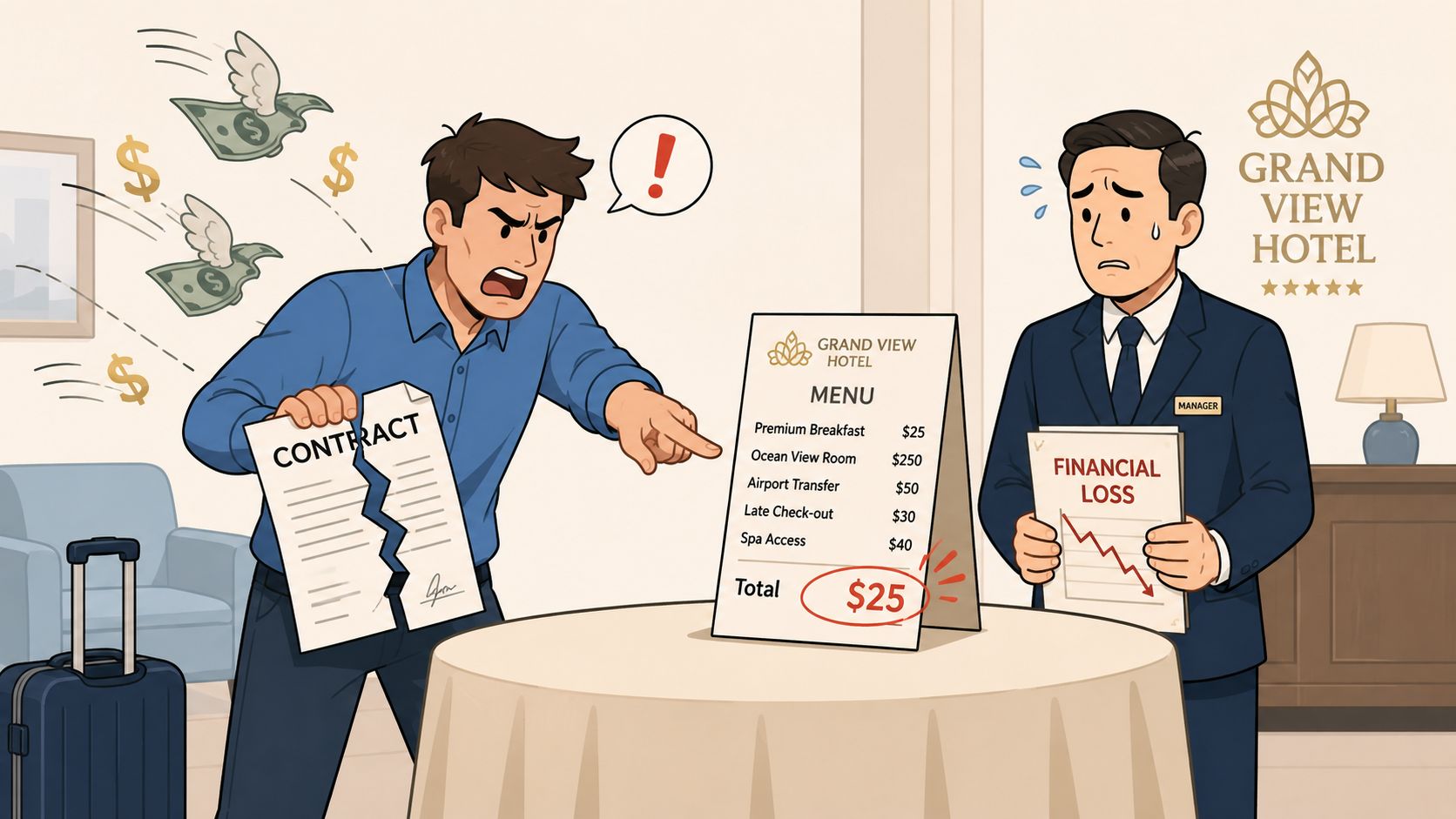
What sits underneath these disputes is advice, specification, or service judgement. Hospitality businesses often think of themselves as operational businesses first. That's fair. But the minute your team recommends, plans, confirms, designs, costs, specifies, or signs off, you're not just supplying labour. You're supplying professional input.
Where hospitality drifts into advisory work
In real venues, this happens constantly:
- Menu and allergen guidance: A chef or manager explains ingredients, substitutions, or dietary suitability.
- Event planning input: A hotel team advises on guest numbers, service timing, room use, and supplier coordination.
- Kitchen systems advice: A senior chef recommends workflow, equipment use, prep structure, or food safety processes.
- Commercial recommendations: A consultant chef or interim head chef provides menu engineering, pricing, or launch support.
None of that is unusual. It's normal hospitality work.
Practical rule: If a client could say, “We relied on your judgement and lost money because it was wrong,” you're in professional indemnity territory.
The risk matters more now because operators are leaning harder on temporary support and stretched management cover. When a kitchen is firefighting due to sickness, peak season pressure, or an unreliable agency booking, decisions get made fast. Fast decisions are sometimes necessary. They're also where wording mistakes, bad assumptions, and undocumented advice creep in.
The legal position is where many owners get a false sense of comfort. Professional indemnity isn't generally a legal requirement in unregulated hospitality roles, but that doesn't make it optional in commercial reality. The gap is especially sharp in catering and hospitality because so much risk sits between what the law strictly requires and what contracts, clients, and reputation demand. The point is captured well in this UK guide to professional indemnity for unregulated consultants, which notes that 40% of claims against non-regulated professionals arise from “errors in specification or advice”.
What doesn't work
What doesn't work is assuming public liability will stretch to cover every dispute.
It won't, if the core complaint is financial loss caused by your advice or service judgement rather than bodily injury or property damage. That's the blind spot.
What Professional Indemnity Insurance Actually Covers
Professional indemnity insurance is best understood as cover for your business's brainwork.
If public liability responds to physical incidents, professional indemnity responds when somebody says your expertise, recommendation, planning, wording, or service delivery caused them financial harm. In hospitality, that can sit with chefs, event managers, GMs, consultants, operations teams, and anyone else whose judgement forms part of the product.
What it usually responds to
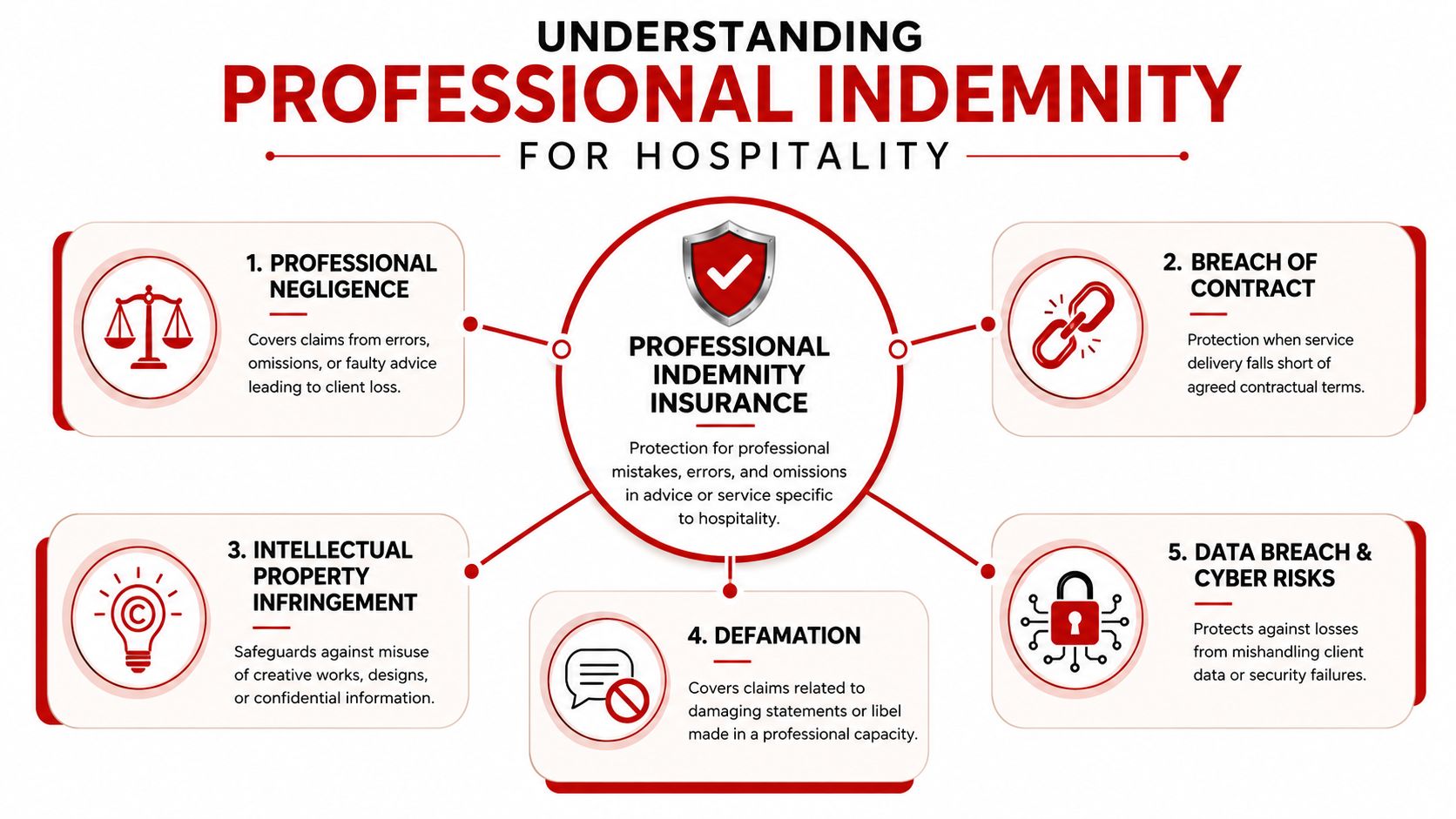
A good professional indemnity policy is there for claims tied to your professional service. In practical hospitality terms, that can include:
- Negligent advice: You recommended a menu structure, dietary plan, event format, or service approach that the client says was defective.
- Errors and omissions: Key information was missing, wrong, or badly communicated.
- Breach of professional duty: The claimant argues your business failed to act with the expected standard of care.
- Defence costs: Even weak claims can be expensive to answer.
- Compensation exposure: If a claim succeeds or settles within policy terms, the insurer may respond.
One of the most important points is that professional indemnity is often about economic damage, not visible damage. The claimant says your service itself was flawed.
Hospitality examples that fit the cover
Think about these everyday situations:
| Hospitality task | What goes wrong | Why PI matters |
|---|---|---|
| Menu consultancy | Costings are flawed and the client says the menu was commercially unworkable | The complaint is about professional advice |
| Event planning | The venue team gives incorrect operational guidance and the client loses deposits | The loss is financial, not physical |
| Guest dietary planning | A specialist meal plan is poorly specified | The dispute can focus on negligent service and resulting loss |
| Interim management support | A temporary kitchen leader gives process advice that causes disruption or wasted spend | The allegation is tied to judgement and expertise |
Your best chefs don't just cook. They recommend, approve, adapt, brief, and sign off. That's exactly why this cover matters in hospitality.
What operators often miss
Some owners only think about professional indemnity when they run a consultancy arm. That's too narrow.
A hotel in Berkshire selling weddings, a pub in Windsor offering private dining packages, a restaurant in Bristol launching chef-led tasting events, or a villa operation in Dorset promising specialist guest catering all create scenarios where the client buys more than food and labour. They buy planning, confidence, and professional judgement.
That's why policy wording matters. If your service offer includes advisory elements, your broker needs to understand that clearly. “Hospitality” on its own can be too vague if your business also handles menu consultancy, event planning, kitchen management support, or private chef advisory work.
PI vs Public Liability and Employers Liability
Confusion then turns into expensive assumptions.
Most operators already know they need public liability. Most know employers' liability is part of doing business if they employ staff. But professional indemnity, public liability, and employers' liability solve three different problems.
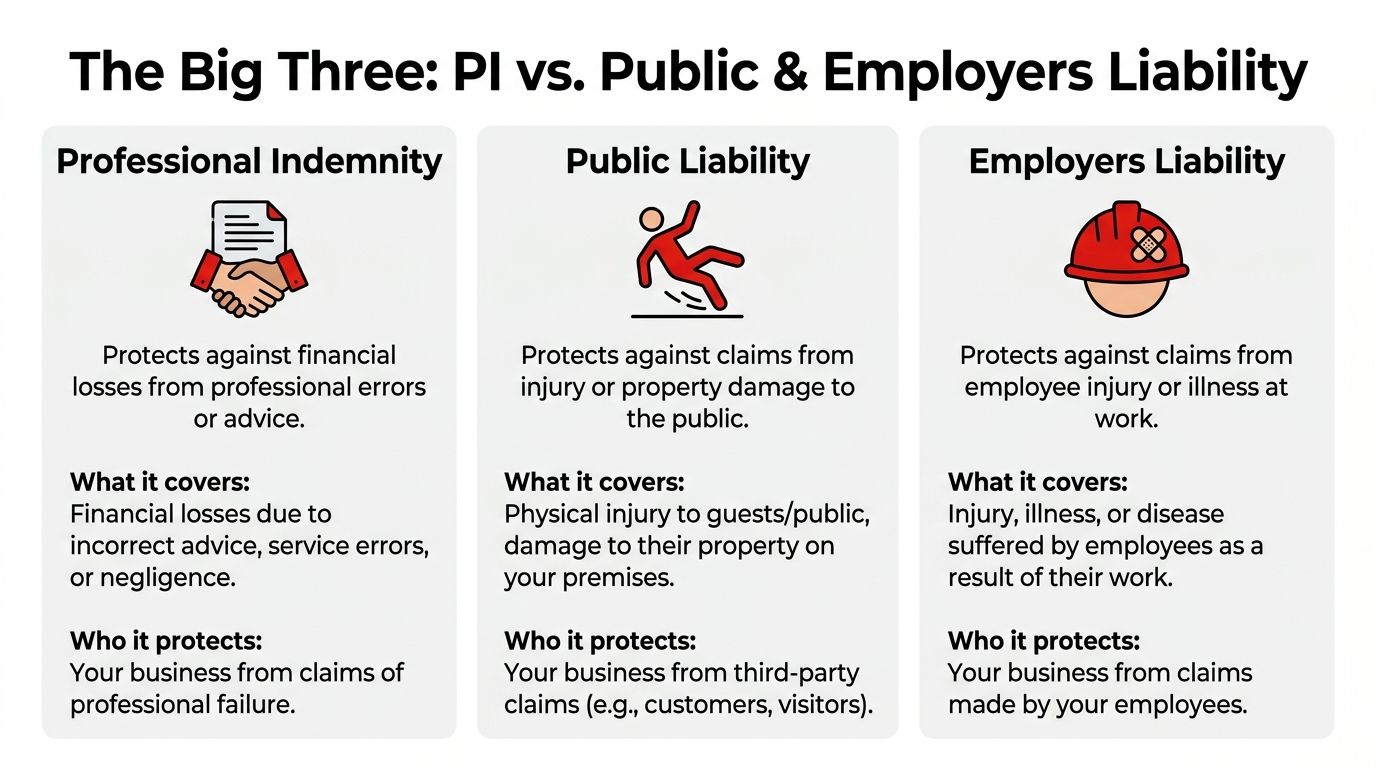
The simplest way to split them
| Policy type | Core risk | Hospitality example |
|---|---|---|
| Professional indemnity | Financial loss from advice, errors, or professional service failure | An events manager gives faulty capacity guidance and the client claims losses |
| Public liability | Injury to third parties or damage to their property | A guest slips on a wet floor in reception |
| Employers' liability | Injury or illness suffered by employees through work | A chef suffers a serious burn in service |
A useful compliance refresher sits in this guide to hospitality employment law and compliance, especially if you're reviewing wider operational risk alongside insurance.
Later in the section, this short video gives a broad overview of business liability cover and helps frame the difference in plain terms.
One wedding, three different claims
Take a hotel wedding.
The florist's assistant slips in a loading area and breaks a wrist. That's likely a public liability issue.
A waiter cuts their hand badly while setting up service. That sits in employers' liability territory if they're your employee.
The couple then claim your events manager wrongly confirmed the room could lawfully and comfortably handle the agreed set-up, causing guests to be turned away and creating knock-on financial losses. That's the type of allegation that points to professional indemnity.
The legal and commercial difference
The legal position matters here. Employers' liability has a statutory minimum of £10,000,000 and is a legal requirement, while professional indemnity is generally not a legal requirement for unregulated sectors like catering, even though it can be critical for claims arising from professional negligence, as set out in the RICS professional indemnity requirements document.
That distinction causes problems because operators hear “not legally required” and read it as “not necessary”.
It isn't the same thing.
If your business gives advice for money, bundles guidance into packages, or signs off plans clients rely on, no insurer or claimant will care that you thought of yourself as “just hospitality”.
Real World PI Scenarios in UK Hospitality
Professional indemnity becomes easier to understand when you stop thinking about policy labels and start looking at how claims are framed.
A Windsor pub and a menu dispute
A pub in Windsor brings in a freelance chef to refresh a tired menu before the Christmas run. The brief isn't just to cook. It's to tighten the offer, rewrite descriptions, and create dishes that look more premium.
One sauce contains a nut derivative, but the wording on the printed menu and staff briefing doesn't make that clear enough. A customer with a food-focused business says the incident damaged an important client dinner and led to reputational fallout around their own event. The physical side of the problem is only one part of the argument. The larger complaint is that the venue's professional food guidance was wrong.
A Dorset hotel and a cancelled launch
A boutique hotel in Dorset secures a valuable corporate booking. The client relies on the duty manager's guidance on how the event can be run, what the room can support, and what permissions are needed for the planned format.
Late in the process, the client is told key parts of the event can't proceed as discussed. Suppliers are already booked. Marketing is already live. The business says it relied on the hotel's advice and wants to recover the wasted spend. This is the kind of dispute that sits well beyond a standard “someone got hurt on site” claim.
A yacht charter and a specialist dietary plan
A yacht chef is asked to design a detailed dietary schedule for a guest with specific medical and lifestyle requirements. The charterer expects more than meals. They expect informed judgement, careful planning, and accurate communication.
The plan turns out to be unsuitable. The complaint focuses on a ruined guest experience, professional failure, and avoidable financial loss during a high-value trip. On yacht work, expectations are usually higher because the service is more bespoke and the margin for error is smaller.
A Bristol café and bad launch costings
A respected chef in Bristol helps a local café owner with menu pricing, supplier assumptions, and launch structure. The advice sounds sensible on paper, but the numbers don't hold up in service. Food margins collapse, labour planning is off, and the owner says the business was pushed into a damaging position by negligent professional input.
That's why training and documentation matter as much as insurance. Good allergen practice is part of risk control, and allergen awareness training for hospitality teams is one of the simplest ways to reduce avoidable disputes around menu advice and service communication.
What ties all four examples together is simple. The dispute isn't only about what happened. It's about whether the venue or chef exercised reasonable professional judgement.
How to Check Your Policy and Choose Your Limit
Buying professional indemnity properly starts with an honest question.
Are you only supplying labour, or are you also supplying judgement?
If your answer includes menu planning, allergen guidance, event advice, launch support, kitchen systems, dietary planning, SOP input, supplier recommendations, or commercial costings, you need to review your cover carefully. A lot of hospitality businesses tick an insurance box without checking whether the activity they sell is described properly in the policy.
Start with the policy mechanics
Professional indemnity is commonly written on a claims-made basis. In practice, that means timing matters. You can't assume a problem from earlier work will be dealt with just because you had some form of cover at the time. Continuity, notification rules, and any retroactive terms matter.
Read these parts slowly:
- Business description: Does it mention consultancy, event planning, menu advice, private chef work, or management support if you do those things?
- Who is covered: Employees, directors, temporary specialists, subcontractors, or only named roles?
- Exclusions: Many disputes end up here. Watch for exclusions around deliberate acts, contractual assumptions, or work done outside the declared business activity.
- Defence costs: Check how they're treated and whether they erode the limit.
A cheap policy that describes your business badly is often worse than no policy review at all, because it creates false confidence.
Choosing a limit without guessing
The market gives some useful benchmarks. According to BIBA's professional indemnity market analysis, the most common limit of indemnity for lower-strata professions in the UK is up to £2 million, with £500,000 described as the minimum typical level. The same analysis notes that, among law firms as a parallel professional-services market, PI premiums typically range from 3% to 9% of annual revenue.
That doesn't mean every pub or café should buy the same limit. It does mean you should choose cover based on the size of the financial promise you make to clients.
A practical way to assess it:
| Business type | Common PI trigger | Limit discussion |
|---|---|---|
| Small café | Menu guidance, private bookings, supplier recommendations | Lower limits may suit modest exposure if advisory work is limited |
| Gastropub | Events, outside catering, menu consultancy, seasonal pop-ups | Mid-range cover often makes more sense |
| Boutique hotel | Weddings, conferences, accommodation packages, event planning | Client contracts may require stronger limits |
| Yacht or villa operation | Bespoke dietary and guest planning | Specialist work usually justifies a closer review |
If a Reading hotel handles corporate events, if a Devon venue sells chef-led private dining, or if a Wales operator leans heavily on interim management support, the question isn't “Do we need PI?” It's “What level matches the promises we make?”
The Claims Process and Factors Affecting Your Premium
A professional indemnity issue usually starts before anyone uses the word “claim”.
It might be an angry email, a request for reimbursement, a solicitor's letter, or a client saying your advice caused them loss. The biggest mistake operators make is trying to smooth it over informally before telling the insurer.
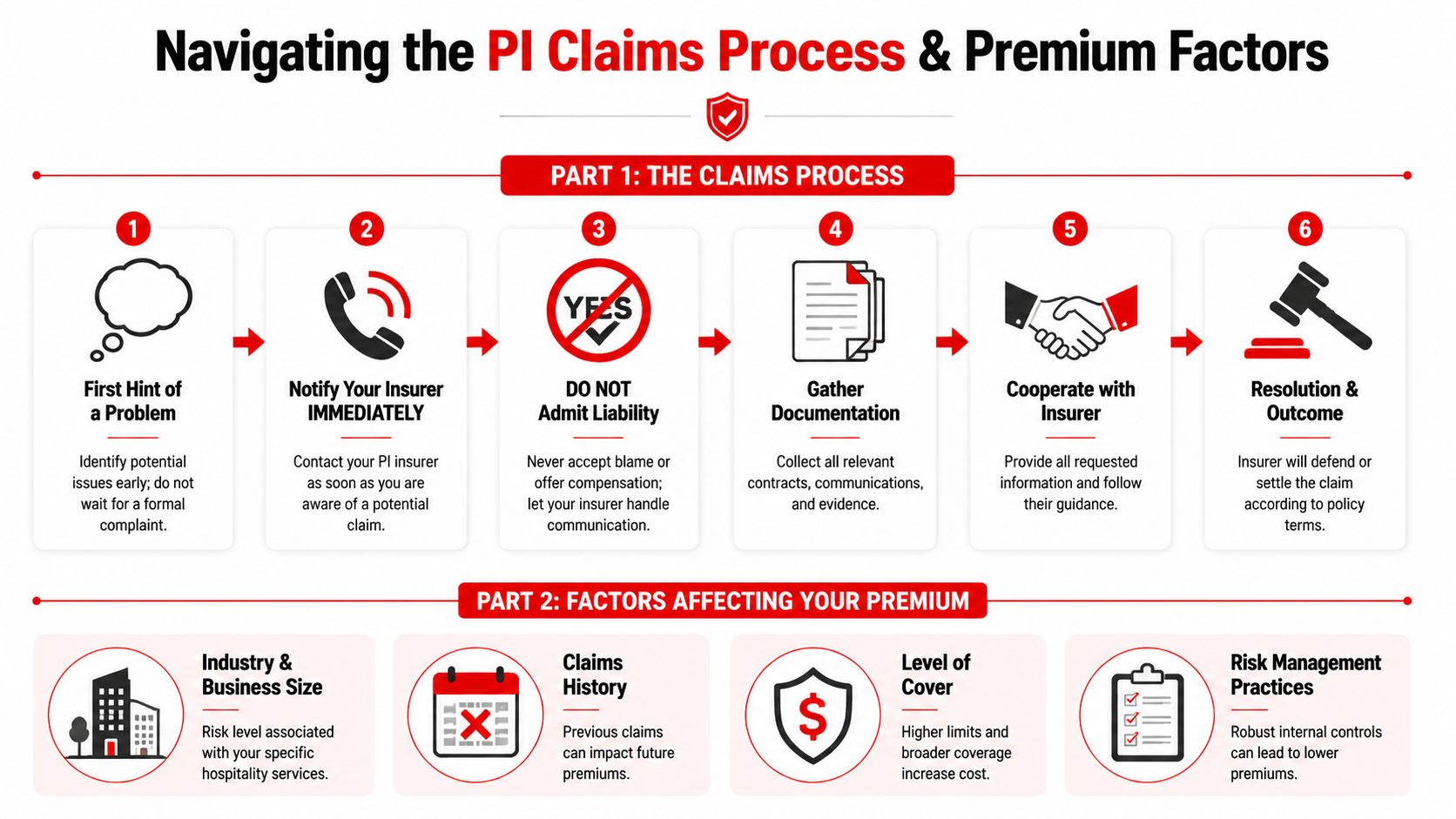
What to do when a problem appears
Move in this order:
- Spot the warning signs early. Complaints about advice, specifications, costings, or planning need attention straight away.
- Notify your insurer promptly. Don't wait for formal proceedings.
- Don't admit liability. You can acknowledge the complaint without accepting blame.
- Lock down the paperwork. Keep contracts, menus, emails, briefings, function sheets, and notes.
- Follow insurer instructions. They'll usually manage the legal response.
For wider incident handling discipline, these accident reporting procedures for hospitality teams are a useful operational complement, even though professional indemnity claims often turn on documents and communications rather than physical accidents.
What affects the premium
Insurers usually price professional indemnity based on a mix of commercial and operational factors:
- What your business does: Straightforward pub trade isn't the same risk as event consultancy or specialist dietary planning.
- Turnover and client profile: Larger contracts usually create larger exposure.
- Your claims history: Repeat issues make renewal harder.
- The indemnity limit and excess: More cover usually costs more.
- Your internal controls: Clear contracts, documented approvals, and training help.
Market conditions also matter. The UK professional indemnity market has softened recently. For many risks, rates in 2024 were 25% to 30% lower than in 2023, described by insurers as the “softest professional indemnity market in many years”, according to this review of UK PI market facts and figures.
That doesn't mean buying on price alone. It does mean this is a sensible time to review poor wording, outdated limits, or gaps created when your business evolved faster than your insurance.
Hospitality PI FAQs and Getting Expert Help
Does a relief chef need their own professional indemnity cover
Sometimes yes, sometimes the hiring business may carry the relevant exposure, and sometimes both need to check their positions properly.
The key issue is role and responsibility. If a relief chef is executing an agreed menu under your systems, that's different from a chef being asked to redesign menus, give allergen advice, set costings, or advise on kitchen process. The more independent professional judgement they exercise, the more important the insurance question becomes.
Does casual advice count as a professional service
It can.
A lot of hospitality disputes start with informal conversations. “Can we run it this way?” “Is this dish safe for that guest?” “How many can this room really hold?” “Will this menu hit the margin?” If the client relies on the answer and says they lost money because it was wrong, the fact it felt casual at the time won't help much later.
We're a small pub. Is this overkill
Not if you offer more than food and drink across the bar.
Private dining, event packages, chef's table experiences, outside catering, consultancy support, menu development for third parties, and high-touch dietary planning all increase the chance that somebody will say they relied on your expertise. Small venues often feel these disputes more sharply because one legal issue can drain management time and cash quickly.
Why is this more relevant now
Because the operating environment is tighter and more dependent on flexible labour.
As of March 2026, official ONS data recorded 69,000 vacant roles in UK hospitality, and that figure may understate the pressure because operators are also stopping advertising for roles they can't fill, as explained in this hospitality staffing costs analysis. When teams are stretched, kitchens are unstable, and managers are covering gaps, advisory mistakes become more likely.
What reduces risk apart from buying cover
Use tighter paperwork and cleaner sign-off:
- Confirm advice in writing: Menus, event details, room capacities, and dietary notes shouldn't live only in memory.
- Define who can approve what: Don't let every team member improvise commercial or compliance advice.
- Train temporary and permanent staff consistently: Short briefings aren't enough for high-risk tasks.
- Review contracts and packages: Promises buried in sales language often create the exposure.
The best operators control variables. Staffing is one of the biggest.
If you need dependable kitchen cover without adding more operational risk, speak to Relief Chefs UK. Established in 2013, they support pubs, hotels, restaurants, private households, yachts and villas across the UK with relief chefs, temporary chefs, permanent chef recruitment, yacht chefs, villa chefs, and wider hospitality staffing support. Whether you're dealing with short notice sickness in Devon, seasonal demand in Wales, agency reliability issues in Bristol, or a kitchen stability problem in Berkshire, Windsor, Reading, Slough or Dorset, they provide a trusted nationwide chef recruitment agency built around hospitality realities. Contact Relief Chefs UK to secure fast, reliable chef staffing support and protect both service standards and revenue.