
Reducing Food Waste in Hospitality Guide
22 July 2026

You already know the feeling. The service was steady, the fridge looked full, the prep list was long, and by the end of the week the bin still took more than it should have. In hospitality, reducing food waste is rarely about one dramatic mistake. It's usually the result of small gaps in forecasting, portioning, storage, and staffing, and those gaps become expensive fast when kitchens are busy, short-staffed, or rotating temp cover.
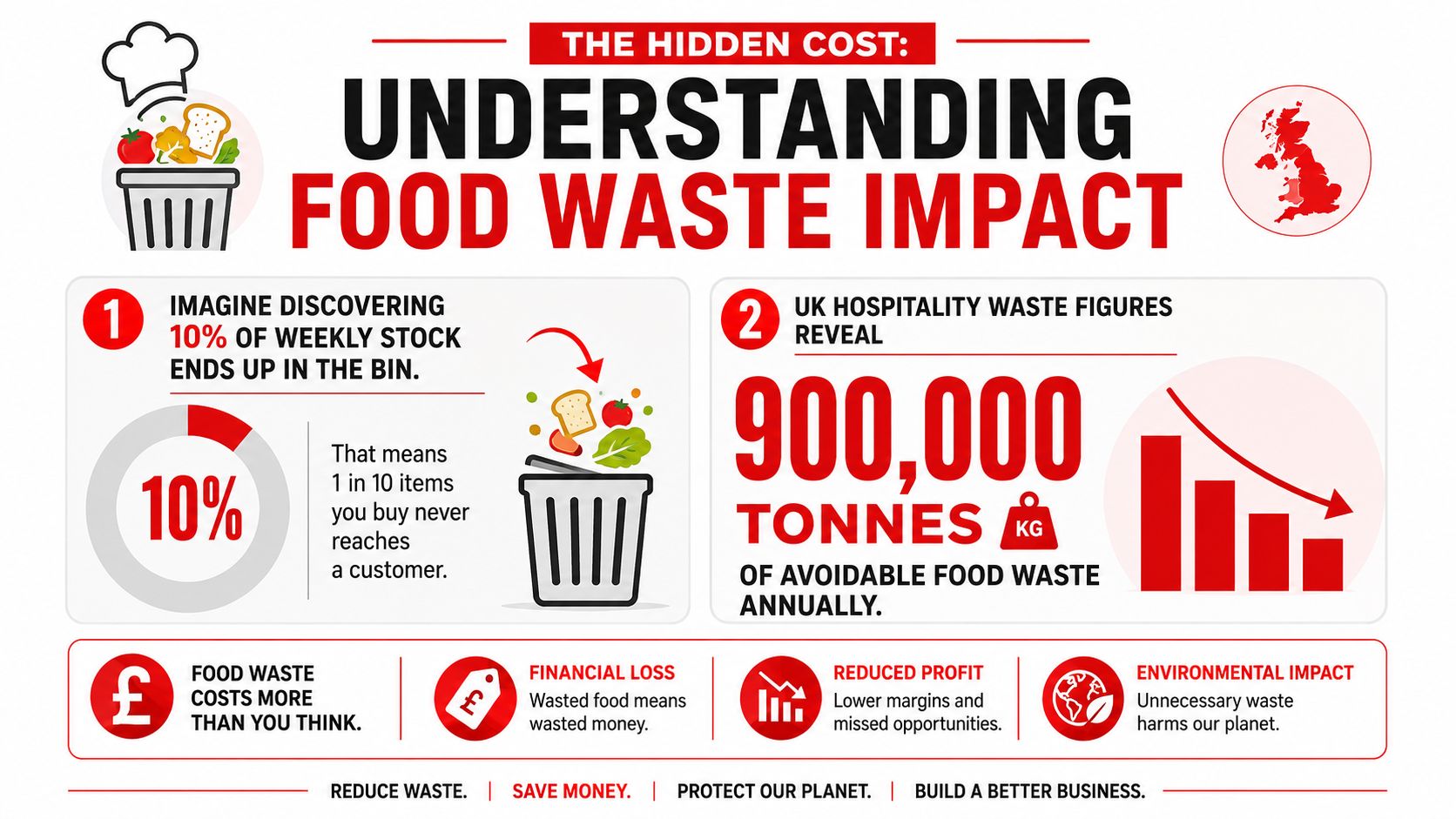
For UK operators, this is a commercial problem as much as a sustainability one. The parliamentary briefing on UK food waste says 10.7 million tonnes of food waste were generated in 2021, with 60% coming from households, hospitality and food service at 10%, and retail at 2%. It also states that the edible value of wasted food, excluding on-farm waste, was £21.8 billion in 2021, including £3.21 billion from hospitality and food service, which is a clear warning that waste sits directly on the P&L (UK Parliament briefing on food waste in the UK).
Understanding Food Waste Impact
A busy kitchen can look under control while waste accumulates. The fridge is full, the prep list is moving, and service still feels manageable, yet the bin tells a different story. In hospitality, reducing food waste sits across purchasing, production, labour, and margin, because the loss usually starts earlier in the week, often with ordering, receiving, or prep decisions.
Why the scale matters in real kitchens
The UK Parliament briefing says the post-farm gate total was 7.8 million tonnes in 2021, down 11% from 8.7 million tonnes in 2007, so progress is possible, but the burden stays high (UK Parliament briefing on food waste in the UK). For hospitality, that puts a pub in Devon, a hotel in Windsor, or a restaurant in Bristol inside a national waste stream that affects procurement, disposal, and labour planning every week.
The operational impact is easy to miss because waste gets spread across the shift. A slightly overfilled prep tray, a batch cooked too early, a menu item that sells slower than expected, or a chef covering a section for the first time can all push numbers in the wrong direction. Waste control and cover reliability belong in the same conversation.
Practical rule: if the kitchen cannot predict demand or staff the line consistently, it cannot control waste consistently.
That link between labour and waste matters in seasonal destinations such as Dorset, Berkshire, Wales, and coastal towns where turnover, service spikes, and short-notice sickness are part of normal trading. In those settings, waste reduction is not about good intentions. It depends on systems that still work when the rota changes.
The business case for action
The same parliamentary briefing shows hospitality and food service accounted for 10% of UK food waste in 2021, and the edible value of that waste was £3.21 billion. Every order sheet, portion guide, and prep list matters. A venue does not need perfection, it needs tighter control and fewer avoidable losses.
The practical case for reducing food waste is simple. Less waste means less over-ordering, less disposal, tighter stock control, and fewer emergency substitutions when a team is stretched. It also means less pressure on the chef in charge when a sickness call comes in at 4 pm and the evening service still has to run.
If you want the commercial upside, start with operational cost reduction. Waste reduction protects margin, supports sustainability goals, and gives managers a cleaner operating base when staffing is unstable.
Conducting Waste Audits and Inventory Optimisation
The fastest way to waste money is to guess. Busy kitchens need numbers, not assumptions, because guesses tend to overstate demand and understate spoilage.
Build the audit around service, not admin
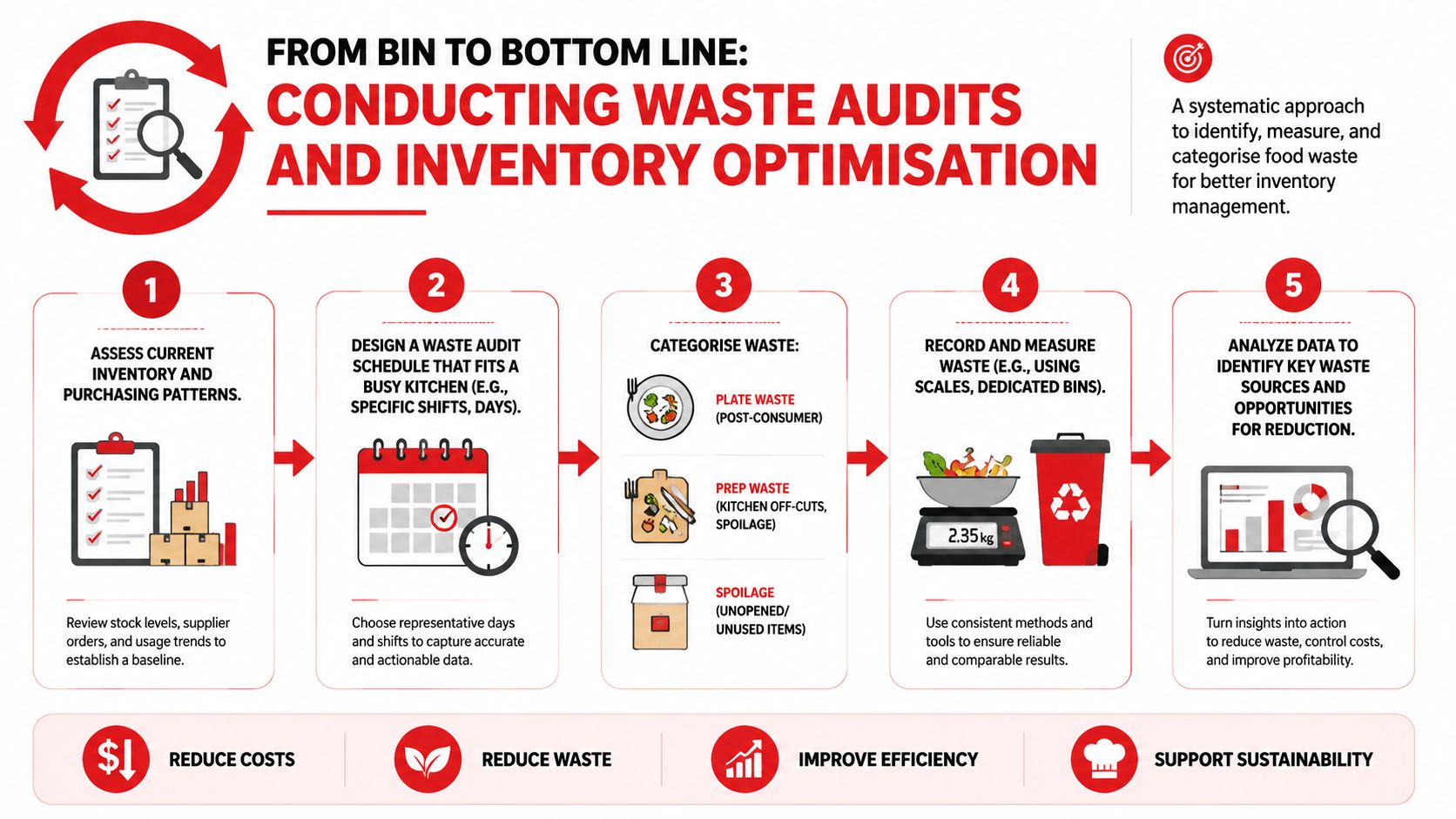
Start with categories that match how waste happens: plate waste, prep waste, spoilage, and delivery losses. Keep the recording simple enough that a sous chef or kitchen porter can use it during service without stopping the line. A paper log works if the team is disciplined, although a digital sheet is easier to review across shifts.
Use a short daily routine:
- Check incoming stock against the order sheet.
- Log anything damaged, missing, or near-date on delivery.
- Weigh or count prep trim, spoilage, and plate returns.
- Tag the item, the station, and the reason.
- Review the totals before the next order goes in.
That workflow mirrors the practical UK approach of measuring waste by category, tightening forecasting, controlling portions, training staff, and routing surplus to redistribution or recycling (Food waste in the United Kingdom).
A two-week audit is enough to expose patterns in a boutique hotel kitchen or a busy pub. The point isn't perfect measurement, it's reliable visibility. If one starter keeps coming back as plate waste, or a breakfast item keeps spoiling before its use-by date, you've found a buying or production issue, not a random event.
Best practice: measure waste at the moment it happens, not after someone has already binned it and forgotten why.
Tighten stock control so waste stops earlier
Inventory optimisation should sit beside the audit, not after it. Set minimum and maximum stock levels, rotate using first-in-first-out, and stop relying on memory when several chefs are handling the same fridge or dry store. Barcode scanning helps larger sites, but the principle matters more than the tool.
Use the audit to challenge ordering habits. If a product keeps appearing in the bin, it may be over-ordered, over-prepped, or both. If a delivery arrives close to the date you planned to use it, that's a supplier issue that needs follow-up, not a kitchen shrug.
For an internal reference on store discipline, stock rotation methods is worth tying to your audit process. The important point is consistency. A kitchen with a decent audit that nobody follows is still a wasteful kitchen.
A good audit should end with one question, not ten. What do we buy less of next week, and what do we stop preparing in advance?
Refining Menus and Portion Sizes
Once the waste data is in front of you, menu changes become easier to justify. The weak dishes usually stand out quickly. They are the plates with the most returns, the ingredients with the most spoilage, or the specials that looked profitable on paper but didn't move.
Engineer the menu around demand and margin
Keep the dishes that sell cleanly, then pressure-test the ones that don't. A premium item can still be wasteful if the portion is oversized, the trim is awkward, or the prep labour is too high for the sales volume. That's where recipe sheets matter. They give chefs a fixed target for yield, garnish, and plating, which reduces drift between shifts.
A Berkshire gastropub can handle a smaller fish portion on a quieter day if the front-of-house team knows how to frame it properly. A Dorset hotel can trial a leaner plate size at lunch, then keep the evening version more generous if guest feedback calls for it. The important part is that the menu is managed as a live operating document, not a printed object that never changes.
Make portion control visible to the whole team
Portion guides need to be practical. Use scoops, ladles, tongs, and pre-portioned components where they make sense, then back them with plated photos so every chef sees the target presentation. If the kitchen relies on judgement alone, portion creep will usually return within weeks.
A few rules help keep the changes grounded:
- Start with the slowest sellers: these are the easiest dishes to adjust without affecting service rhythm.
- Test smaller plates on quieter services: you'll see guest response without risking a full shift.
- Link every portion change to cost: if the reduction isn't visible in the recipe cost, the team won't trust it.
- Review complaints and returns together: one bad service can tell you more than a week of theory.
Small changes often have the most impact because they affect every plate. That's especially useful in sites with seasonal spikes, where ordering too much “just in case” is a common habit. The goal isn't to cut generously sized dishes down to nothing. It's to stop producing more food than guests want.
Engaging Staff through Training and Processes
Waste reduction falls apart when the team sees it as another policy pinned to the wall. It works when chefs and front-of-house staff can use it under pressure, during sickness cover, late rota changes, and peak season service.
Train for the way kitchens actually run
The best training is short, direct, and repeated. Start each shift with a waste check that covers portions, storage, date labels, and what needs using first. Keep the language plain. A new temp chef should know where the records live, how the bins are labelled, and who signs off waste before the first ticket comes in.
UK hospitality vacancies reached 16% in 2024, equivalent to 336,000 roles unfilled, which makes training and flexible cover operational imperatives rather than nice extras (UK Hospitality written evidence). That's why kitchens need systems that help relief chefs settle fast and maintain standards without long handovers.
A simple training pack can include:
- A one-page station brief: opening stock, expected covers, and high-risk items.
- A date-label guide: what gets opened first and what must be binned.
- A portion photo sheet: the exact look of a standard plate.
- A waste log reminder: what to record and when.
Build processes that survive last-minute cover
When a chef calls in sick or an agency booking falls through, the waste plan should still hold. That means using daily huddles, station leads, and a named waste champion who checks that prep hasn't run ahead of demand. It also means making sure short-notice cover can see the same standards as the core team.
For managers, staff training and development should include waste discipline, not just cooking technique. A relief chef who understands your portion guides and stock rules is less likely to create avoidable waste on day one. The same applies to seasonal hires and temporary cover in hotels, pubs, and private dining.
A kitchen doesn't need perfect staffing to control waste. It needs clear procedures that don't collapse when staffing changes.
Seasonal demand in places like Devon, Bristol, Windsor, Reading, and Slough can make staffing unpredictable. The kitchens that stay steady are the ones that brief fast, record cleanly, and don't leave waste decisions to memory.
Managing Surplus through Suppliers Donation and Composting
Even a disciplined kitchen will still have surplus. Some of it can be donated, some of it needs separate collection, and some of it should go to composting or recycling routes. The key is to treat surplus as a managed stream, not a pile of leftovers.
Put prevention first, then route what remains
The WWF UK roadmap is clear that donation alone doesn't stop overproduction, and that preventing waste through ordering and portion controls has to come first (WWF UK Hidden Waste Roadmap). That matters because donation can be valuable without solving the root cause. If the kitchen keeps overproducing, the surplus still keeps happening.
Once prevention is in place, build a simple surplus protocol. Set supplier agreements where possible, so returns or adjustments can be discussed quickly. Create a donation process for edible surplus that matches food safety rules, local collection timings, and packaging standards. Then separate inedible food waste for composting or organics collection so it doesn't sit mixed with general waste.
A pub in Slough that segregates peelings for on-site compost in planters is using the same principle at a smaller scale. The point isn't the planter, it's the discipline of keeping organic material out of general waste and giving it a useful second life. That can help reduce haulage loads and tidy up back-of-house routines at the same time.
Make compliance easy for the team
Donation and composting only work when the process is obvious. Put clear signage near prep stations, keep collection days fixed, and make sure waste-transfer paperwork is easy to find. If the team has to ask three people before binning something, the system is too complicated.
Useful actions include:
- Agree packaging rules with suppliers: avoid last-minute confusion about returns and pickups.
- Set a donation checklist: temperature, labelling, sealed containers, and collection timing.
- Separate inedible scraps immediately: peelings, trimmings, and spoilage should not mix with edible surplus.
- Schedule collections before backlogs build: missed pickups create contamination and extra labour.
The best surplus system is the one the team will consistently use when service is busy. Simple rules beat ambitious plans that collapse on a Friday night.
Tracking KPIs and Using Templates for Continuous Improvement
A kitchen only improves what it checks consistently. If waste figures sit in a notebook or a spreadsheet that nobody opens, the same problems keep returning under different labels.
Use a small dashboard that managers will actually read
Track the figures that drive decisions, not numbers that look neat on paper. The most useful ones are waste percentage, cost per cover, and spoilage rate. Add a short note beside each figure so the numbers have context, especially when the site has hosted a function, dealt with staff sickness, or had a supplier problem.
The UK policy direction is moving toward mandatory separate food-waste collections under the 2030 target to halve food waste, with an interim 20% reduction by 2025 (UK food waste statistics and policy context). Regular tracking is no longer just an internal preference. It is part of how kitchens show control.
| KPI | Target | Current | Frequency |
|---|---|---|---|
| Waste Percentage | Set locally | Review weekly | Weekly |
| Cost per Cover | Set locally | Review weekly | Weekly |
| Spoilage Rate | Set locally | Review weekly | Weekly |
Use the table as a live template. A pub may need one version for lunch and another for events. A hotel might split breakfast, banqueting, and room service. A yacht or villa kitchen may need tighter review because menu changes and guest patterns shift quickly, and the team may be working with changing cover and shorter notice.
Build the review cycle into management, not admin
Set a monthly waste-review meeting and keep it short. The goal is to agree the next action, not to admire the spreadsheet. One week the answer may be lower par levels. Another week it may be a portion change, better fridge labelling, or a different supplier delivery day.
Practical rule: if no one owns the KPI, no one changes the kitchen.
Where staffing is unstable, the KPI review should also feed into rota planning. If waste rises when the kitchen runs on temporary cover, that points to a training gap. If waste spikes during peak bookings, forecasting may be off. If waste falls when a senior chef is on site, the business should ask how to copy that discipline across the wider team.
The best dashboards lead to one action per review. That keeps the process lean, useful, and tied to trading reality.
Conclusion and Next Steps
Reducing waste in hospitality starts with measurement, then moves through portion control, staff training, surplus handling, and regular review. Each step tightens the link between what the kitchen buys, what it serves, and what it throws away. That's how operators protect margin without making service harder.
The next move is practical. Book the first waste audit, check the menu items that create the most spoilage, and update the briefing sheet so every chef follows the same standards. Then put a weekly KPI review in the diary and keep it there.
When staffing gaps hit, those systems need reliable chefs who can step in quickly and work to your process. Relief Chefs UK supports UK venues with relief chefs, temporary chefs, permanent chef recruitment, yacht chefs, villa chefs, and wider hospitality staffing support, backed by nationwide coverage and a chef-led approach. If you want steadier kitchens and less waste in the weeks ahead, contact Relief Chefs UK today.
Call the team.
Office 01392 715474 · info@reliefchefs.co.uk