
Seasonal Menu Planning for UK Hospitality
18 August 2026

A Saturday service is already under pressure. The spring menu was written months ago, the supplier has warned that a key crop is running late, two chefs are off sick, and the new dish takes longer to plate than it did during the tasting. By the time the first serious summer booking arrives, the menu may be seasonal in name but completely mismatched to the kitchen delivering it.
That's the operational problem with seasonal menu planning. It isn't just a list of ingredients available in Britain. It's a decision about supply, menu structure, food cost, waste, training, service speed and whether the rota can support the dishes you've promised guests.
UK hospitality vacancies were 72% higher in late 2023 than in the pre-pandemic period, while chefs represented 60% of applications within hospitality, according to UK hospitality recruitment analysis. A seasonal menu that ignores labour capacity is a design exercise, not an operating plan.
Why Seasonal Menus Break Down in Busy Kitchens
The failure often begins during menu development, long before service. A chef selects asparagus, peas and soft fruit in January, creates attractive plates, photographs them and orders printed menus. Then the crop arrives late, the purchase price shifts, the prep team changes and the kitchen must execute unfamiliar recipes during its busiest trading period.
I have seen this in pubs where the specials board becomes a second menu, and in boutique hotels where breakfast, weddings and dinner draw on the same small team. Creativity is rarely the problem. The weakness is a menu with no tolerance for supplier substitutions, staff absence or a sudden run of covers.
The pressure arrives all at once
Summer exposes the gaps quickly. Outdoor dining, weddings, school holidays and local events increase demand while annual leave and short-notice sickness reduce capacity. Christmas brings a different squeeze, with party menus, private dining and late-November bookings competing with normal service.
Temporary kitchen staff are often committed weeks ahead during the main demand windows, June to September for summer and late November for the Christmas party season, as UKHospitality's workforce information explains. Waiting for the first absence means choosing between an unreliable agency chef, a reduced service or an exhausted permanent team.
A missing commis changes the menu immediately. The chef on garnish may be pulled into bulk prep, sauces may be simplified and a delicate plate may need to leave the menu altogether. A dish designed around several small components can become the slowest ticket on the pass once one pair of hands disappears.
Practical rule: Do not approve a seasonal dish until you know who will prep it, who can cook it under pressure and what happens when the first-choice ingredient is not delivered.
Design for the kitchen you have
A dish can look commercially attractive and still be wrong for the operation. Multiple garnishes, separate sauces, delicate cooking and last-minute assembly create more failure points. Relief staff or new starters increase that risk because they need clear station ownership and recipes that can be repeated without constant supervision.
For an independent pub in Devon or Dorset, a short menu with controlled seasonal changes may protect standards better than a full rewrite. The same applies to a hotel in Bristol, Wales, Berkshire, Windsor, Reading or Slough, where banquet work and bedroom occupancy can alter the production plan with little warning.
Seasonal menus hold up when they have clear substitutions, controlled prep, realistic station ownership and planned cover. They break down when launch day is treated as the finish line. The menu must be tested against a full service, a late delivery and the rota you can fill.
Building a UK Seasonal Calendar You Can Actually Cook From
A useful calendar is built around supply windows, not a promise that an ingredient will appear on one exact date. In the UK, domestic fruit and vegetable production is concentrated in summer, particularly for higher-value crops such as berries. Winter availability is narrower and relies more heavily on root vegetables and leafy greens, as described in the UK food supply sources report.
Defra's policy definition is practical for chefs. Food is seasonal when it is outdoor grown or produced during its natural growing period in the country or region where it is produced. It can still be seasonal even when it isn't eaten locally. That gives you a useful planning framework based on the UK growing calendar, rather than using “local” as the only test.
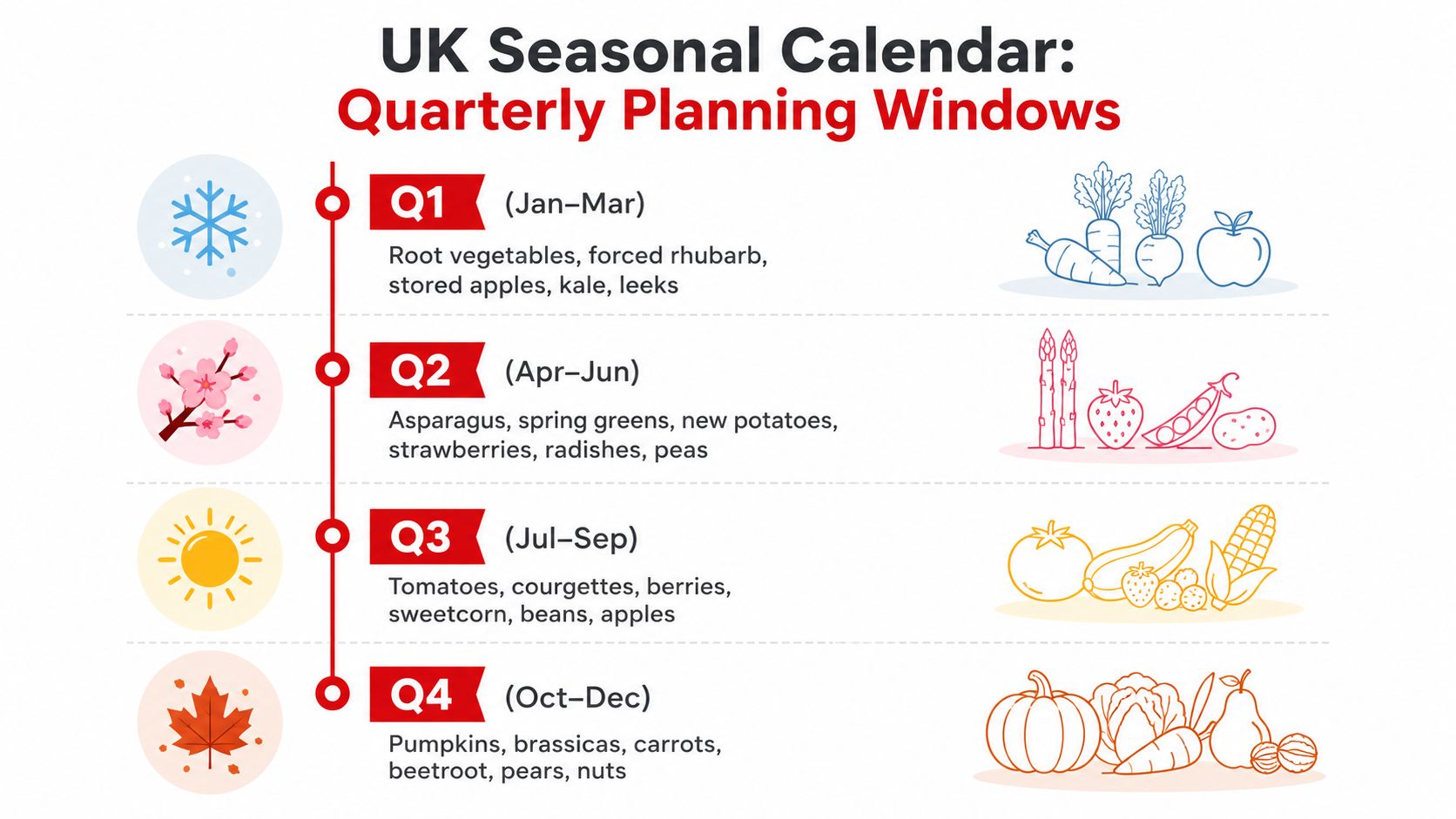
Use quarterly windows
Q1, January to March suits stored apples, root vegetables, brassicas, leafy greens and forced rhubarb. A pub might run braised beef with celeriac, cabbage and a sharp rhubarb relish. Keep a substitute ready, such as parsnip for celeriac or stored pear for apple, depending on supplier quality.
Q2, April to June brings asparagus, new potatoes, peas, spring onions and early soft fruit. Ask suppliers when the first reliable deliveries are expected, not merely when the crop is theoretically available. A spring dish should be able to move from asparagus to tenderstem broccoli or broad beans without requiring a complete menu rewrite.
Q3, July to September is the strongest period for British berries and other summer produce. Salads, grilled vegetables, tomatoes, courgettes, berries and new potatoes can carry a menu. Don't build every dish around the same crop. If berries are late or expensive, the dessert section shouldn't collapse with them.
Q4, October to December favours apples, pears, pumpkins, squash, roots, brassicas and game. Build warmth through roasting, braising and pickling, but retain a lighter option for hotel guests and business diners.
The regional overlay matters. Devon and Dorset suppliers may offer different availability from Bristol or Wales, while Berkshire, Windsor, Reading and Slough operators may depend more heavily on distribution networks. Ask each supplier about expected quality, pack sizes, minimum orders, delivery days and likely substitutions.
Let the menu educate guests
A national MORI survey on British seasonal food found that 74% of UK adults would be likely to buy British fruit and vegetables when they're in season, yet 63% couldn't correctly identify when common British produce is harvested. A menu note such as “British asparagus, available during its spring window” helps guests understand why an item appears briefly.
Build a flex slot into every quarter. The dish title can remain stable while the garnish changes, or the specials board can carry the most volatile ingredients. Use seasonal demand forecasting to connect expected covers with production and labour before the calendar becomes a rota problem.
Costing Seasonal Dishes Without Bleeding Margin
Seasonal creativity needs a cost boundary. A dish should earn its place through a combination of purchase cost, selling price, prep time, waste risk and sales potential. The expensive mistake is to calculate only the ingredient cost and forget the labour, menu printing, training and failed batches that come with a changeover.
A sensible operator reviews the menu 3 to 4 times per year, using each cycle to assess customers, budget, menu policy, structure, recipes, cost and nutrition, then trial, review, implement and monitor the results. That workflow is set out in WRAP hospitality menu-planning guidance.
Cost the plate, not just the recipe
For every new dish, record:
- Edible ingredient cost: Price the usable portion, including trimming and cooking loss.
- Accompaniments: Include sauces, oils, pickles, bread, garnishes and finishing products.
- Prep time: Note whether the dish needs a separate purée, stock, crumb, garnish or dessert component.
- Portion standard: Weigh the main components during trial service, then photograph the finished plate.
- Substitution effect: Cost the backup ingredient as well as the preferred one.
- Sales role: Decide whether the dish is a volume seller, a premium anchor, a low-cost vegetarian option or a limited special.
A summer berry dessert may attract attention, but it can become a poor margin dish if quality varies and the kitchen discards soft fruit. A root vegetable main may be less glamorous but easier to batch, portion and sell consistently. The strongest menu normally contains both, with the higher-risk dish controlled through limited availability.
Treat volatility as a design input
Ask the supplier for a price range and availability warning before the recipe is finalised. If the dish only works financially at the lowest quoted price, it isn't finished. Write the recipe so a change from one brassica to another, or from one berry to another, preserves the plate identity and service method.
A gastropub often needs dishes that move quickly and use overlapping prep. A boutique hotel may accept more intricate presentation for a smaller, reservation-led service, but it still needs a clear batch plan when occupancy rises. Don't use the same menu engineering rules for both operations.
A seasonal special should be allowed to disappear before it's allowed to damage the whole menu.
Keep a live costing sheet at the pass or in the kitchen office. Review the actual invoice, yield, portions sold and waste after the first service. If the recipe is slow, under-portioned or too dependent on one ingredient, amend it early rather than defending the original idea.
Sourcing Suppliers and Designing a Flexible Menu Architecture
The supplier conversation should begin before the menu is printed. Ask what they can supply reliably, which products are likely to fluctuate, what pack sizes are practical for your volume and how much notice they can give when a crop changes. A grower may offer excellent produce but insufficient consistency for a hotel serving several functions, while a wholesaler may provide dependable distribution but less control over provenance.
Use a primary supplier for dependable staples, a specialist relationship for high-value seasonal products and a backup route for urgent substitutions. Don't promise a named grower on the menu unless the supply arrangement can support the claim throughout the planned window.

Build three layers into the menu
The core layer contains dishes that use stable ingredients, familiar methods and existing equipment. These items protect the operation when the rota is thin or a supplier has a difficult week.
The seasonal layer changes with the quarter. Use a consistent dish format, such as grilled fish with seasonal vegetables or a vegetarian main built around the best available produce. The cooking method and plating sequence stay familiar while the ingredient changes.
The specials layer absorbs daily volatility. Put exceptional produce, short-dated stock and small trial batches here. A specials board lets the chef test demand without committing the whole operation to a recipe that hasn't earned its place.
This approach reflects current UK hospitality commentary favouring core dishes with seasonal swaps, shorter menus that change little and often, and produce-led specials, particularly for independent pubs and hotels with limited reprint budgets, as discussed by Arthur David's food trends coverage.
Prepare substitutions before the shortage
Write a substitution card for each volatile dish:
- Preferred ingredient and expected quality.
- Acceptable replacement.
- Revised portion or cooking adjustment.
- New cost per plate.
- Front-of-house wording.
- Person authorised to make the change.
For example, a spring vegetable garnish might move from asparagus to peas and broad beans, but only if the sauce, cooking time and plate balance still work. Brief front of house before service, not after the first guest asks why the menu differs from the description.
The best architecture reduces reprinting, retraining and waste. It also gives the head chef permission to respond to the supplier without making the kitchen look disorganised.
Cutting Waste Across Prep, Production and the Plate
Waste control begins with the recipe, not the bin. UK hospitality and food service outlets waste around 920,000 tonnes of food each year, with 75% described as avoidable, equivalent to roughly one in six of the 8 billion meals served annually, according to WRAP's hospitality food waste overview. Seasonal planning helps only when orders, yields and production match actual demand.
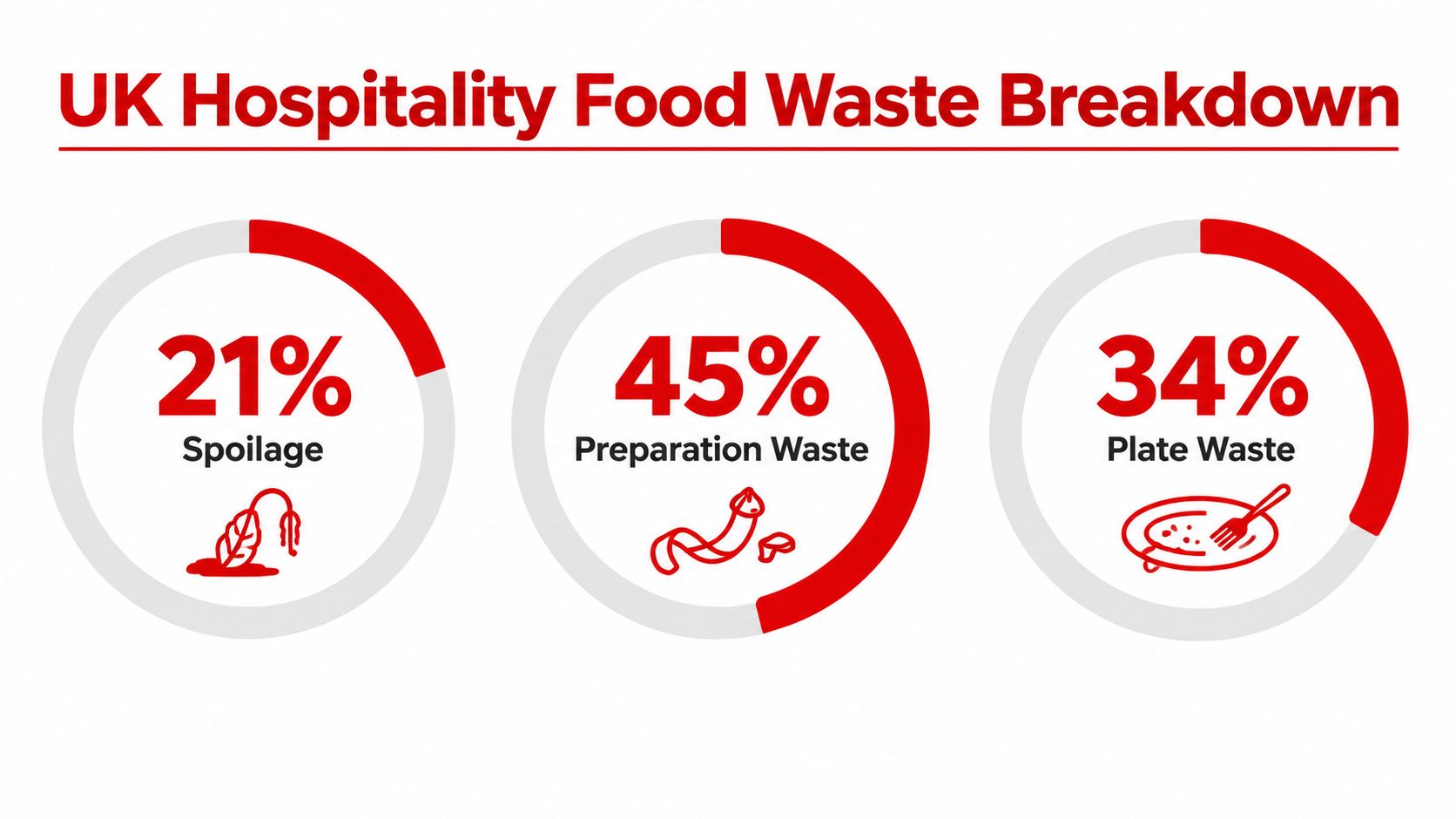
The WRAP breakdown connects waste to specific kitchen decisions. Spoilage accounts for 21%, preparation waste for 45% and plate waste for 34%, as recorded in the WRAP food service waste report.
Turn the categories into kitchen actions
Spoilage points to ordering, storage and timing problems. If soft fruit is deteriorating, move it into a compote, dessert component or staff meal while it remains usable. A specials route gives the kitchen somewhere practical to send short-dated stock.
Preparation waste forms the largest share in the cited breakdown, so record trims during recipe trials rather than waiting until launch. Use broccoli stems in slaw or soup, beetroot tops in a garnish, and chicken carcasses for stock where the food safety system permits it. The yield sheet should show what each ingredient produces, including usable secondary components.
Plate waste can expose portion or appetite problems. A large garnish may look generous and return untouched. Reduce the component, improve its seasoning or offer a smaller portion where the operation can support it. Review returned food by dish, not only as a total bin weight.
Kitchen check: Weigh the bin from one new dish during its first services. The result is more useful than an assumption made during development.
Run a short waste review each week during a changeover. Record spoilage, prep trims, overproduction and returned food separately. If a special sells slowly, cook a smaller batch at the next service. If a dish sells out early, revise its prep plan before increasing production across the menu.
Use the food waste reduction service from Relief Chefs UK when reviewing how staffing, prep discipline and menu design interact. A stable team is more likely to follow yield sheets and portion standards than a kitchen repeatedly rebuilding its routines around unfamiliar cover.
A seasonal menu should give every usable part of an ingredient a planned destination. If one dish creates a trim, another should use it. That turns waste reduction into menu architecture and protects GP during peak trade.
Staffing Seasonal Menus When Kitchens Are Already Short
A menu change is a staffing event, not just a recipe task. Development, supplier trials, tastings, recipe writing, briefings and close supervision all need scheduled labour. Leave them out of the plan and the team either works unpaid hours or skips the preparation that keeps service controlled.
The staffing gap remains structural, so menu simplicity is a practical operating choice. A short-staffed kitchen cannot absorb a long list of components, unfamiliar equipment and complicated substitutions without slowing the pass. Build the menu around the capability available at launch, then add complexity only when the team can support it.
Plan the rollout around people
Set the sequence before the first service:
- Development: The head chef tests dishes with the strongest available team, including the people likely to run each station.
- Tasting: Kitchen and front of house taste together and agree on accurate dish descriptions.
- Briefing: Give every station a recipe card, prep list, plating image and substitution rule.
- First service: A senior chef owns the pass and watches the new dishes closely.
- Early review: Check ticket times, errors, waste and guest questions before making further changes.
Book cover for the launch period, holiday gaps and likely sickness. Temporary chefs may be committed weeks ahead during busy periods, so last-minute cover is a poor foundation for a menu change. Confirm the booking before training starts, and keep one named person responsible for decisions when the rota changes.
Match chef capability to menu complexity
A generalist temporary chef can keep a section open, but may not deliver a complicated new menu without a proper briefing. Send the menu, prep standards, equipment details and service expectations before the shift. Where short-term cover is likely, remove components that add labour without improving the guest experience.
Relief Chefs UK, established in 2013, provides relief chefs, temporary chefs, permanent chef recruitment and wider hospitality staffing support, including yacht chefs and villa chefs. Its model includes a short request form, a recruitment team available 24/7, and fully vetted, right-to-work-checked chefs, subject to availability. That makes its flexible staffing support relevant when a launch meets short-notice sickness or an unreliable agency booking.
Give the temporary chef a clear station, prep deadline and escalation route. A name on the rota does not protect service unless that person can work within the menu's actual demands.
For a pub in Devon, a hotel in Bristol or a multi-site group across Wales and the South East, cover should protect kitchen stability. A smaller menu executed cleanly will usually serve the business better than an ambitious menu that leaves the pass dependent on one exhausted chef.
A 90-Day Seasonal Menu Rollout You Can Start Next Week
Use the next 90 days to connect menu design with supply, margin, waste and labour. Assign one owner to every dish and record the preferred supplier, backup ingredient, GP target, prep lead and pass responsibility.
| Phase | Days | Key Actions | Staffing Checkpoint |
|---|---|---|---|
| Plan | 1 to 30 | Review sales, speak with suppliers, cost recipes, establish a waste baseline and confirm menu structure | Identify gaps, annual leave, sickness risk and launch cover |
| Test | 31 to 60 | Trial recipes, check yields, test portions, brief front of house and confirm substitutions | Run tastings, train stations and book temporary support |
| Launch | 61 to 90 | Introduce the menu, monitor sales, waste and service flow, then make controlled adjustments | Put an experienced chef on the pass and review cover after the first services |
Keep the first changeover deliberately narrow. Protect the core dishes, use seasonal swaps where possible and let the specials board carry the most volatile produce. Review actual invoices, prep trims, plate returns and staff feedback before the next cycle rather than relying on memory.
If your seasonal menu is ready but the rota is thin, Relief Chefs UK can provide vetted relief chefs, temporary chefs, permanent chef recruitment and wider hospitality staffing support across Devon, Bristol, Wales, Berkshire, Windsor, Reading, Slough, Dorset and other UK hospitality hotspots. Visit Relief Chefs UK to request cover and discuss a staffing plan that keeps your seasonal menu serviceable when demand, sickness or supplier changes hit.
Call the team.
Office 01392 715474 · info@reliefchefs.co.uk