
/temporary-chefs-south-west: Expert Relief Chefs In South
10 May 2026
A busy Saturday in the South West rarely falls apart all at once. It starts with a text at 8:15am. Your sous chef is down with sickness. Your Head Chef is already covering ordering, prep and a function menu. Lunch bookings are strong, dinner is full, and the holiday trade you need for the month has finally arrived.
By 10am, the problem isn't staffing. It's risk. Risk to service, risk to standards, risk to the team that's about to absorb another double shift, and risk to the guests who won't care why the kitchen slowed down.
That's why /temporary-chefs-south-west isn't really about filling rota gaps. It's about keeping kitchens stable when the region's trading patterns, geography and labour pressures make “business as usual” unreliable.
The South West Staffing Challenge
A hotel in Devon, a seafront pub in Cornwall, a gastropub in Dorset and a city restaurant in Bristol all face the same issue in different forms. The demand changes fast, the talent pool isn't always close by, and when one chef drops out, the whole kitchen can feel it.
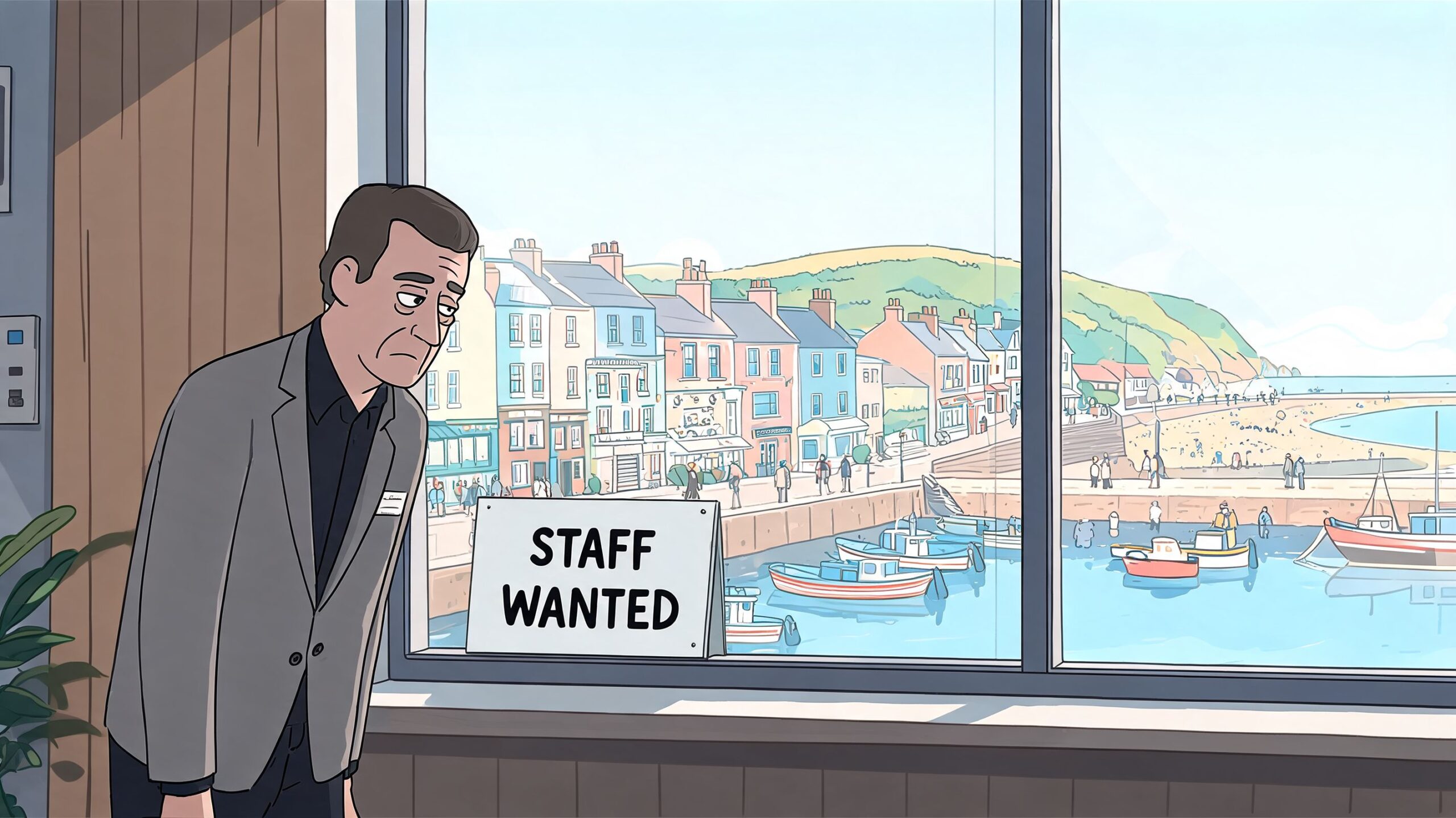
The South West has always had a particular staffing reality. You're often operating in areas with strong visitor demand but smaller local labour pools. In practical terms, that means a packed weekend can depend on whether you've got enough capable hands on section, not whether demand exists.
Chef demand hasn't suddenly become difficult. It's been building for years. Regional data from 2016 showed the South West had 12,884 chef and cook positions, while the wider South East had over 32,000, according to People 1st's report on the chef shortage. For operators, the point isn't historical trivia. It's that the pressure is longstanding, and local supply has struggled to keep pace.
Why permanent-only staffing leaves venues exposed
A permanent team matters. Every strong kitchen needs a core. But relying on permanent chefs alone is like running a busy service with no contingency stock. It works until the first real problem hits.
Common pressure points look like this:
- Short notice sickness: A key chef drops out on the morning of service.
- Seasonal spikes: Trade jumps during bank holidays, summer weeks and school breaks.
- Unexpected departures: A chef walks, gives minimal notice, or stops turning up.
- Function overload: Weddings, events and private dining stretch a team that was sized for normal trade.
In Dorset, I've seen venues lose valuable time calling old contacts, posting rushed ads, and hoping someone decent appears. Usually, that creates another problem. The manager still has no cover, and now half the day is gone.
What actually works in the South West
The most resilient venues don't treat temporary cover as a panic button. They build it into their operating model. They know who to call, what level they need, and how quickly they can get someone in.
That matters whether you're running a boutique hotel with breakfast, lounge and banqueting pressure, or a pub kitchen that can't afford to close a section on a sunny weekend. If you're trading in the region and need short-term support, it helps to understand the local realities around temporary chef cover in Dorset, because staffing conditions vary sharply between rural, coastal and city sites.
The kitchen rarely collapses because of one absence alone. It collapses because there was no backup plan behind the rota.
What a Professional Temporary Chef Really Is
There's still an outdated view of temporary chefs. Some operators hear “agency chef” and picture someone who arrives late, needs hand-holding, doesn't read the prep list properly, and disappears before the hard part of service begins.
That chef exists in the market. Every GM and Head Chef has probably met one.
A professional temporary chef is something else entirely. They're not casual labour. They're a chef who can enter an unfamiliar operation, understand the pass quickly, work to your spec, and support service without dragging standards down.
The role has changed across the industry
The whole staffing model has changed. A 2025 analysis of chef staffing trends describes a significant surge in flexible employment, with temporary and contract roles becoming a primary staffing model as operators adapt to unpredictable demand, according to ChefHire's 2025 hospitality staffing analysis.
That matches what many operators already know from the floor. Full-time teams still matter, but rigid staffing structures don't absorb volatility well. A chef on annual leave, an event added at short notice, a run of strong weather, a team member who leaves mid-season. Any one of those can put pressure on an otherwise good operation.
The difference between a temp and a relief chef
The easiest way to think about it is this. A weak temp fills a shift. A proper relief chef protects a service.
A strong temporary chef should be able to do most of the following without drama:
- Walk into an unfamiliar kitchen: They don't need a half-day orientation just to find the combi and fridge layout.
- Read standards fast: They understand your menu, plating style, allergens, prep systems and service rhythm quickly.
- Slot into the brigade: They don't arrive with ego. They work with your team and respect your chain of command.
- Stay calm under pressure: Busy checks, delayed deliveries and staffing stress don't throw them off.
- Support compliance: They understand hygiene, documentation and the importance of working clean from minute one.
That last point gets overlooked. If a temporary chef isn't properly checked, the risk sits with the venue. Right to Work, references, background screening and basic suitability checks aren't admin extras. They're part of protecting the business.
Why generic job board hiring often fails
Job boards have their place. They can work well for planned recruitment. They're much weaker when the need is urgent and the risk is operational.
When a GM needs cover for tomorrow or the next day, posting an advert doesn't solve the core issue. It creates a waiting period. Then comes CV screening, chasing replies, checking availability, and hoping the person who looked fine on paper can handle your kitchen.
Practical rule: If the gap is affecting this week's service, you don't have a recruitment task. You have an operations problem.
That's the distinction many hospitality businesses now understand. Temporary chefs aren't just there for emergencies. They're part of a flexible labour strategy that keeps the kitchen functioning while permanent recruitment, holidays, events and seasonal pressures play out around it.
The Relief Chefs UK Advantage How We Deliver
Friday, 10:30am. A key chef is out, covers are still on the books, and the fundamental question is no longer "Can we find someone?" It is "Can we protect service, wage control and guest spend without dragging the whole management team into a staffing scramble?"
That is the standard we work to.
Relief Chefs UK has operated since 2013, and the business is run by chefs, not a call centre reading from a script. That changes the brief straight away. The conversation starts with service reality. What section is exposed? How much support will the chef have on site? Is this a steady hotel service, a food-led pub under pressure, or a city kitchen that needs pace from the first ticket? Those details decide whether cover saves the day or creates a second problem.
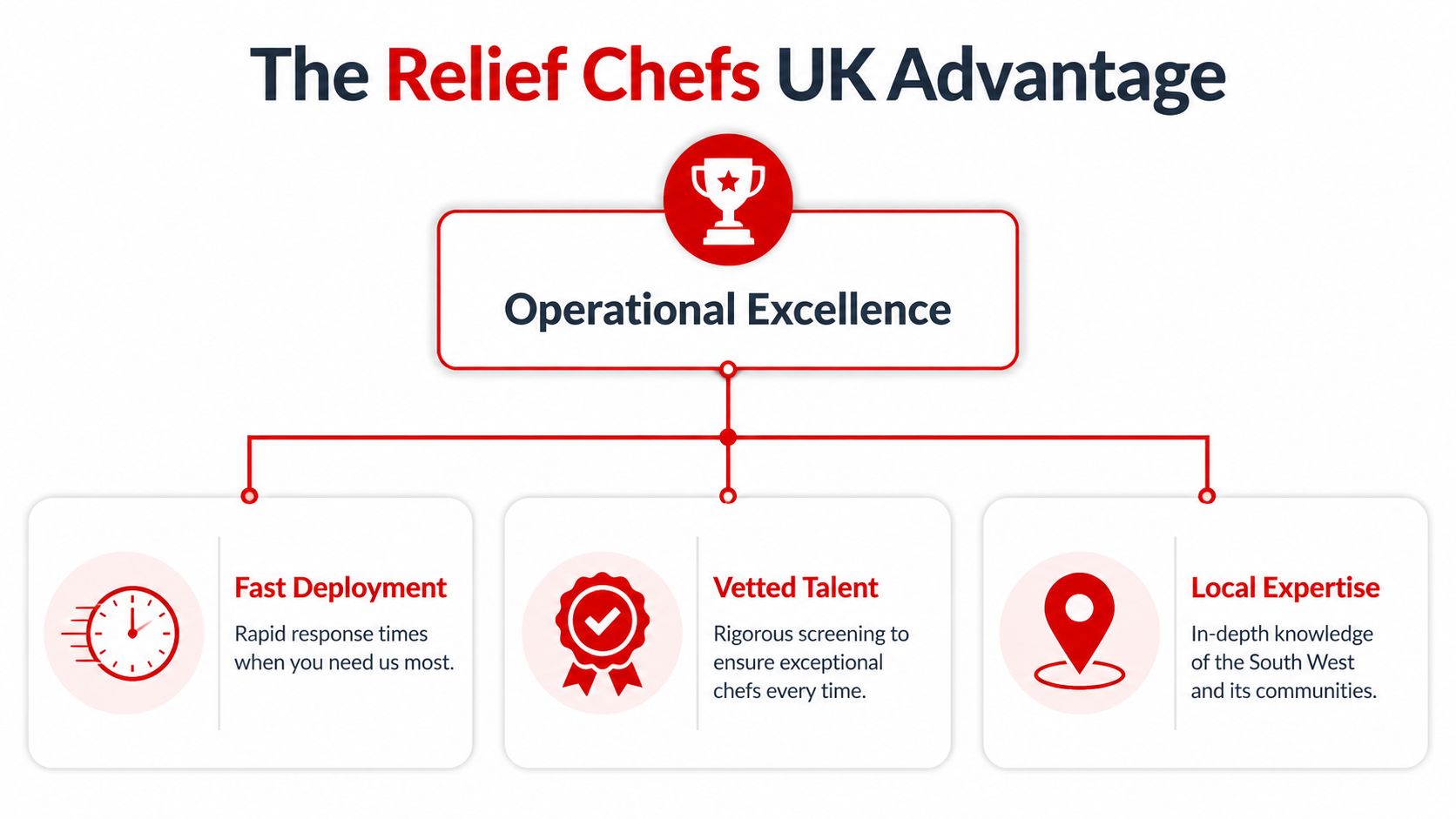
Speed matters because delay is expensive
Empty shifts cost more than agency fees. That is the bit operators sometimes miss until they have lived through it a few times.
A delayed hire means shortened menus, tired senior chefs, slower checks, weaker upsell at busy periods, and managers stepping into kitchen gaps instead of running the business. In South West venues, where margins are often under pressure from seasonality, supplier costs and a smaller local labour pool, that operational drag hits profit quickly.
The model has to reflect that. Relief Chefs UK works on fast response, clear matching and realistic deployment times.
- Fast reply on requests: venues get a direct answer quickly, so managers can make a decision early
- Matching by kitchen need: section, level, service style and independence matter more than a generic job title
- Short-notice availability: useful for same-week pressure, last-minute gaps and unexpected volume
That speed is not about convenience. It protects revenue and stops short-term disruption turning into a costly week.
Good matching protects the shift and the budget
A poor match shows up fast. The chef may be technically capable, but too slow for the site, too senior for the section, or too dependent on support the brigade cannot spare. Then the Head Chef ends up babysitting, the team loses confidence, and the venue pays for cover without getting full value.
Good delivery is more disciplined than that.
The brief needs to be specific. Service volume, menu style, prep expectations, finishing standards, KP responsibility, accommodation issues, and whether the chef needs to run independently all affect who should walk through the door. For busy city work, that might mean placing someone used to high-volume turnover and fast sections, like the team supplying temporary chefs in Bristol. For a rural hotel, reliability, travel practicality and all-round kitchen strength may matter more than polish on one narrow section.
That is the difference between filling a gap and solving the problem.
Vetting reduces risk before the chef arrives
Vetting only matters if it lowers the chance of trouble on shift. Right to Work checks, references and background screening are part of that. So is making sure the chef has worked at the level claimed.
For a GM or owner, the value is practical:
| Area | What proper checks help prevent |
|---|---|
| Compliance | Avoidable legal and employment issues |
| Kitchen standards | Chefs arriving below the level the site needs |
| Guest impact | Poor service caused by weak performance in key shifts |
| Management time | Last-minute firefighting after a bad placement |
None of this is glamorous. It is still where a lot of the genuine value sits.
South West coverage needs regional judgement
The South West is not one market. Bristol, Bath, Exeter, coastal Cornwall, rural Somerset and Dorset all behave differently. Travel times are longer than they look on a map. Staff accommodation can be the sticking point. Seasonal spikes can turn a manageable rota into a problem in a few days.
A staffing partner has to account for that operational reality. Sending a chef from too far away can create lateness risk, cost issues and poor repeat availability. Sending the wrong profile into a small brigade can slow the whole kitchen down. Local judgement matters because every booking has a logistics decision behind it, not just a skills decision.
Support after placement matters just as much
The booking is only the start. Plans change. Shifts get extended. Trade jumps. Someone who was available for three days may now be needed for three weeks.
A useful staffing partner stays involved, answers the phone, and deals with changes before they become service failures. Replacement support, clear communication and continuity all reduce the downside for the venue. That is the commercial value of the relationship. It gives the business a labour option that is flexible, controlled and far less risky than leaving the rota to chance.
For South West operators, that is no longer a nice extra. It is part of running a stable kitchen.
Temporary Chefs in Action Across the South West
The value of temporary chef cover becomes obvious when you look at real operating situations, not tidy theory. Most venues don't need help in abstract. They need someone who can arrive, take a section, and stop the week from going off course.

A Dorset gastropub with an extended absence
A common South West problem isn't just short-notice sickness. It's the chef who's off for longer than expected. The rota gets covered internally for a few days, then the team starts to feel the strain.
In a Dorset gastropub, that usually lands on the Head Chef first. They write the rota tighter, cut prep corners they know they shouldn't, and spend more time patching holes than running the kitchen. Standards don't collapse overnight. They drift.
A good temporary chef helps in a specific way. They give the core team breathing room. The pub keeps the menu on, the Head Chef gets back to running service properly, and the owner doesn't have to choose between closing days, simplifying too hard, or exhausting the brigade.
A Bristol restaurant facing a heavy run of trade
Bristol brings a different pace. City sites often need chefs who can walk into a busier service environment, handle pace immediately, and work with a brigade that doesn't have time for hand-holding.
That's where local cover options matter. For city venues looking at temporary chefs in Bristol, the requirement is usually clear. The chef has to be useful from the first shift. Not eventually. Not after three services. Straight away.
A restaurant dealing with festival traffic, warm-weather trade or a busy private bookings week doesn't need a long recruitment cycle. It needs pressure off the existing team before mistakes start showing at the pass.
A temporary chef earns their keep fastest when the rest of the team forgets they're temporary and just gets on with service.
A boutique hotel with functions to cover
Hotels have a wider staffing problem than most stand-alone restaurants. Breakfast still has to go out. Lounge food still matters. Dinner still needs standards. Then a wedding, wake or private event lands on top.
When one key chef is absent, the problem spreads across multiple services. The GM starts speaking to front office about complaints before the day has even settled. The Head Chef starts protecting one service by weakening another.
This kind of pressure is exactly why experienced temporary support matters in hotels. You're not just looking for a cook. You're looking for someone who understands sequencing, prep discipline and the difference between surviving the event and protecting the guest experience across the whole property.
A short look at kitchen realities helps here:
A yacht or villa brief in Devon
The South West isn't only pubs, restaurants and hotels. Devon marinas, private households and charter settings often need a different type of chef altogether.
Yacht chefs and villa chefs need more than solid cooking ability. They need discretion, flexibility, and the confidence to work in a tighter environment where guest expectations are high and there's nowhere to hide. The wrong placement in that setting becomes obvious fast. The right one feels effortless.
That's why many operators don't separate hospitality staffing into neat boxes anymore. Temporary chefs, permanent chef recruitment, yacht chefs, villa chefs and broader hospitality staffing support are all part of the same operational question. Who can step in and protect standards without creating a second problem?
How to Request Chef Cover and What to Expect
Most managers wait too long to ask for help because they assume the process will be slow, messy or uncertain. That hesitation costs time, and time is what you don't have when the kitchen is exposed.
The practical route is much simpler. Make contact as soon as the gap becomes real. That might be short-notice sickness, a looming resignation, confirmed annual leave pressure, or a run of bookings your current team won't absorb safely.
The speed issue matters. As noted in the earlier section, the gap between the staffing problem and the solution is where the venue loses control. The broader point is backed up by this discussion of job board speed versus urgent cover needs, which highlights the mismatch between slow recruitment channels and immediate operational pressure.
The booking process in plain terms
Most strong temporary chef bookings follow a simple pattern:
You send the brief
Keep it direct. Role level, location, dates, service style, accommodation position if relevant, and whether the chef must run a section independently.The requirement gets matched
Precision matters here. A breakfast chef for a hotel is not the same brief as a senior CDP for a busy Bristol restaurant or a sole chef for a country inn.You review the proposed chef
Before arrival, you should know who's coming and what level they're expected to cover.The chef starts
Once confirmed, the aim is simple. They arrive ready to work, not ready to be trained from scratch.
What helps the match go better
The best bookings usually come from clear briefs, not long ones. Tell the agency what can't go wrong.
Useful details include:
- Service pressure: Lunch only, full-day hotel operation, events, or dinner-heavy trading
- Kitchen setup: Brigade structure, solo sections, prep support, equipment constraints
- Menu style: Fresh food pub, banqueting, gastro, rosette-led, private household
- Site realities: Parking, staff accommodation, rural access, split shifts
If the chef needs to hit the ground running, say so plainly. “Needs hand-holding” and “must run the section solo” are completely different briefs.
What doesn't work
What usually fails is trying to solve an urgent kitchen issue through the same process you'd use for long-term recruitment. Posting ads, waiting for replies, screening CVs late at night, and hoping someone decent is free tomorrow is rarely an efficient use of a GM's time.
When service is at risk, speed and fit matter more than volume of applicants.
Transparent Pricing and Flexible Cover
A Saturday breakfast shift drops out in August. By Monday, your Head Chef is covering doubles, the duty manager is fielding complaints about slower ticket times, and payroll still looks ugly at the end of the week. That is the pricing problem most South West operators are dealing with.
Agency cost concerns are reasonable. GMs and owners have seen day rates quoted one way, invoices land another way, and short-term cover sold as a cheap fix when it papers over a bigger planning issue. The useful comparison is not agency cost versus nothing. It is agency cost versus the financial hit from reduced covers, closed service periods, overtime, waste, refunds, and permanent staff walking because the rota never settles.

Planning cover in advance makes sense when the pressure is predictable, even if the exact dates are not. In the South West, that usually means holiday parks ramping up, coastal trade spiking with the weather, wedding-heavy weekends, half-term swings, Christmas functions, or a long recruitment gap that drags on longer than planned. Buying cover shift by shift in those periods usually costs more in time, decision-making, and disruption than setting a structure in advance.
The commercial benefit is straightforward. Planned temporary support gives you a controllable labour option without locking the business into full-time payroll you may not need in quieter weeks. For venues balancing seasonal demand and tight margins, that flexibility protects both service and cash flow.
A practical way to judge plan level is by operating pressure, not by how ambitious the venue sounds.
| Plan | Best fit | Typical need |
|---|---|---|
| Starter | Independent pubs and smaller cafés | Occasional emergency cover and short gaps |
| Growth | Busy restaurants and boutique hotels | Repeat support during stronger trading periods |
| Premium | Multi-site groups and larger hotel operations | Priority access, ongoing support and closer account handling |
Good pricing should be clear before the first shift is booked. If the structure is hard to explain, it will be hard to manage once things change midweek.
Look for clarity on:
- Placement terms: What happens if hours, dates, or kitchen scope change
- Replacement support: How quickly cover is addressed if a chef becomes unavailable
- Invoicing process: Whether billing is simple and consistent, without scattered extras
- Access level: Whether monthly clients receive faster response during peak demand
If you are comparing fixed payroll against flexible cover, this guide on the cost of employing kitchen staff gives a more useful baseline than headline wage alone.
The Business Case
The question worth asking is simple. What does instability cost your operation over a month?
In practice, that cost shows up everywhere. Slower service. Tired senior chefs making expensive mistakes. Managers pulled off the floor. Menus trimmed back to cope. Revenue lost on the days you should be strongest.
For many South West businesses, a staffing plan is not just labour buying. It is a way to steady the kitchen, protect standards, and stop short-term staffing gaps turning into a wider trading problem.
Your Questions Answered and Next Steps
By this point, the main issue is usually clear. Temporary chef cover isn't a luxury line on the P&L. For many South West venues, it's part of basic operational control. It protects service when recruitment is slow, demand jumps, or the rota breaks at the worst possible time.
What tends to stop action isn't whether cover is useful. It's the practical doubts that come right before an enquiry. Those are worth answering directly.
What if I'm not happy with the chef?
That needs to be addressed upfront with any staffing partner. If the chef isn't the right fit, you need a route to resolve it quickly. No GM wants to pay twice for the same problem.
The sensible approach is to work with agencies that offer clear replacement support and stay communicative once the chef is on site. If there's an issue with performance, fit or availability, the conversation should be immediate and practical.
Are temporary chefs only for emergencies?
No. Emergencies are one use case, but not the only one.
They're also useful for planned holidays, event-heavy periods, seasonal reinforcement, long-notice departures, menu transitions, new openings, refurb reopenings and trialling the right level of support before making permanent hires. In many businesses, temporary cover helps the permanent team stay stronger because it stops them carrying every pressure point alone.
Can a temporary chef really maintain standards in an unfamiliar kitchen?
A good one can. That's the whole point.
They won't know your kitchen better than your Head Chef. They don't need to. They need to understand systems quickly, respect the operation, and work at the level promised. The match matters. So do clear prep sheets, allergen systems and a realistic briefing on day one.
Is this only relevant for pubs and restaurants?
Not at all. Hotels, event venues, private households, yachts, villas and multi-site groups all use flexible chef cover for different reasons.
A hotel may need a breakfast specialist for a run of occupancy. A private estate may need a chef who can handle discretion and varied guest preferences. A yacht brief may require a chef comfortable in compact spaces and close guest contact. The staffing model changes, but the principle stays the same. You need someone who can step in without increasing risk.
Should I still recruit permanently?
Yes, if the business needs permanent structure.
Temporary cover and permanent chef recruitment aren't opposites. They solve different problems. Permanent recruitment builds the long-term brigade. Temporary support protects the business while you recruit properly and keeps the kitchen stable when even a well-built team hits pressure.
Are South West venues different from sites in larger cities?
They often are. Travel, accommodation, local labour supply and seasonality can affect bookings and staffing in ways city-centre sites don't always face. A rural Devon hotel, a Cornwall coastal venue and a central Bristol restaurant all need chefs, but the practicalities of finding and placing them aren't identical.
That's why operators should work with people who understand those regional differences instead of using a one-size-fits-all approach.
What should I prepare before making an enquiry?
Keep it simple. You don't need a polished brief. You need the facts that affect the shift.
Have these ready:
- Dates and service times
- Role level needed
- Venue type and menu style
- Location and access details
- Whether accommodation is available
- Any essential requirements such as banqueting, breakfast, sole chef cover or section ownership
That's enough to start the conversation properly.
When should I make contact?
Earlier than you think.
A lot of managers wait until they've exhausted internal favours, overworked the team and lost a day to stress. If you already know next week looks weak, start now. If your chef has gone off sick and service is exposed, call now. The best staffing outcomes usually come from acting while there's still room to solve the problem cleanly.
What's the sensible next step?
If your kitchen has become too dependent on luck, you need a staffing plan, not another crossed-fingers rota.
For venues that want one route for relief chefs, temporary chefs, permanent chef recruitment, yacht chefs, villa chefs and broader hospitality staffing support, Relief Chefs UK is one practical option. The business was established in 2013, is run by chefs, and has an experienced recruitment team available 24/7 to help find the right cover, subject to availability.
If you're a GM, owner, Operations Manager or Head Chef in Devon, Cornwall, Dorset, Bristol or elsewhere in the South West, the decision is straightforward. Keep absorbing the risk internally, or build flexible cover into the way the kitchen is managed.
If your rota is exposed, your team is stretched, or you need dependable chef cover without wasting more time on slow recruitment, contact Relief Chefs UK. Send your brief, speak to someone who understands kitchens, and get practical support for temporary chefs, relief chefs, permanent recruitment, yacht chefs, villa chefs and wider hospitality staffing needs.
Call the team.
Office 01392 715474 · info@reliefchefs.co.uk